India has officially launched its campaign for a non-permanent seat on the United Nations Security Council (UNSC) for the 2028-29 term with External Affairs Minister S. Jaishankar unveiling the country's vision under the theme ‘SHANTI: India for the United Nations Security Council 2028-29 – Norms, Trust, Integrity.’
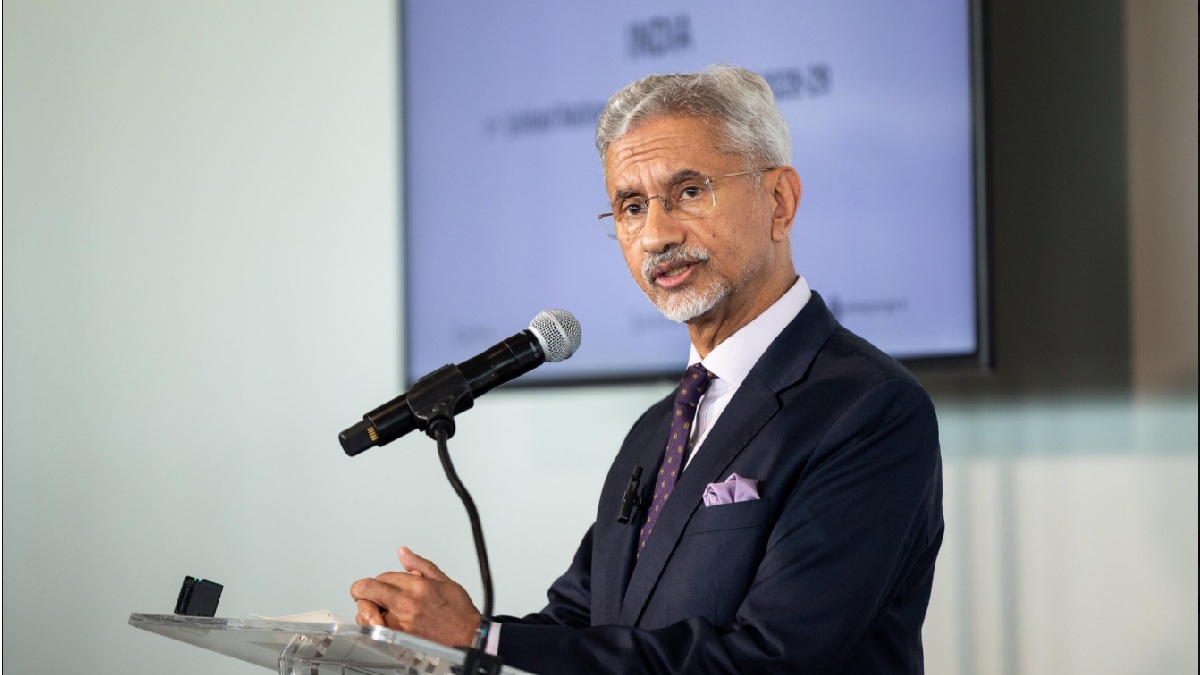
The campaign was launched at a special meeting at the United Nations Headquarters in New York with diplomats, UN representatives and senior officials. Through the SHANTI - Securing Holistic Advancement through Norms, Trust and Integrity - India has outlined its priorities for contributing to global peace, security and multilateral cooperation.
India was a non-permanent member of the UN Security Council for the 2021-22 term and is now seeking another two-year term starting in 2028.
India's Vision for the Security Council
In this purpose, Jaishankar said India will work to make sure that the voices and concerns of the “Global South” are taken into account in the international community at every level of decision-making.
The Global South must play a more meaningful role in defining our common future, he said, calling for reforms that would make multilateral institutions more representative, credible and effective in addressing today's global challenges.
India’s campaign, he said, is based on the country’s commitment to strengthening its cooperation with and towards international partners and to a sustainable solution to global issues.
Six Key Priorities Under the SHANTI Framework
India’s campaign is built around six major priorities aimed at strengthening the effectiveness of the United Nations and the Security Council.
The agenda includes:
- Modernizing multilateral institutions to make them more in line with present-day global realities.
- Making UN peacekeeping missions better through improved technology, clearer mandates and better operational planning.
- Emphasizing the importance of women peacekeepers and their involvement in conflict resolution as part of the ‘Women, Peace and Security’ agenda.
- Advocating for a safe, open, peaceful and rules-based maritime order.
- Encouraging the safe and human-centered use of artificial intelligence (AI) and dealing with the risks of new technologies.
- Increasing international efforts to counter terrorism and disrupt terrorist financing networks.
In the future, Jaishankar said that technological innovation, especially in artificial intelligence, should be guided by principles of inclusivity, security and public welfare rather than becoming a source of new global risks.
Pleased to launch India’s campaign for the @UN Security Council 2028-29.
— Dr. S. Jaishankar (@DrSJaishankar) July 13, 2026
Underlined 🇮🇳’s approach rooted in SHANTI - Securing Holistic Advancement through Norms, Trust and Integrity.
We will prioritise :
➡️ Strengthening the Voice of Global South, and factoring its concerns… pic.twitter.com/pGOHJho5fC
Focus on Peacekeeping and Global Security
India also indicated the need to modernise United Nations peacekeeping operations by adopting advanced technology and making peacekeeping mandates realistic and effective.
India, as one of the world’s biggest contributors to UN peacekeeping missions over the past decades, said it would continue to support global peacekeeping operations and the safety and effectiveness of peacekeepers.
Election Next Year
The election for the 2028-29 non-permanent UNSC seat is scheduled to take place in June next year.
India will compete with Tajikistan for the single seat in the Asia-Pacific Group.
The campaign comes at a time when global political crises are taking place, including the Russia-Ukraine war, the Israeli conflict, and heightened tensions between the US and Iran.
In this context, India has positioned itself as a country that advocates dialogue, multilateral cooperation and rules-based international order.
Jaishankar's Diplomatic Outreach
During his visit to New York, Jaishankar will also meet with UN Secretary-General António Guterres to discuss issues related to global development and India’s role within the United Nations.
His visit to the UN follows a diplomatic tour of Qatar, Bahrain, Kuwait and Oman from July 5 to July 10 in which he met with regional partners and discussed cooperation, trade and strategic partnerships.
After his New York tour, Jaishankar is expected to travel to Brussels in October to attend the third India-European Union Trade and Technology Council meeting. In this regard, he will meet European Union and Belgian leaders to talk trade, technology, connectivity and global strategic cooperation.
With the launch of the SHANTI campaign, India has formally initiated its diplomatic campaign to gain the support of the world and strengthen the United Nations Security Council's ability to serve the interests of developing countries.