India has also asked the United States Trade Representative (USTR) to revisit the 12.5% tariff it has proposed on Indian goods and argue that trade disputes should be handled through bilateral negotiations and not through unilateral trade measures.
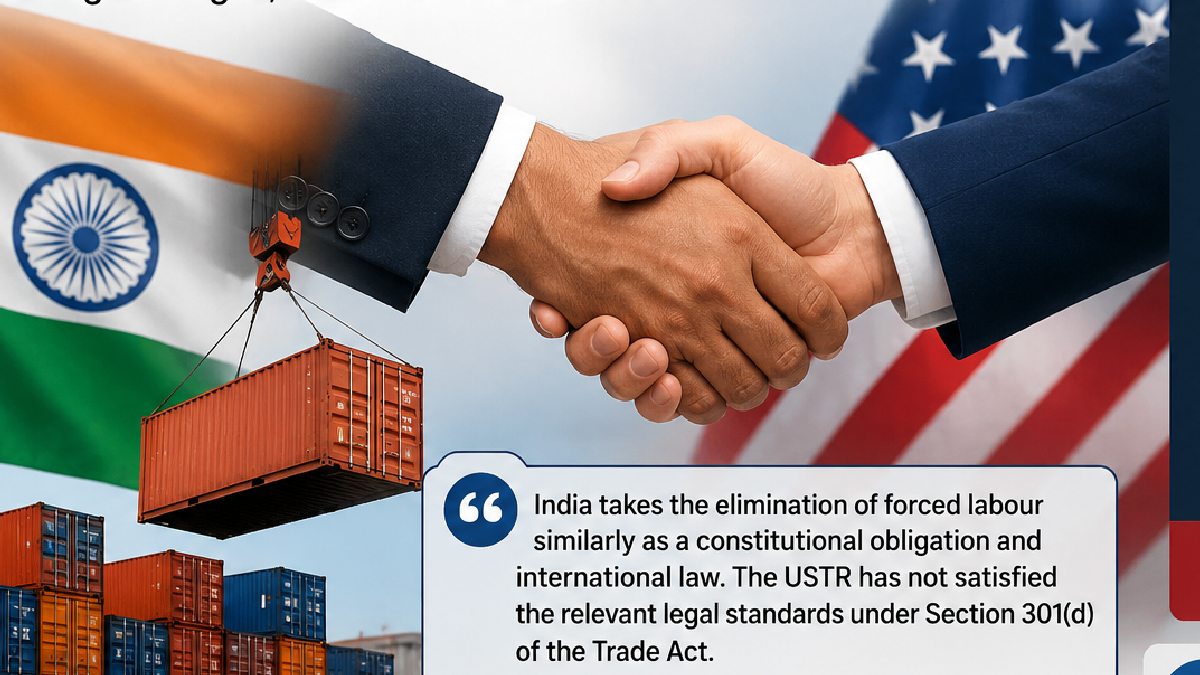
The request comes as a result of a USTR investigation into forced labour and excess industrial capacity, which covers 60 countries including India.
What is the USTR investigation?
In March, the USTR launched two separate Section 301 investigations into trade practices in several countries. The investigations focused on forced labour and industrial overcapacity.
On June 3, the USTR released its findings on the forced labour investigation and proposed additional tariffs on imports from the countries under review.
Under the proposal:
The import of goods from Canada, Ecuador, the European Union, Indonesia, Mexico and Pakistan would be subject to a 10% tariff. All imports from 54 countries, such as India and China, would be subject to a 12.5% tariff.
The proposed tariffs have not yet been finalised.
India Rejects USTR's Findings
India’s Joint Secretary in the Department of Commerce, Brij Mohan Mishra, in a public hearing, questioned the basis of the USTR’s findings.
According to news agency PTI, Mishra said India considers the elimination of forced labour as both a constitutional obligation and an international legal commitment.
He said that the USTR had failed to satisfy the legal standards under Section 301(d) of the US Trade Act.
Mishra believes that the absence of an explicit policy on forced labour imports is not enough to categorize India’s policies as unreasonable in US trade law.
The investigation lacked sufficient evidence to justify tariff action, he said.
India Prefers Bilateral Engagement
India has said trade-related concerns must be resolved through a good bilateral dialogue not through a single tariff action.
The proposed duties come at a time when both countries are in discussions about strengthening economic and trade ties and the outcome of the USTR review will matter for exporters and businesses in both countries.
For now, the 12.5% tariff is still under consideration and no final decision has been made by the U.S.