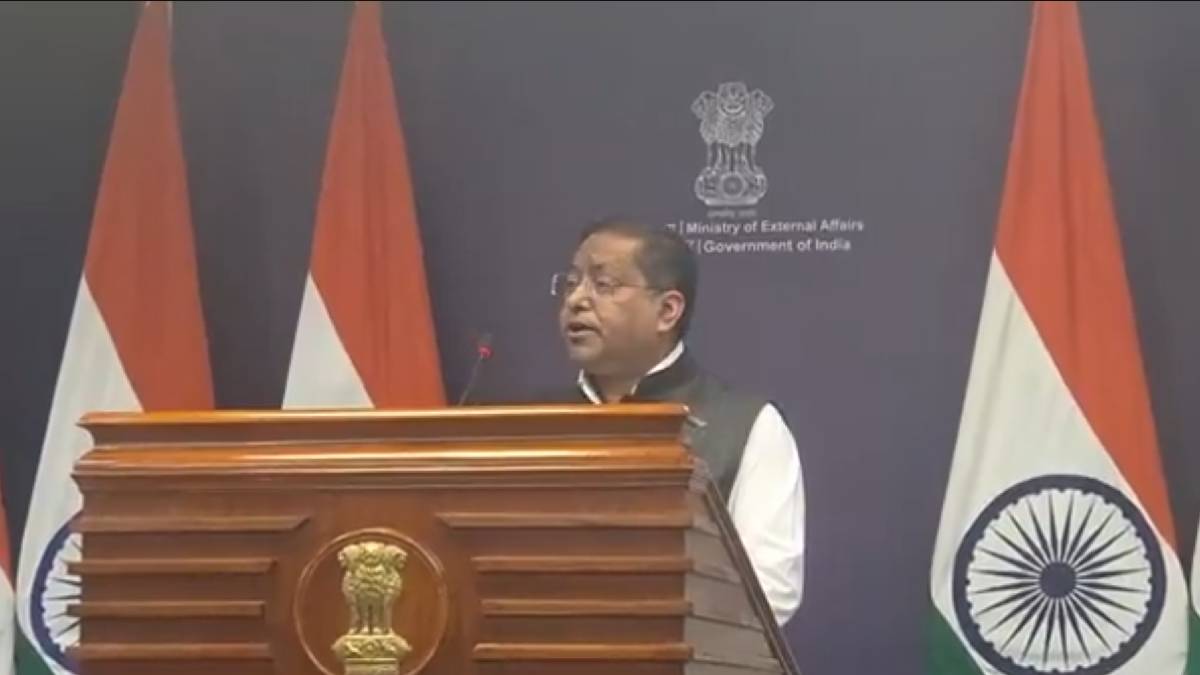
The Ministry of External Affairs (MEA) has termed NIA’s case against an American national and six Ukrainian citizens as a “legal matter” as the probe into their alleged links with armed groups in Myanmar gathers pace.
The US national Matthew Aaron Van Dyke and six Ukrainian nationals were arrested by the NIA in March 2026. The agency has alleged that they were involved with Myanmar-based ethnic armed groups and training on drone warfare and other technologies.
According to recent NIA filings and court proceedings, the case has alleged movement of foreign nationals through India’s northeastern region into Myanmar. The NIA told a Delhi court that some of those arrested were allegedly involved in training drone warfare, drone operations, assembly and jamming technology for Myanmar-based ethnic armed groups.
The case has also taken a new turn as the NIA on September 8 filed a chargesheet against seven foreign nationals. Van Dyke and six Ukrainian nationals are among the accused. Reports on the chargesheet said that the agency had alleged they were involved in training anti-India ethnic armed groups in Myanmar.
But there is a legal distinction too. The latest chargesheet does not invoke the UAPA (though the original investigation was under Section 18 of the UAPA).
"Its a legal matter", MEA Spox on NIA dropping terror charges against American, 6 Ukranians over training armed groups in Myanmar pic.twitter.com/a4OFtH4Yqb
— Sidhant Sibal (@sidhant) September 8, 2026
The original case was about foreign nationals travelling through India’s northeastern states and allegedly crossing into Myanmar. In a Delhi High Court order, the NIA alleges Ukrainian nationals entered India on tourist visas, travelled to Mizoram without the required permits and crossed into Myanmar for training (drone warfare and related technologies) scheduled there.
The investigation has also been linked by the NIA to an alleged drone attack on a civilian aircraft in Myanmar. Earlier this month, the agency told a Delhi court that seven foreign nationals arrested in March were allegedly connected with the attack. The NIA sought permission to interrogate Van Dyke and Ukrainian national Kaminskyi Viktor while they were lodged in Tihar Jail.
The allegations have therefore raised questions about the international nature of the case because US and Ukrainian citizens are involved; alleged activity in Myanmar; and an investigation being carried out by Indian authorities.
MEA’s description of the matter as a legal one implies that proceedings are being done through the proper investigative and judicial channels. The comments also come at a time when the case has been drawing international attention because of the nationalities of those accused and alleged links with armed groups across the India-Myanmar region.
The Delhi High Court had earlier allowed NIA to continue investigation beyond 90 days and extended permissible period of investigation to 180 days. Six Ukrainian nationals challenged the extension, but the court rejected their plea on August 31.
The latest chargesheet is now another step in the process. Allegations in an investigation or chargesheet do not equate to a judicial finding of guilt — the accused will have the chance to contest the allegations through the legal system.
NIA is still investigating alleged activities in Myanmar and foreign nationals’ involvement in the case, so it will remain under scrutiny. MEA’s response “legal matter” shows that next steps will largely depend on what happens in judicial proceedings and what evidence comes before courts.