A pothole on a Bengaluru road has once again shown what poor road conditions can do to people — in this case, a road user suffered an ankle injury and was left with a hospital bill of around ₹2 lakh.
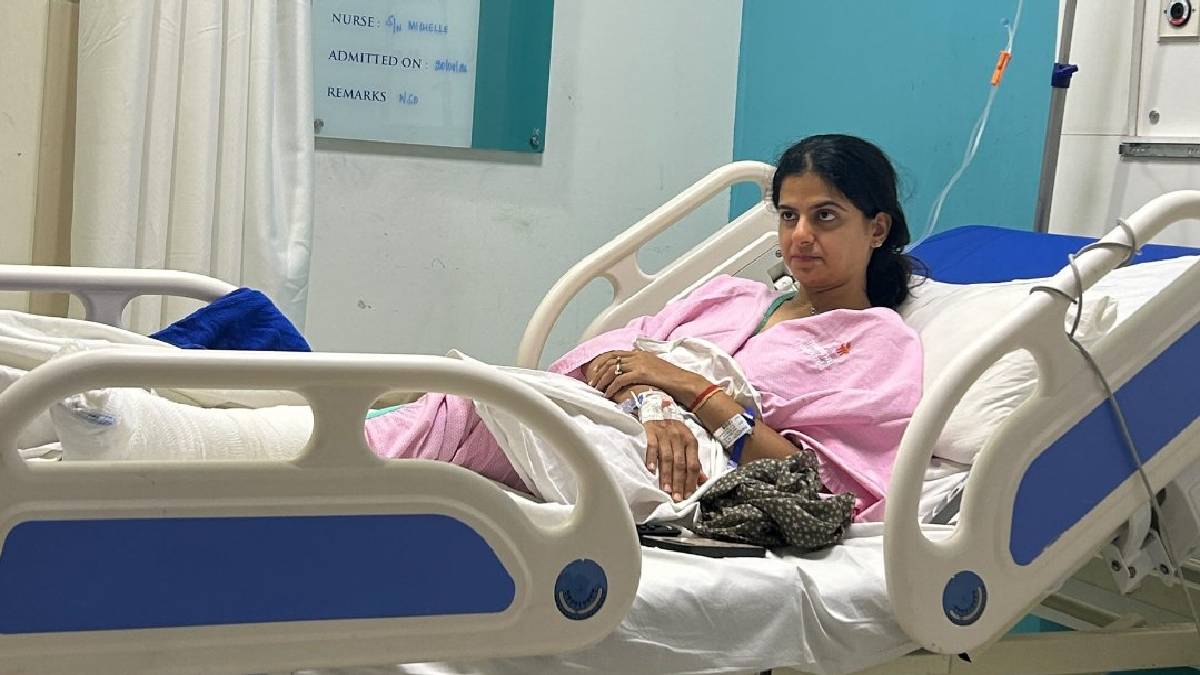
What appeared to be a normal road was reportedly the cause of a life-changing accident when the victim hit a pothole. The ankle was badly injured, and the person needed treatment and hospitalisation. The treatment cost is said to have added another dimension to what could have been a terrible incident — the hospital bill reportedly ran into ₹2 lakh.
Bengaluru is known as India’s technology capital, but its roads have been a constant irritant for residents, commuters and motorists alike. Potholes, uneven surfaces, incomplete road work and waterlogged stretches have been blamed time and again for accidents and injuries (especially during heavy rains).
Potholes are especially dangerous for two-wheeler riders. A rider going at normal speed may not have time to see a deep or poorly visible pothole (night or when rainwater has accumulated on the road), and even a brief loss of balance can lead to a serious fall resulting in fractures, ligament injuries or other trauma.
The latest incident also shows how financially damaging a road accident can be. Medical treatment for serious orthopaedic injuries can include emergency care, diagnostic scans, surgery, hospitalisation, medicines and follow-up treatment — all of which add up quickly, and families have to deal with physical recovery as well as financial pressure.
The reported ₹2 lakh hospital bill has therefore become part of the conversation around Bengaluru’s pothole problem. A damaged road is not just an inconvenience for commuters — for some road users, a poorly maintained surface can mean lost working days, expensive medical treatment and long-term physical problems.
Potholes in Bengaluru have often come under public criticism — people have asked for faster identification and repair of dangerous stretches. Civic authorities have carried out pothole-filling and road-repair drives at times, but complaints about potholes recurring from time to time keep coming in from different parts of the city.
One of the biggest problems is that temporary repairs may not withstand heavy rain or traffic. Water seeps into cracks in road surfaces, weakening the structure and eventually causing repaired sections to deteriorate again. Potholes then return repeatedly (especially on heavily used roads).
The incident also raises questions about accountability and road maintenance standards. When public roads become so dangerous for commuters that they have to be fixed, residents expect authorities to find out what’s wrong with them; warn people where necessary; and do durable repairs.
The advice for motorists and riders is that they slow down when visibility is poor; keep a safe distance from other vehicles; and exercise extra caution on unfamiliar roads. But individual caution cannot eliminate the risks created by dangerous road infrastructure.
The reported accident is a reminder that Bengaluru’s pothole problem has consequences far beyond traffic jams and complaints on social media. Behind every serious road accident can be a person who needs medical treatment, lost income, physical pain and financial stress.
A pothole may look like a small defect in the road, but for a two-wheeler rider who comes across one unawares, it is deadly. The crushed ankle reported and ₹2 lakh medical bill have put Bengaluru’s road safety concerns back on everyone’s radar again.
As the city expands and traffic volumes increase, safe roads need to be maintained. People shouldn’t have to think of every pothole as a potential accident site; road maintenance can’t ultimately be measured by how many potholes are filled but whether or not roads are safe for people who use them every day.