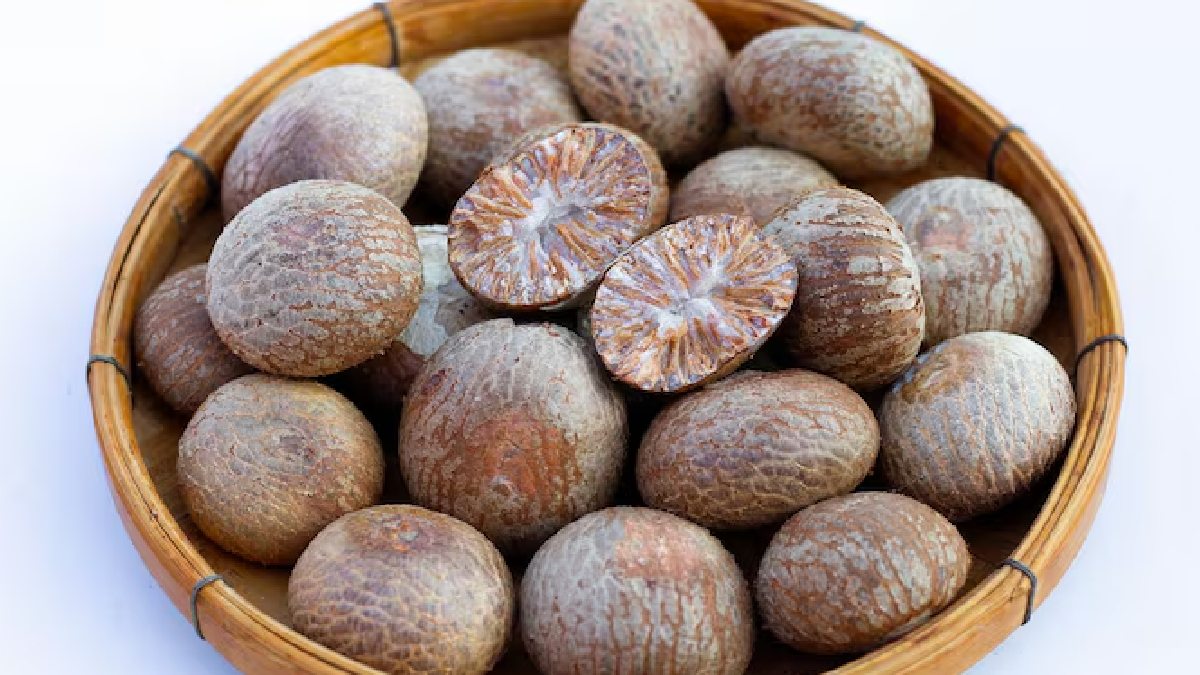
Arecanut farmers in coastal and Malnad are experiencing a severe setback thanks to sustained and heavy rainfall which has resulted in the spread of Kole Roga or fruit rot disease in several plantations in Karnataka. Farmers in some of those areas have suffered crop losses of more than 20%, creating fears of large financial losses in the current season.
The situation is particularly worrying in parts of Dakshina Kannada, where continuous rainfall has created highly humid conditions in arecanut plantations. Farmers depend on arecanut cultivation for income and the disease has added to the problems already created by excessive rainfall.
Arecanut plantations are prevalent in Dakshina Kannada, Udupi, Kodagu and Chikkamagaluru, and the impact of prolonged wet weather is a serious concern for a large number of farming families.
High Moisture Creates Favourable Conditions For Disease
Kole Roga is a recurring concern for arecanut growers during the monsoon. Excess moisture and prolonged wet conditions can provide fertile conditions for the disease to spread through plantations.
The current spell of rain has complicated the problem in a number of places. Farmers say the duration and severity of the rain has made it difficult to protect the crop and carry out timely preventive measures.
The disease can cause affected arecanuts to rot and fall prematurely and lead to direct production losses. As the infection spreads, farmers will lose a portion of their expected harvest and may have to spend more on disease control and plantation maintenance.
For families that depend on cultivation of arecanut, the reduction in production could be huge for their income.
There is a survey going on to assess crop damage.
With crop damage mounting from different parts of the country, an arecanut growers’ association has begun to collect information to gauge the extent of the losses.
The survey will therefore help to see the extent of damage in different areas and how much of the crop was affected due to the disease and excessive rainfall.
Farmers and growers’ representatives are looking for a more complete picture, particularly in areas where plantations have had multiple disease attacks because of continued wet weather.
Third Round Of Bordeaux Mixture Spraying Becomes A Challenge
Farmers generally use recommended preventive measures such as spraying Bordeaux mixture to control or prevent the spread of Kole Roga.
Many growers have already completed two rounds of spraying. However, the continuing rainfall has meant that there is concern that a third round may now be needed in affected plantations.
In recent years, the spraying operation has been difficult because of the unpredictable weather. Farmers need a good dry period for the spray to work on the plants. If rain comes in again soon after the mixture is applied, the treatment can be washed away or its effect may be reduced.
This is an additional financial burden for farmers who have to spend money on inputs and labour every time the spraying operation is carried out.
Labour Shortage Adds To Farmers’ Problems
Besides rainfall and disease, a shortage of skilled agricultural labour is also another challenge for arecanut growers.
Plantation activities like spraying plant-protection measures must be completed during short breaks between rainfall. During these periods, the availability of workers is limited, making it difficult for farmers to perform essential operations.
The combination of excessive rainfall, disease pressure and labour shortages has therefore increased the pressure on growers.
Farmers Seek Government Support
Farmers whose plantations have already suffered losses are seeking timely support and compensation. They want authorities to investigate crop damage scientifically and provide assistance to eligible growers.
Farmers are also interested in technical advice for disease control and timely advice from agriculture officials to protect the rest of the crop.
For growers, the immediate task is to prevent the disease from spreading further and save whatever portion of the crop is still healthy. But as long as it keeps raining, this will become more difficult.
The situation has highlighted the vulnerability of arecanut plantations against a prolonged monsoon. Rainfall for agriculture is a necessity, but when it is too much, it is a threat for diseases like Kole Roga.
With the monsoon continuing in coastal and Malnad Karnataka, arecanut farmers are now hoping for a break in the rain so that they can carry out necessary disease control measures and prevent further crop losses.