Karnataka’s Food Safety and Quality Department has taken a major step to protect consumers by prohibiting artificially manufactured “analogue paneer” in hotels, restaurants and other food establishments for one year.
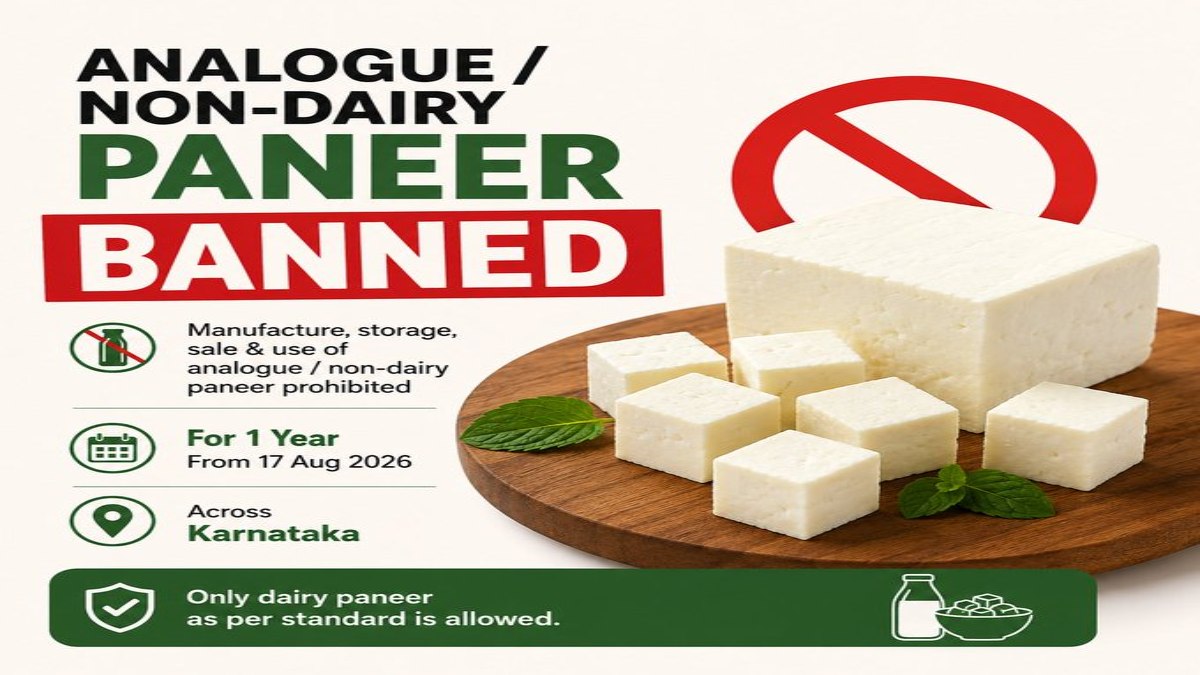
The move is expected to increase scrutiny of paneer products being served to customers across the state and comes at a time when substitutes and non-dairy ingredients are being used as genuine paneer. The decision is especially significant for consumers who regularly eat paneer-based dishes at restaurants, hotels and other commercial food outlets.
Paneer is an important dairy product made from milk. Genuine paneer is made by curdling milk and separating the solid milk proteins and fats from the liquid whey. Because of its nutritional value and its versatility, paneer is an integral part of Indian food (paneer butter masala, palak paneer, chilli paneer, matar paneer and various grilled and fried recipes).
In this context, analogue paneer is simply a product that resembles paneer but is made partly or substantially with non-dairy ingredients. Depending on the formulation of a product, vegetable fats, starches, proteins and other food ingredients can be included. The concern for consumers is not only that a different product exists, but that it is correctly identified and marketed and not presented as paneer. Food businesses are obliged to adhere to food and product standards and labelling requirements if they substitute.
According to the state department, some hotels and restaurants have tried artificial paneer for cost-cutting. Such products may be cheaper to produce than traditional dairy paneer and therefore can help businesses to reduce production costs. But consumers who buy a dairy product may unknowingly get a substitute if the food outlet does not disclose what is being served.

The department has advised food establishments that paneer in their kitchens is made from milk and dairy ingredients. Retailers, restaurants and other commercial establishments have been told to avoid using analogue paneer and serving it as real paneer. It is supposed to help reinforce tracking and promote food safety, and so businesses will be required to follow food safety regulations for one year.
The quality of imitation dairy products has been another concern. Not every non-dairy paneer alternative is bad for health but products containing unsuitable, adulterated or poorly put-together ingredients can be harmful. And excessive consumption of certain low-quality fats is also not healthy from a nutritional point of view. Food businesses need to be regulated to ensure they use products that meet safety and quality standards.
According to the enforcement measures reported, food safety officials will conduct inspections and special drives in hotels, restaurants, dairies and other establishments across Karnataka. Food samples may be collected to be sent to a lab for laboratory testing to determine products’ compliance with the standards. If any food establishment is found to be violating the food safety laws, it may be subject to legal action. We also expect to better educate entrepreneurs and managers of food businesses on their responsibilities.
For consumers, the development is another reminder that they need to be more conscious of the food they eat outside of the home. And customers who frequently order paneer dishes can ask restaurants about what ingredients are used and go for those where food preparation is transparent and, where possible, check online. But consumers can’t assume that every inexpensive or strange paneer product is artificially made. Lab tests and regulatory inspections are much more reliable than any other way to ensure that a product meets the required standards.
The ban has the potential to be very beneficial to restaurant and hospitality business owners– especially those that rely on paneer-based dishes. Food suppliers, procurement and kitchen inventories will need to be reviewed for compliance, and they will also need to be able to do the same as retailers when suppliers and manufacturers are held accountable when products that don’t meet prescribed standards are put on the market and in the food supply chain.
The enforcement drive is expected to continue across various parts of Karnataka for the next one-year period. Authorities will likely target areas where there are complaints and indications of food adulteration, and routine inspections may also be conducted. The success of the measure will ultimately depend on consistency of enforcement, reliable laboratory testing and strict action against businesses that intentionally mislead consumers.
For millions of paneer consumers in Karnataka, the decision is likely to raise the level of quality and authenticity of dairy products sold outside the home. By tightening the inspection of artificial paneer and making sure that businesses are up to date on food safety standards, we will get what we pay for. The move also reinforces a broader message to food businesses that they need to prioritize food quality, consumer transparency and public health.