Hundreds of protesting people demonstrated in Delhi’s Jantar Mantar on Friday, in opposition to the caste-based reservation system and also calling for a wider review of affirmative action policies and more emphasis on economic disadvantage. Protesters held banners, posters and saffron flags, and slogans demanding change in the current system of reservation were raised.
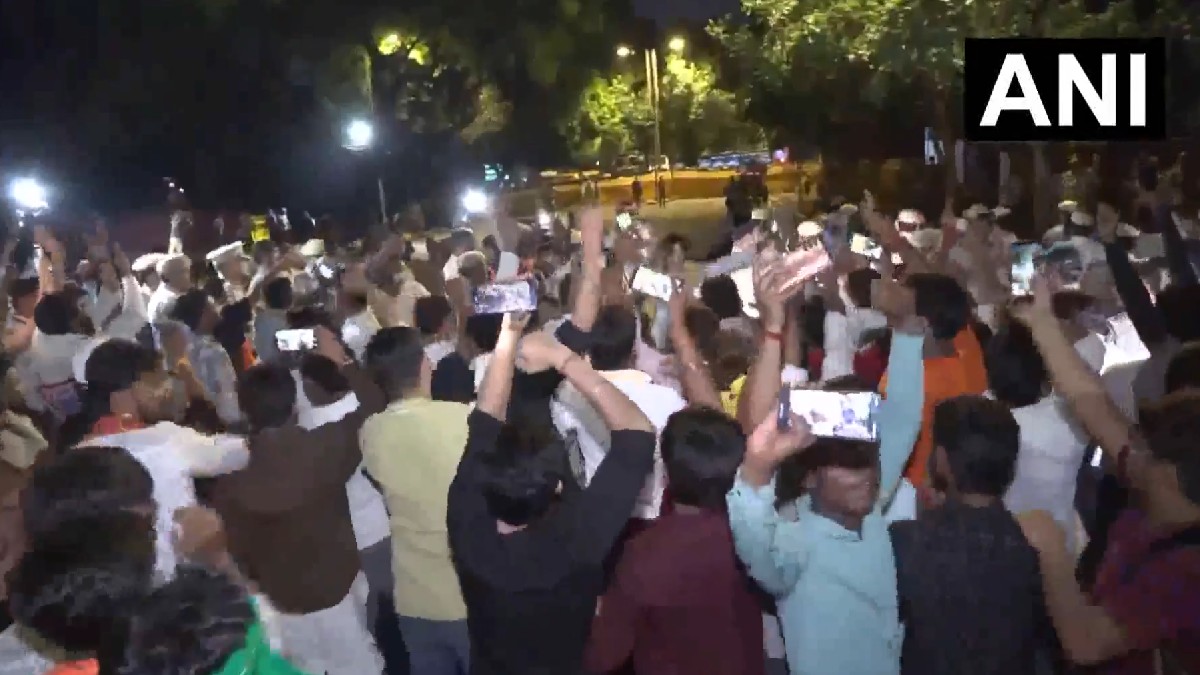
The protest was organized after a call from “Reservation Hatao Andolan”, an Instagram-based page that encouraged people to join the demonstration in the national capital. Police remained on high alert around Jantar Mantar and deployed people to monitor the gathering. At that time no permission had been given for the demonstration and some people who arrived at the site in the morning had been removed, police sources said.
The gathering was also dedicated to several issues of reservation in government jobs, education and other aspects. Protesters disagreed on some aspects of the existing system, but a common demand was that the government stop giving people based on caste and class basis reservation and look to see if reservation benefits are being given to people who need them the most.
1. Reservation Should Consider Economic Status
One of the main demands brought up at the demonstration was that the criteria of eligibility for government support be put in much more economic light. Protesters said financial hardship can affect people from all castes and that economically disadvantaged people should receive assistance regardless of their social status.
A protester associated with Akhil Bhartiya Kshatriya Mahasabha said poor students should receive support for education, coaching and other requirements irrespective of caste. It is part of a larger argument that those who oppose the caste-based reservation should be given a larger weight in government welfare and educational assistance.
2. Comprehensive Review Of The Reservation System
Protesters also asked for a full review of the existing reservation system. When policies were introduced to address historical and social disadvantages they did not work as intended in their current form.
The demonstrators insisted that the government should regularly assess the impact of reservation and weigh whether it is hitting the economically disadvantaged communities at the grassroots level and whether it is a right to relieve social injustice. They wanted to have a longer conversation rather than simply keep existing and wait for the results of the present system and not evaluate how it is working.
3. Demand For A Creamy-Layer Criterion
A second major demand was the introduction or extension of the “creamy-layer” principle in reservation policies. Protesters argued that relatively better-off sections within beneficiary communities should not get repeated advantages if the objective is to ensure that assistance reaches those who are worse off.
Protesters also argued that economically disadvantaged people need scholarships, fee relief, educational schemes and coaching programmes. Financial circumstances should be taken into account when developing policies directed at improving access to education and employment and their argument was that that is what they were saying.
4. Changes To SC, ST And OBC-Related Policies
The demonstrators also wanted changes to policies of Scheduled Castes, Scheduled Tribes and Other Backward Classes. Their demands were broader than reservation quotas to other legal and policy frameworks for those communities.
The Scheduled Castes and Scheduled Tribes (Prevention of Atrocities) Act was also mentioned in the demonstration, and protesters said they wanted the debate to be broader and to include the other provisions in place. That’s part of the larger debate around how to balance protections for historically disadvantaged communities with what those who disagree with the current legal and reservation system have to say about that.
5. Wider Debate On Reservation And Higher Education
The protesters also questioned whether a reservation system that was established decades ago should continue when society is changing and the economy is not. Indian society has changed and then policymakers should look at how to deal with it.
Higher education policies were also discussed and such issues as University Grants Commission came up. Protesters asked for a more general investigation into admission policies and the role of reservation in higher education.
Heavy Security At Jantar Mantar
Security personnel monitored the demonstration closely as authorities sought to orchestrate the event at Jantar Mantar. Police sources said those who gathered at the site and had not been given permission were removed and that they also checked people walking in on the protest area.
#WATCH | Delhi: A large number of people have gathered in Delhi’s Jantar Mantar protesting against caste-based reservation. pic.twitter.com/oFXJfWBquc
— ANI (@ANI) August 21, 2026
The gathering also generated claims on social media about internet connectivity in the area. Some protesters claimed there had been internet jammers put up in Jantar Mantar, where one could not access social media platforms. The claim could not be independently verified.
The protest highlights the persistent debate over reservation in India and it is as much about social justice, representation, economic inequality and access to education and employment as that of caste. Even if affirmative action proponents say caste-based policy is still necessary to stop past discrimination in Indian society and structural disadvantages, it is becoming more common for economic situation and other indicators to play a larger role.
So the demands raised at Jantar Mantar go beyond an easy call for ending reservation. They signal a demand from the protesters for a thorough reconsideration of the way affirmative action is structured and who is eligible to benefit from its benefits and whether economic disadvantage should be considered alongside social and historical factors.