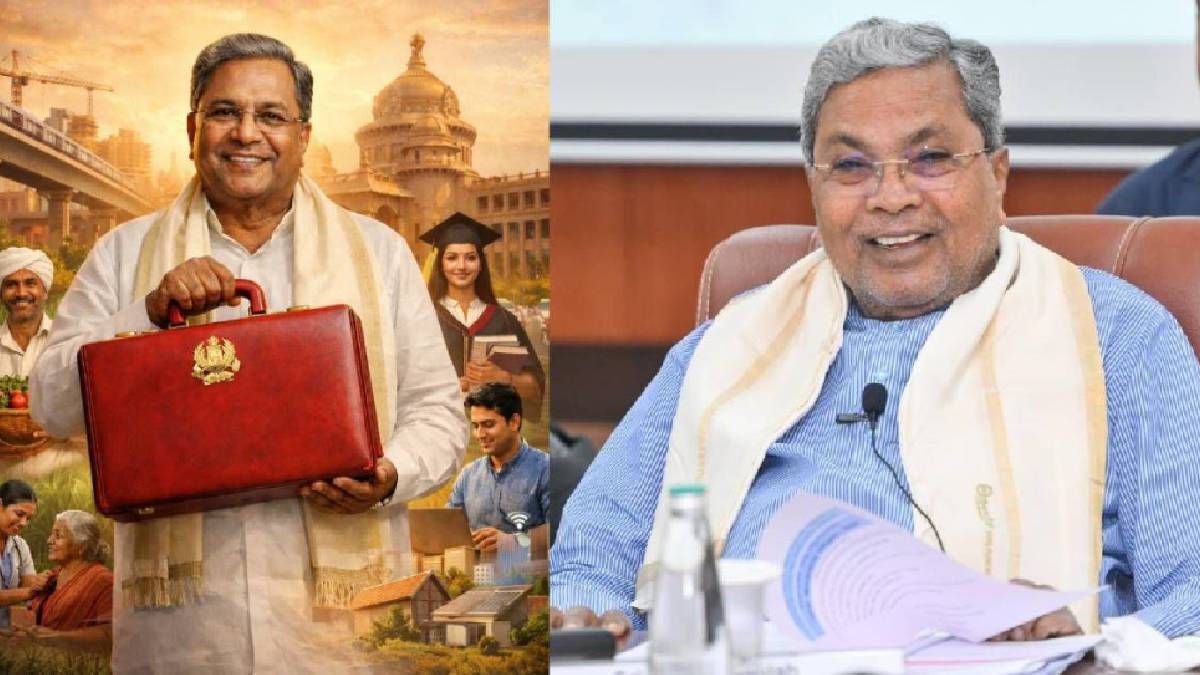
Chief Minister Siddaramaiah delivered his 17th state budget in 2026, speaking for over three hours in a marathon presentation. This year’s budget is notable not only for its size ₹4.48 lakh crore but also for the wide scope of projects announced across Bengaluru, infrastructure, agriculture, health, education, and women’s welfare. The budget strikes a balance between urban development and rural assistance, with a strong focus on job creation, social welfare, and long-term infrastructure planning.
Development of Bengaluru with a Second Airport and Other Projects
One of the most striking announcements is the plan to establish a second international airport in Bengaluru. With Kempegowda International Airport already the third busiest in India, congestion has become a serious issue. The government will prepare a feasibility study with the Airports Authority of India (AAI) to ease traffic and plan for future expansion.
Other highlights for Bengaluru include:
- ₹7,000 crore per annum urban development grant.
- 450 km white-topped roads over three years for ₹3,000 crore.
- ₹450 crore investment for enhancement of Outer Ring Road corridor.
- 9 km pedestrian walkway through the ORR metro viaduct at a cost of ₹160 crore.
- 40 km of tunnel road corridors (North–South and East–West) approved at ₹40,000 crore.
- Hebbal–Mekhri Circle tunnel & elevated road at ₹2,250 crore.
- 41 km metro expansion under Namma Metro in 2026–27.
- Cauvery Phase VI water project worth ₹6,939 crore to supply additional water.
- 100 Miyawaki parks across the city to be developed.
These projects aim to make Bengaluru a global-standard city, tackling congestion, water supply, and urban infrastructure challenges.
Railways and Airports Throughout Karnataka
The budget also focuses on connectivity across the state:
- ₹600 crore for nine railway corridors in 2026–27, with costs shared 50:50 with Railways.
- ₹1,593 crore released so far for seven domestic airports, including ₹200 crore this year.
- Plans to open Flight Training Schools and aircraft manufacturing units at Vijayapura and Shivamogga under PPP models.
Agriculture and Farmer Welfare
Farmers remain at the heart of the budget. Key highlights include:
- Seed subsidy of ₹468 crore benefiting 40 lakh farmers.
- Drip irrigation units for 7 lakh farmers at ₹2,825 crore.
- Farm equipment distribution to 3.41 lakh farmers.
- 32,138 farm ponds constructed with ₹363 crore.
- Crop insurance compensation of ₹6,213 crore for 51 lakh farmers.
- Free electricity subsidy worth ₹48,000 crore for 36 lakh irrigation pump sets.
- Zero-interest loans of ₹70,000 crore to 83 lakh farmers.
New initiatives include:
- Chief Minister Krishi Vistara Scheme with ₹100 crore over three years to generate new sources of income.
- Promotion of new pulses seed varieties.
- Establishment of farmer’s malls in Kolar district.
- A new agriculture college at Athani.
Dairy Development and Animal Husbandry
To support livestock farmers:
- ₹40 crore subsidy for purchase of cattle to 10,000 beneficiaries.
- ₹4,523 crore incentives for milk suppliers, including ₹609 crore arrears.
- ₹101 crore compensation for accidental deaths of sheep, goats, and pigs.
- Construction of 100 veterinary facilities and funding for animal hospitals.
- ₹5 crore fertility camps in 1,000 villages.
- CT scanning centre for cattle in Bengaluru–Bidar.
Health Sector Boost
Healthcare receives a strong push:
- New government medical colleges in Vijayapura and Kolar.
- Super-speciality hospitals in Karwar and Yadgir at ₹100 crore each.
- Cancer hospital at Munirabad–TB Dam in Koppal district.
- Victoria Hospital renamed “Shantaveri Gopala Gowda Hospital.”
Education and Employment
Education and jobs are central to this year’s budget:
- Recruitment of 15,000 school and college teachers and 2,000 higher education positions.
- Six new planetariums in districts including Ballari, Koppal, and Yadgir.
- ₹600 crore for 117 Maulana schools.
- ₹50,000 laptops for 5,000 students.
- ₹400 crore for 100 school upgrades.
- ₹200 crore for Anganwadi buildings.
- ₹1 crore for new childcare centres.
- ₹5 crore for 10 geriatric units.
- 25 new metric hostels for students.
Employment generation:
- 56,432 government posts to be filled this year.
- Age relaxation of five years for recruitment delayed by court cases.
- ₹8,600 crore for roads and infrastructure under the Chief Minister’s Infrastructure Development Programme.
Women and Child Welfare
Women’s welfare receives unprecedented funding:
- ₹94,663 crore for women-oriented programs.
- ₹63,135 crore for child development programs.
- Uniform distribution for 1,39,844 Anganwadi workers.
- ₹5 crore for Devadasi rehabilitation.
- 10 hostels for SC/ST working women in major cities.
- ₹62,345 crore spent so far under the Gruha Lakshmi scheme, benefiting 1.24 crore women.
- ₹28,608 crore allocated for Gruha Lakshmi in 2026–27.
- 99 days maternity leave for guest lecturers.
CM Siddaramaiah’s Karnataka Budget 2026 is ambitious and broad-based, focusing on both urban renewal and rural empowerment. Bengaluru will benefit from major infrastructure improvements, including a second airport, tunnel roads, metro expansion, and water projects. Farmers and livestock owners receive strong financial backing, while healthcare, education, and women’s welfare get record allocations.
By filling over 56,000 government posts, the budget also directly addresses unemployment. With a total size of ₹4.48 lakh crore, this budget reflects the government’s commitment to balancing growth, welfare, and infrastructure. If implemented effectively, it could transform Karnataka’s future into a model of inclusive development.