The Karnataka government has formed three expert committees to review the functioning of the state police department, including police services, modernisation, cadre structure, and recruitment rules.
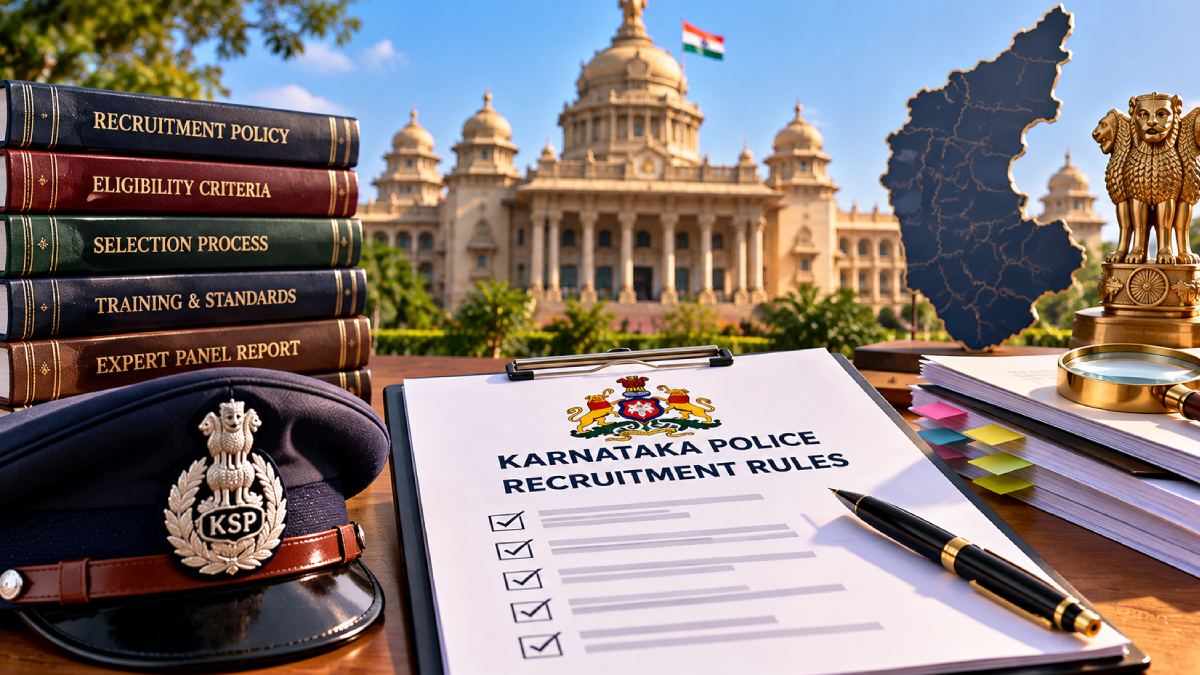
The committees have to assess the department’s current requirements and suggest changes for improving public services, boosting technology and infrastructure, and aligning recruitment and staffing with the changing workload of the police force.
Karnataka Home Minister Priyank Kharge announced the formation of the panels on Monday. The committees, with a retired Director General of Police as the chair, have two months to submit their reports and recommendations.
Three Panels to focus on Police Services, Modernisation and Recruitment
The first committee, chaired by retired DGP R K Dutta, will take into account the quality and delivery of police services available to citizens.
Its areas of review include registration of FIRs, handling of complaints, functioning of police stations, emergency services, reporting of lost property, cybercrime complaints, permissions and certificates. The panel will also explore community policing and ways to make police services more prompt, transparent and citizen-friendly.
The committee will also consider key performance indicators and a mechanism for regularly reviewing the quality of services. It has also been asked to consider a Citizen Charter that could specify service standards, including procedure and expected time for different police services.
The second committee, which will be chaired by retired DGP M N Reddy, will focus on modernisation of the police department.
The review will also cover emergency response systems, control rooms and the 112 service, forensic laboratories, police vehicles, communication systems and other infrastructure. The panel is also to look at artificial intelligence, computerisation and modern hardware in policing.
Training infrastructure is another part of its mandate. The committee will consider police training academies at the state level and regional level as well as current law-and-order equipment and other evolving technology needs.
Recruitment rules and police cadre structure under review
The third committee, chaired by retired DGP Kamal Pant, will focus on the cadre structure of the police department, sanctioned strength, classification of posts and recruitment rules.
The panel will check if the staffing pattern is currently appropriate for the department’s current workload and future requirements. It will review recruitment procedures and eligibility criteria, training and capacity-building requirements.
Promotion opportunities and career progression will also be explored. The committee has been asked to consider career mobility across different levels of the police hierarchy and to ask whether new posts need to be created or existing posts reclassified.
The panel will also look at the structure of police posts in relation to reservation requirements and make recommendations for future recruitment.
The review is going on at a time when police responsibilities are broadening beyond law-and-order duties and cybercrime, digital investigations, emergency response and technology-driven policing are increasingly important.
Kharge said that the government would like human resource requirements to be scientifically evaluated to make sure that the police department has the appropriate cadre structure, recruitment system, training framework and opportunities for professional development.
Reports Expected Within Two Months
All three committees have a two-month tenure to complete their examination and submit their reports to the government.
The three panels will therefore approach police reform from different but connected areas. The first will focus on services provided to citizens, the second on modernisation and technology, the third on human resources, cadre structure and recruitment.
Kharge said modernisation should not be limited to purchasing new equipment. Technology, human resources, training, infrastructure, communication systems and citizen services need to be included when planning police reforms, the minister said.
The recommendations will be considered by the state government after the committees have their reports. Any changes to recruitment rules, sanctioned posts or cadre structures would require the relevant administrative and regulatory processes before they can take effect.
As for prospective police recruits, the third committee’s review could be relevant to future recruitment and eligibility requirements. However, the formation of the panel does not in and of itself alter the existing recruitment process or the recruitment process.
The Karnataka government has also divided the wider reform exercise into three areas, so as to ensure that each committee is able to focus on the operational and administrative needs of the police department. Recommendations made in the next two months are likely to be the basis of any further changes in police services, modernisation and recruitment structures.