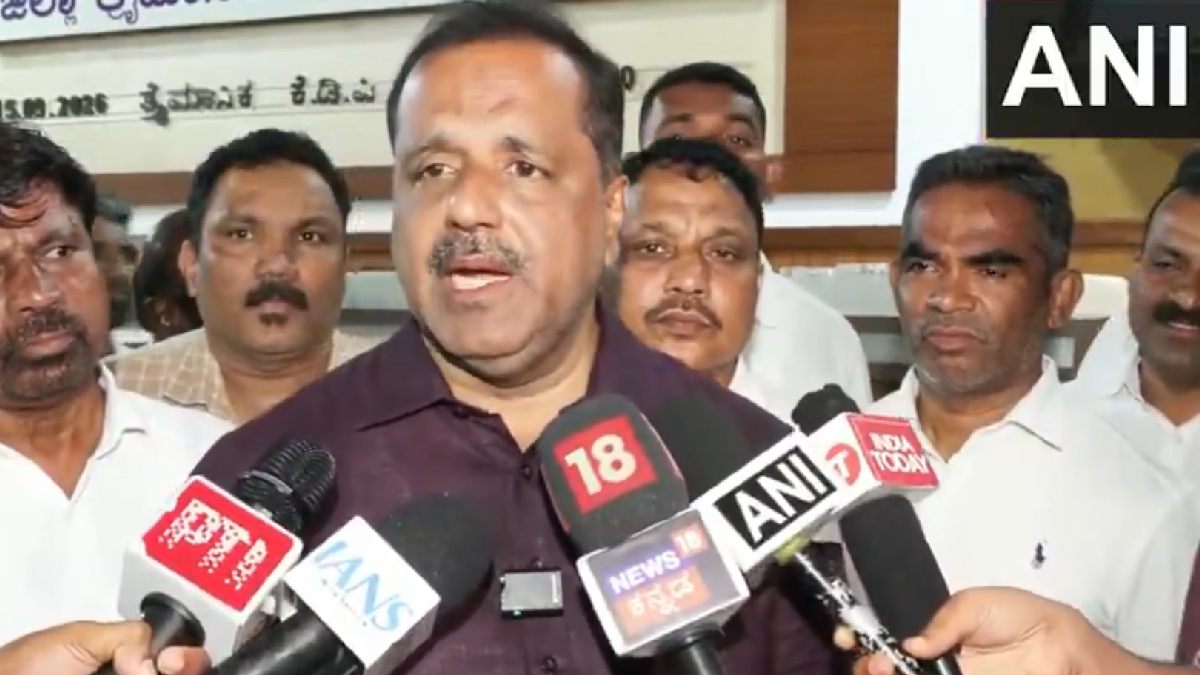
The political dispute over the rendition of Vande Mataram in Karnataka intensified on Tuesday when State Home Minister Priyank Kharge challenged BJP leaders to recite the national song in full without reference to written material. Kharge directed the challenge at Karnataka BJP president BY Vijayendra and senior BJP leader R Ashoka while defending the Congress government's position on keeping official renditions of the song to its first two stanzas.
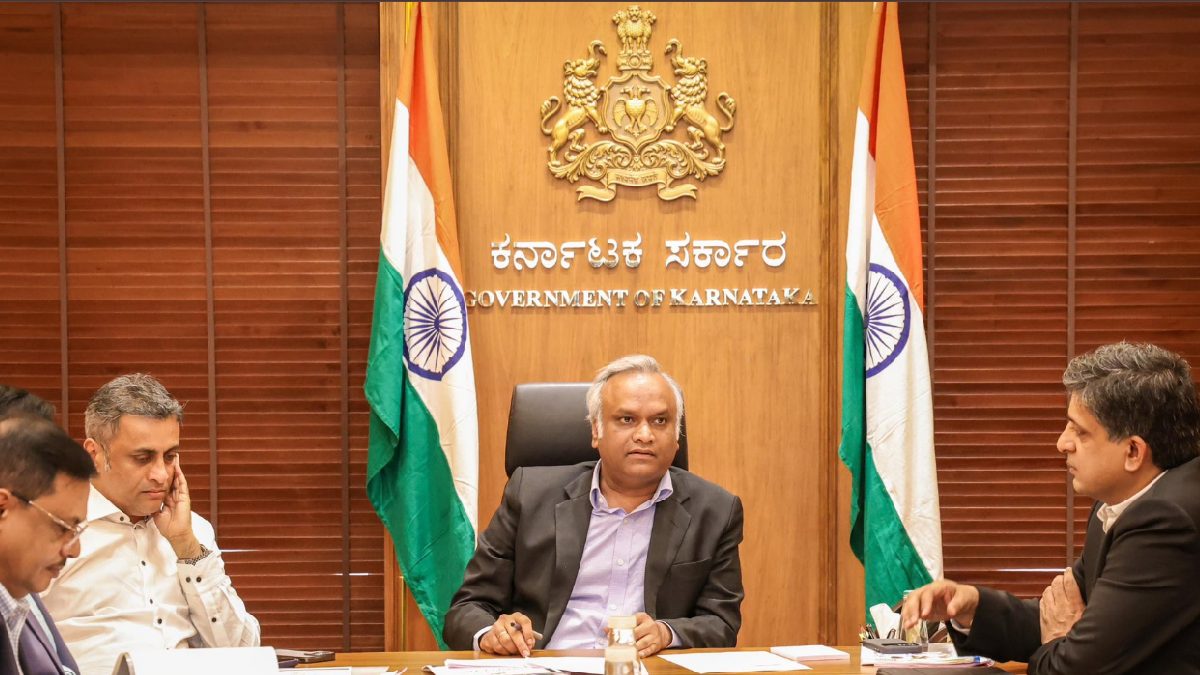
The controversy has now moved beyond political statements and has now taken on a Public Interest Litigation (PIL) filed before the Karnataka High Court challenging the state's decision to restrict Vande Mataram to two stanzas at government functions.
Priyank Kharge Issues Challenge to BJP leaders
Kharge, in response to a gathering of people, asked if BJP leaders BY Vijayendra and R Ashoka could recite all six stanzas of Vande Mataram without help. He asked them to do so without using a teleprompter or reference to a piece of paper.
Kharge then added a personal consequence to the challenge, saying he would resign if the BJP leaders got to the recitation under those circumstances.
The Congress leader also criticized the BJP’s demand for a full version of the song to be made public at the stage of official functions. While claiming that the two-stanza practice is still valid, he referred to leaders from India's freedom movement and cultural history.

"Our forefathers decided that only two stanzas of Vande Mataram will be sung. Now BJP and PM Modi want to sing all stanzas. Are they greater than Jawaharlal Nehru, Subhash Chandra Bose, and even the Nobel Laureate Rabindranath Tagore?" Kharge said.
His remarks have added another layer to the current debate over the appropriate official version of the national song and the circumstances under which its full version should be performed.
Centre's Guidelines on Full Vande Mataram Version
The dispute is linked to guidelines issued by the Union Home Ministry in January 2026 as part of the Centre's observance of the 150th anniversary of Vande Mataram.
According to the guidelines cited in the reports, the full six-stanza version, with a duration of about three minutes and 10 seconds, is to be used for specified official occasions. The guidelines also say that when the National Song and National Anthem are performed together, Vande Mataram should precede Jana Gana Mana.
The Centre has continued its 150th anniversary commemorations during 2026. The six-stanza version was also introduced for Akashvani broadcasts from March.
The guidelines are now a key point of reference in the political debate as to whether the full version should be adopted more widely at government functions.
Karnataka Maintains Two-Stanza Practice
The Congress-led government in Karnataka has maintained its position of using the first two stanzas of Vande Mataram at state government functions, according to the details cited in the ongoing conflict.
According to reports, the state's order makes an exception for programmes attended by the President, Vice-President, Prime Minister, or Governor.
The difference between the Centre’s guidelines and Karnataka’s practice has become the central issue in the political controversy. BJP leaders have criticised the state government’s position, and Congress leaders have defended the use of two stanzas by citing historical context and existing practice.
PIL Filed in Karnataka High Court
The case also entered the legal arena on Tuesday as advocate Girish Bharadwaj filed a PIL before the Karnataka High Court challenging the state’s decision.
The petition challenges Karnataka’s decision to only have the official version in two stanzas and argues that the state government's decision is inconsistent with guidelines from the Union government. It reportedly refers to a letter from the Ministry of Home Affairs on July 9, 2026, about using the official version during mass singing.
The petitioner also raised a constitutional question of whether the state government has the power to prescribe a particular version of the National Song to carry out its duties.
The PIL argues that the subject does not fall under the State or Concurrent Lists of the Constitution and therefore seeks judicial intervention over the alleged conflict between the state order and the Centre's directions.
The High Court’s hearing of the petition would bring to light the legal issues of implementing the respective orders.
Political Debate Continues
The Vande Mataram controversy in Karnataka is now a political fight as well as a legal one. BJP leaders have questioned the decision of the Congress government to continue with the two-stanza version, and Congress leaders have defended the state and wondered why the complete version is still being demanded at government events.
At the heart of this dispute are two separate issues: the Centre's current protocol for the entire six-stanza version on certain occasions and Karnataka's move to use two stanzas at state government functions (with reported exceptions).
Kharge’s challenge to BJP leaders has further fuelled the political fight, and the PIL before the Karnataka High Court has drawn attention to the constitutional and administrative issues raised by the state’s order. The court proceedings and any subsequent directions from the authorities will determine how the matter unfolds in the next weeks.