The Board of Control for Cricket in India (BCCI) has taken strong action against Bengal leg-spinner Rohit Yadav due to age-based discrepancies in his documents and has sentenced the Bengal leg-spinner to a two-year ban. Yadav has to take a two-year suspension after India’s Under-19 side has been picked for the upcoming series against Australia, with the age fraud in junior cricket taking on new life after Yadav and the team selection.
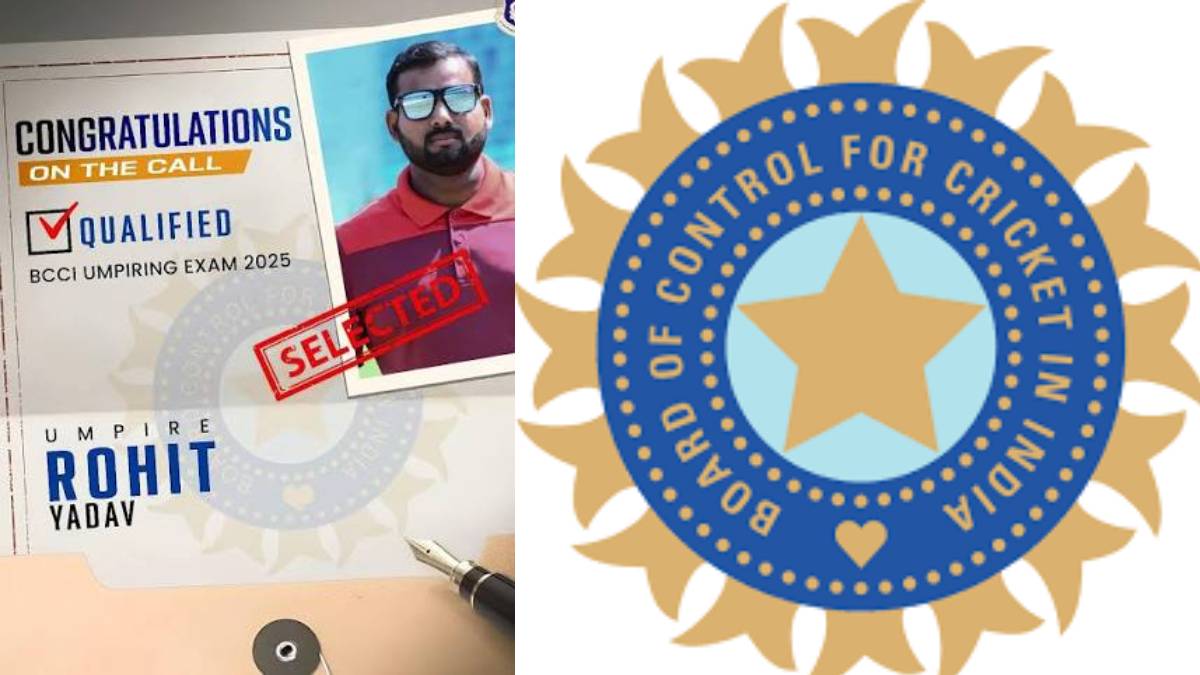
Rohit Yadav, who is from Uttar Pradesh but belongs to Bengal, was recently a member of India’s Under-19 team. He toured Sri Lanka with the Indian U-19 team in July and made an impact with six wickets and also in the final Test won by India. He was picked up for home matches against Australia U-19 in Rajkot and Ahmedabad.
The age discrepancy was discovered in Yadav’s documents while he was on tour in Sri Lanka. According to reports, investigators identified three different birth certificates of the cricketer that had different years of birth— 2007, 2009 and 2010. These were the kinds of records that made people question his eligibility to play in age-group cricket.
His Aadhaar records also had inconsistencies. Records in 2017 and 2020 suggested his birth year as 2006, but a further update in 2021 made it 2009. Yadav's junior teams of the Cricket Association of Bengal (CAB) had already removed him based on the discrepancies and had informed the BCCI about it.
Following the investigation, the BCCI has now decided to ban Yadav from domestic cricket for two years. It has also informed affiliated state cricket associations, and he will not be able to represent teams in domestic competitions during this period of suspension.
Yadav’s case is part of a much wider crackdown by the Cricket Association of Bengal. CAB has ruled 62 players ineligible for registration or transfer for tournaments during the 2026-27 and 2027-28 seasons due to documentation and age-related discrepancies. The large number of players involved has highlighted the scale of the issue within age-group cricket.
Of those, Ravi Kumar is a member of India’s victorious 2022 Under-19 World Cup team. CAB records showed a 45-month discrepancy in his age. Vishal Bhatti, a left-arm spin all-rounder who played three first-class and two List A games, is also included.
CAB has also examined the documentation and age records that players keep. Records have been examined in different age groups, and there are some cases where discrepancies allegedly ran into several years. The exercise aims to make sure that players who are playing age-group cricket meet the eligibility criteria and that opportunities are not taken away from the players who comply with the rules.
Age fraud is a long-term issue in Indian youth sports, but age group competitions can be a gateway to scholarships, jobs and higher level selection for young athletes. India is still experiencing a larger age fraud problem even in several sports, including hundreds of young athletes being disqualified or scrutinized for allegedly falsified ages.
For cricket, the problem is especially profound because Under-19 competitions are designed to provide genuine young players with opportunities to develop before entering senior-level cricket. Any manipulation of age may give an older player a physical or competitive advantage over legitimate age-eligible players.
BCCI has introduced measures to ensure age discrepancies are detected and evaluated, including medical age-assessment for junior players. Yadav’s case and CAB’s decision to take action against 62 players show that the governing bodies are stepping up their scrutiny of player documentation.
Rohit Yadav’s case is particularly intriguing because the discrepancies came to light just a few days before he had played at the India Under-19 level. He had said that his selection for the Australia series had shown that he was progressing through the national junior pathway, but the investigation has resulted in a two-year suspension from domestic cricket.
That crackdown would also serve as a warning to players, parents, academies and officials involved in junior cricket. Accurate birth records and consistent documentation are vital as cricket authorities try to make age-group competitions more transparent.
The BCCI’s two-year ban on Rohit Yadav and the CAB’s action against 62 cricketers are far more than individual disciplinary measures. They also signal a renewed focus on document verification and age integrity in Indian cricket, particularly at the junior level, where selection opportunities can very much influence a young player’s career.