A fresh controversy over Chinese President Xi Jinping’s health has erupted as former Tibetan government-in-exile leader Lobsang Sangay said that Xi Jinping might have suffered two, or possibly three, heart attacks. In an ANI Podcast interview recorded on September 3, Sangay had said that Xi’s recent public appearances, political position, and the wider question of China’s leadership succession were made public in an interview.
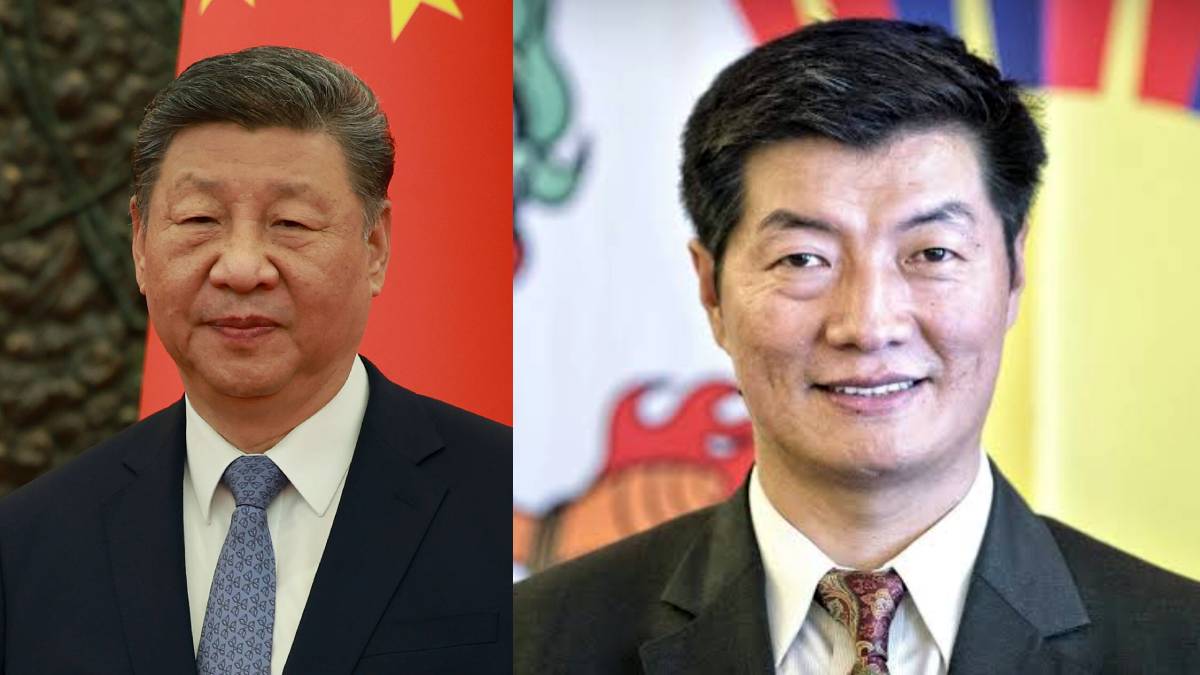
However, the claim is still not verified. There is no independent medical evidence or publicly available confirmation from Chinese authorities that Xi Jinping suffered the alleged heart attacks. Sangay’s comments appear at the moment as an accusation based on information he says he received from a senior former Chinese official.
Sangay said that he spoke for more than an hour with a very senior former Chinese official who said Xi had suffered at least two “heart strokes” and possibly a third. Sangay linked the alleged health problems to what he described as changes in Xi’s appearance, gait and public demeanour.
The former Tibetan leader also observed that Xi had periods in which he was absent from public view. He said those absences, according to Sangay’s account, led to speculation about the Chinese leader’s health. An absence from public appearances alone doesn’t mean a person has had a heart attack or any other medical condition.
And the timing of such a claim has been particularly acute since Xi is still in the middle of the international stage. Xi arrived in Egypt for a state visit after attending the Shanghai Cooperation Organisation summit in Kyrgyzstan and meeting officials and diplomats as part of his activities, and the fact that he is still active at an international level.
On September 4, Reuters also reported that Xi is planning to send a large delegation of Chinese corporate executives to Washington for a summit on September 24. The preparations for the visit have been reported in a way that shows Xi is still involved in China's foreign policy and economy. That does not tell us anything about his health condition, but it is important context in assessing unverified claims about his health.
Sangay’s comments go beyond Xi Jinping’s alleged health problems. In the interview, he spoke about recent changes in the Chinese military and raised questions about the concentration of political power around Xi. He also spoke about what he described as a succession dilemma facing China’s leadership.
China’s political system places enormous power in Xi, who holds the top positions in the Communist Party, government, and military. Because of this concentration of power, rumours about his health can quickly spur speculation about the political future and succession of China's leaders.
The latest allegation is not the first time that speculation about Xi Jinping’s health has been circulated. Such speculation also arose in previous years when the Chinese president reduced his public appearances or appeared physically different. Such reports have frequently lacked verifiable evidence, making it difficult to distinguish genuine information from political rumours.
Sangay’s background also matters in assessing the latest comments. He served as the elected Sikyong (or political head) of the Central Tibetan Administration from 2011 to 2021 and has been a vocal critic of Chinese policy toward Tibet. His political position means that his comments about China's leadership must be seen in the broader political context.
At present, there is no publicly available medical report establishing that Xi Jinping had two or three heart attacks. The accusation is therefore not a fact. Sangay and an unidentified former Chinese official made this claim, and it is not a fact.
But the story should attract international attention because Xi’s health is so closely linked to political stability and succession in China. Any serious health problems that might be significant for the Chinese president could have implications for Chinese domestic politics, military power, foreign policy and international markets.
However, there is no other evidence presented to date that Xi Jinping has had two heart attacks. His continued diplomatic schedule and planned international trips show that he is at least still active, while the medical claim made by Lobsang Sangay is not yet being independently verified.