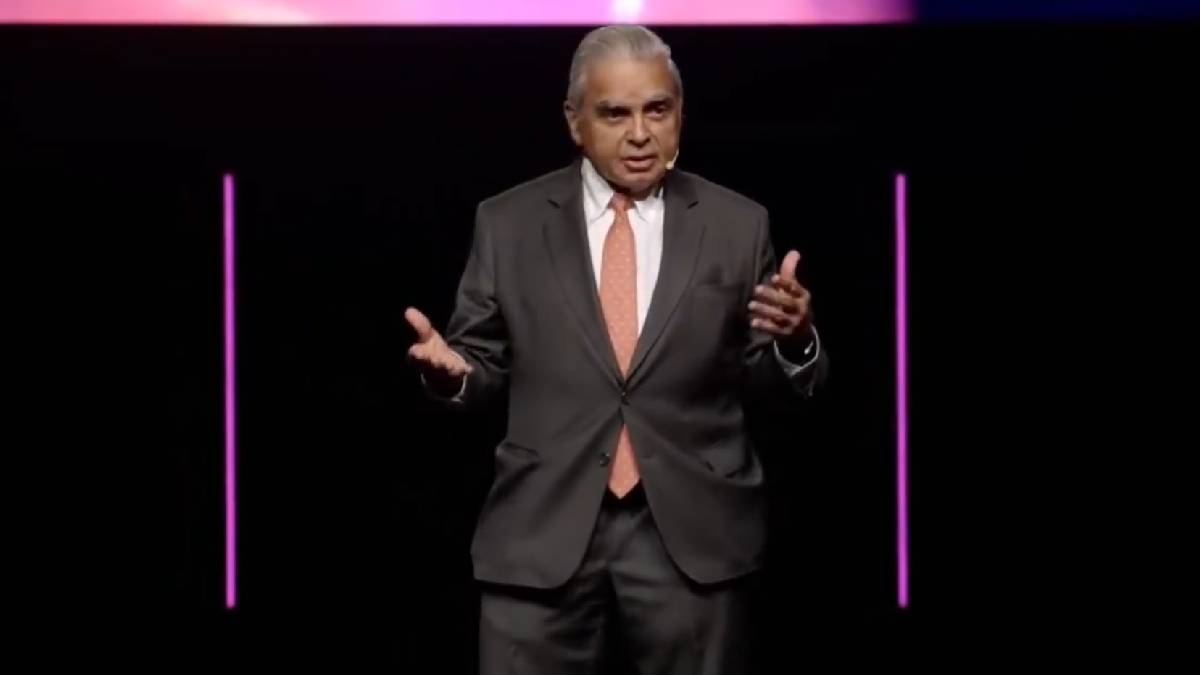
India’s economy could be four times larger than the United Kingdom’s by 2050, according to Kishore Mahbubani, a former President of the United Nations Security Council.
That comment is the result of global interest in India as a long-term economic potential, with India becoming one of the world’s largest economies over the next few decades.
Former President of the UN Security Council, Kishore Mahbubani -
— News Algebra (@NewsAlgebraIND) July 30, 2026
"By 2050, India’s economy is expected to be four times larger than the UK’s" pic.twitter.com/wAovQT7Ny2
“By 2050, India’s economy is expected to be four times larger than the UK’s,” Mahbubani said.
The projection indicates that India’s large population, growing workforce, growing consumer market and increasing role in global trade could significantly strengthen its economic position in the years ahead.
India is already one of the largest economies in the world, and has attracted numerous foreign investments since it has so much potential to grow and develop. Domestic consumption, infrastructure growth, technological development, manufacturing investment and a fast-growing services sector are driving the country’s expansion.
The comparison with the United Kingdom is also indicative of a global economic balance shift. India and the UK have been closely connected politically and economically as well as culturally for centuries now. But the scale and growth potential of the Indian economy are changing the economic relationship.
India’s population and demographic profile are key to its future growth. If education, jobs, healthcare, and skills development are supported, the country has a large working population which it will benefit from, and if education quality, employment opportunities, healthcare, and skills development are good, the country will be better able to grow.
A growing workforce is able to increase production, encourage entrepreneurship, and expand the domestic consumer market. But economists have also said that demographic potential should be supported by job creation and investment in human capital.
India’s huge domestic market is also a major factor behind long-term economic forecasts. Rising incomes and urbanisation are expected to support demand for housing, transportation, financial services, technology, healthcare, education and consumer goods.
The digital economy has shifted India’s economy. Digital payments, online commerce, financial technology and technology-enabled services have opened up opportunities for consumers and businesses as well.
India is also one of the biggest centres of information technology and business services globally. The technology sector is still significant for exports, employment and innovation.
Manufacturing will be another important part of India’s long-term growth strategy. Government strategies to promote domestic production and attract foreign investment will help to expand India’s involvement in international supply chains.
Infrastructure development is also seen as necessary to sustain economic growth. Investments in roads, railways, ports, airports, energy systems and digital connectivity can lower costs, increase productivity and support greater economic integration.
Mahbubani's prediction places India's future growth within the context of wider changes in the global economy. Asian economies are expected to take a larger share of global output as countries develop and expand.
India’s economic growth could also expand its reach in international institutions and global policy discussions. A bigger economy might also provide greater impact on trade, climate change, technology, energy security and international development.
Longer-term economic forecasts are uncertain, however. Economic growth can be affected by global recessions, geopolitical tensions, technological changes, environmental issues and domestic policy decisions.
What India will need to do to achieve strong and sustainable growth involves addressing employment, education, income inequality, infrastructure and environmental sustainability.
The country will also need to ensure that economic growth creates broad-based opportunities across regions and social groups.
The prediction that India’s economy will become four times bigger than the UK’s by 2050 is therefore an estimate and not a certain outcome. The final size of both economies will depend on their future growth rates, inflation, productivity, exchange rates and economic policies.
But Mahbubani’s response is a sign of more confidence in India’s long-term economic trajectory.
The projections also illustrate the changing scale of India’s economic relationship with big developed economies. As India’s economy continues to grow, it will play a larger role in international markets (e.g., in decision-making and even in the stock markets).
By 2050, India's economic position may be very different from its current one. If growth is robust and structural reforms continue, India can be one of the world’s most influential economic powers.
For now, Mahbubani’s prediction has also helped to add to the debates about India’s economic future and the country’s potential to reshape the world economic order.