It means that public transport and cab services are making life easier. They link people to workplaces, homes, and destinations via ease of using. But occasionally minor misunderstandings between passengers and drivers can cause nasty encounters. The past week we posted a story that went viral, where a cab driver and a woman passenger had a dispute about the place of drop and the payment. The incident illustrated the difficulties faced by drivers as well as respect and interaction as common values.
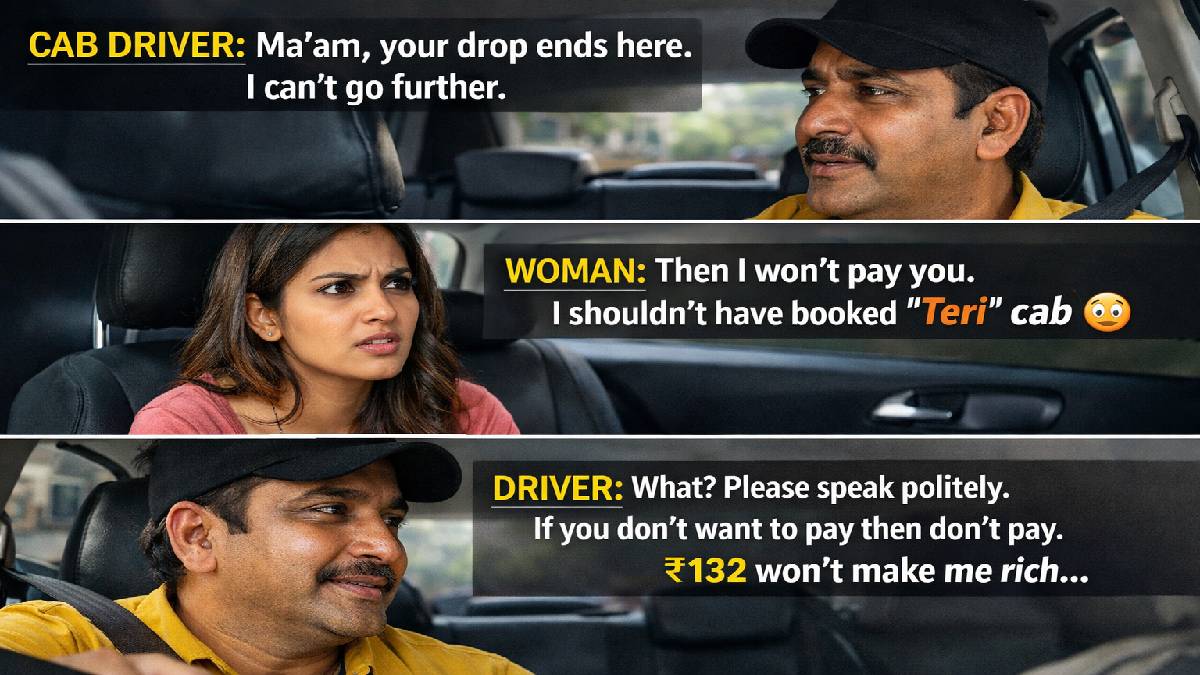
One day, the cab driver told the passenger that she had reached a time and place where she was at drop off and he could not go any further. Road restrictions, traffic rules, or safety concerns may have contributed to this phenomenon. She did not really understand, but reacted angrily instead of understanding the situation. She said she wouldn’t pay the fare and went so far as to say she should not have ordered the cab. The driver asked her to speak politely and got taken aback by her answer. If she didn't want to pay, he said, then she could leave without paying, for ₹132 wouldn't make him wealthy. His words exhibited frustration but dignity; he had a desire for respect instead of money.
CAB DRIVER: Ma’am, your drop ends here, I can’t go further.
— Lakshay Mehta (@lakshaymehta08) February 1, 2026
WOMAN: Then I won't pay you. I shouldn't have booked "Teri" cab 😳
DRIVER: What? Please speak politely. If you don’t want to pay then don’t pay. ₹132 won’t make me rich… pic.twitter.com/4rfa6sBpWz
Cab drivers frequently work long hours, coping with traffic, the weather and the burden of delivering with customers. Their incomes depend on each ride, but more than money, they value being treated with respect. Here, the driver stated the fare amount wasn’t the issue. What was important to him was the manner in which he was spoken to. For drivers, restricted roads or safety concerns are common situations. They can’t always accommodate every request, but they do as best as they can in accordance with rules and limitations. When passengers react or lash out as angry or disrespectful, it increases the emotional strain of their work.
Frustration is just as well-deserved from the passenger’s side. When someone books a cab, for example, they hope to receive an exact drop at the exact spot they go to. If this doesn’t happen, then they don't experience a great deal of service from the cab. But the manner in which those concerns are voiced changes everything. Instead of refusing to pay and/or berating the driver, the passenger could have sought an explanation, or requested other alternatives. The conflict could have been amicably resolved by communicating respectfully. The passenger could, for example, have been inclined to ask whether the driver could stop closer or suggested a different safe spot.
This is not only about ₹132 or a cab ride. It’s emblematic of a bigger problem regarding how service workers interact with other people. Drivers, delivery agents and all the other workers whose jobs are on the frontlines too, whether or not following rules, or dealing with issues outside their control are sometimes scolded loudly. The driver’s line “₹132 won’t make me rich” was effective because it demonstrated that dignity is more important than money. It reminded them that respect is an inherent right, regardless of whose job people have.
For passengers: Treat people with politeness, even when you’re annoyed. Ask for answers instead of reacting with anger.
For drivers: Communicate clearly about limitations and reasons for stopping short of a destination.
For both: Small gestures of respect can prevent conflicts and make daily interactions smoother.
The cab ride that happened last night is a reminder of how fragile human interactions can be. A minor disagreement about drop point became a viral story because it addressed greater issues of respect, dignity, and communication. To passengers, be aware that these are drivers working under trying conditions. For drivers: Good communication has the benefit of preventing confusion. At the end of the day, it gets both parties better when they just talk right and if there is some respect you could say that is the most constructive thing. This incident may have been over a small sum of money, but the lesson is substantial: money is not dignity, and courteous words turn conflict into understanding.