Maharashtra Food and Drug Administration (FDA) has intensified its crackdown on food safety violations across Mumbai, taking action against eateries and seizing food products in violation of safety standards.
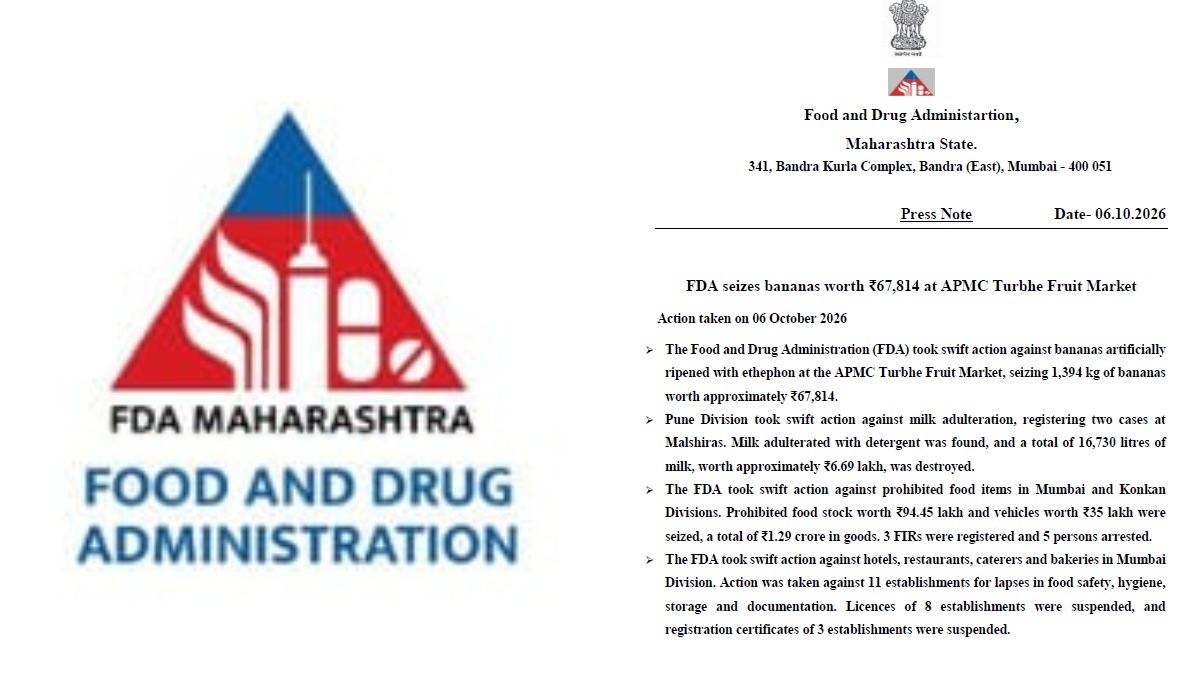
A huge 1,394 kilograms of bananas were seized as they were chemically ripe, the agency said, along with the licences of eight restaurants and three others.
The latest enforcement activity underlines food safety authorities’ increasing attention to product quality and handling in the supply chain and the quality of food that people are buying from them. Besides bananas, officials also seized banned tobacco products and adulterated milk during separate operations. Cases were registered for violations and arrests were also made as authorities intensified their inspection and enforcement.
The seizure of 1,394 kg of bananas is one of the biggest highlights of the latest operation. Artificial or chemical ripening of fruits has long been a concern for food safety authorities as certain substances may be misused to accelerate the ripening process. Natural fruit ripening takes place biologically and unauthorised or incorrect use of ripening agents can cause food safety problems.
And this can be the case: “chemically ripened” is a number of different things and not every artificial ripening method is necessarily as safe. Food safety authorities generally distinguish between permitted ripening activities and prohibited or unsafe chemicals. The seizure allows them to study and determine if the products violated any food safety laws.
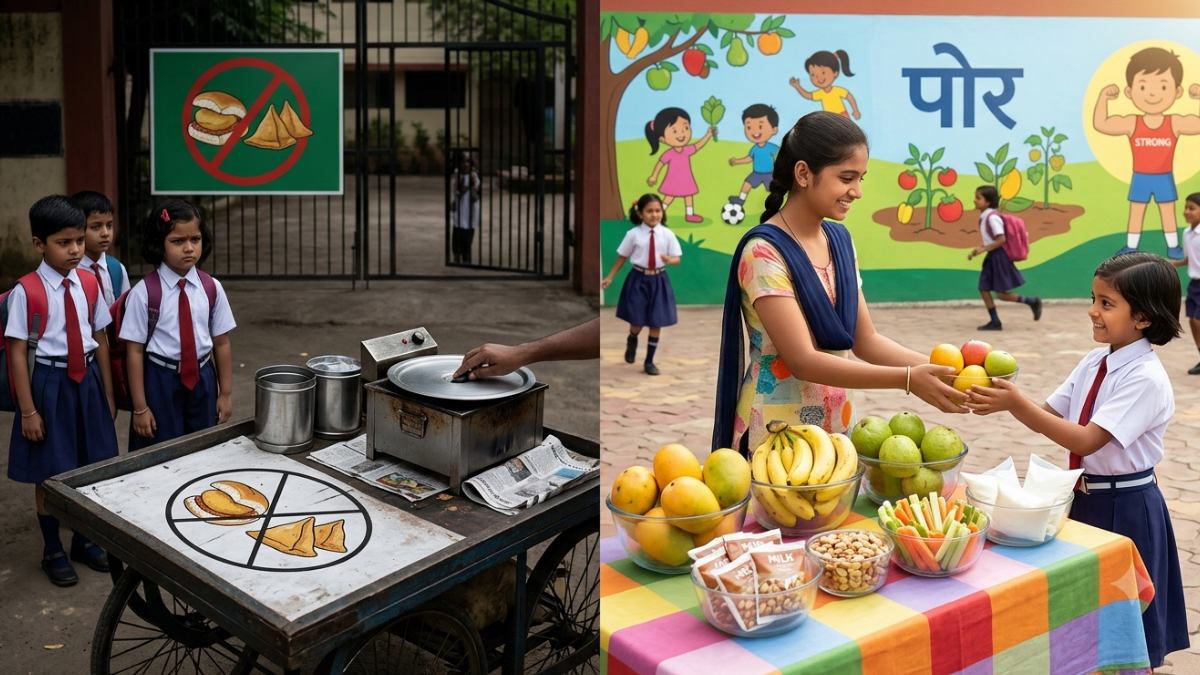
It is important for consumers to keep in mind the quality and condition of fruits purchased from markets and food outlets. Bananas naturally change colour and texture as they mature, and consumers should avoid fruits that appear unusually ripened, have an abnormal appearance or are being sold under questionable storage conditions. But visual appearance alone cannot be reliably used to establish whether a fruit has been chemically ripened.
FDA action extended beyond fruits. They have also investigated restaurants and taken regulatory action against those businesses where food safety inspectors were involved. Eight food outlets were suspended and three others faced different actions. Such actions show that food safety enforcement is not only a function of manufacturing and retail but also of restaurants or food-service operators.
Eateries are required to comply with hygiene, storage and food-handling standards. Violations may put consumers in a position of unknowingly eating contaminated or adulterated food and could undermine confidence in the food service industry. Licence suspension is thus a key regulatory tool when authorities learn of serious or repeated deficiencies.
At separate operations, the FDA also seized banned tobacco products and adulterated milk. The variety of violations in enforcement of the law illustrates the broad scope for food and public health regulation. In particular, adulterated milk can be quite dangerous, as milk is widely consumed by children and adults and is very much part of the daily diet.
The authorities also registered cases and made arrests in connection with separate violations. The responsibility of individuals or establishments involved will be determined after enforcement of the law and legal proceedings will take place. Registration of a case or an arrest does not establish guilt, and the allegations are subject to inquiry and due process.
The increased inspections are happening at the same time that food safety agencies across India are continuing to monitor food businesses and ensure that adulteration is not allowed and the food is made to comply with the best standards. These drives can help spot bad behaviour and motivate businesses to be more hygienic, source ingredients and store them properly and to be in good working process.
In Mumbai and elsewhere in Maharashtra, the latest FDA action also serves to demonstrate the need to purchase food from reliable sources and report adulterated or unsafe practices to the authorities concerned. People should be wary of social media stories about certain foods or ripening methods and not trust them.
Maharashtra | The Food and Drug Administration (FDA) took action against bananas artificially ripened with ethephon at the APMC Turbhe Fruit Market, seizing 1,394 kg of bananas worth approximately Rs 67,814. Pune Division took swift action against milk adulteration, registering two cases at Malshiras. Milk adulterated with detergent was found, and a total of 16,730 litres of milk, worth approximately Rs 6.69 lakh, was destroyed. The FDA took swift action against prohibited food items in Mumbai and Konkan Divisions. Prohibited food stock worth Rs 94.45 lakh and vehicles worth Rs 35 lakh were seized, a total of Rs 1.29 crore in goods. 3 FIRs were registered and 5 persons arrested. The FDA took swift action against hotels, restaurants, caterers and bakeries in Mumbai Division. Action was taken against 11 establishments for lapses in food safety, hygiene, storage and documentation. Licences of 8 establishments were suspended, and registration certificates of 3 establishments were suspended.
— ANI (@ANI) October 6, 2026
The seizure of 1,394 kg of bananas, along with action against eateries, tobacco products and adulterated milk, reflects the scale of the Maharashtra FDA’s latest food safety enforcement campaign. As investigations and testing continue, more action could follow if laboratory results or inquiries establish violations of food safety regulations.
And it is that enforcement of safety standards in food businesses and the supply of food to consumers that is required. Strong enforcement, lab tests and good food choices are the key to public health.