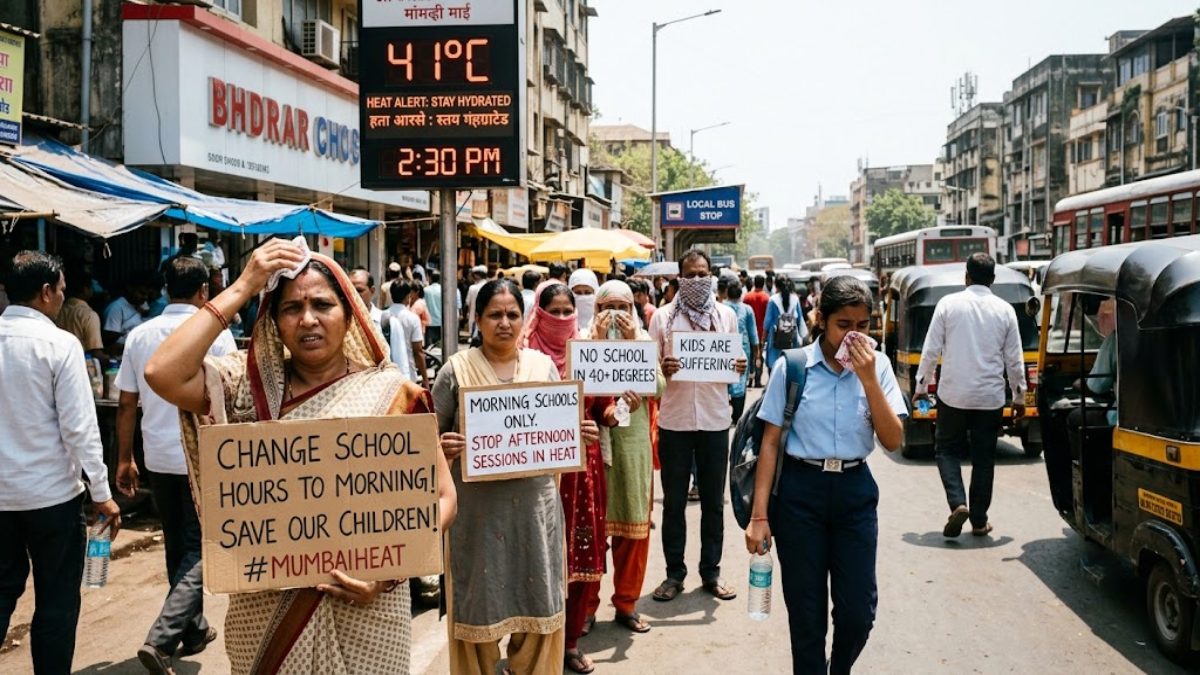
Maharashtra is experiencing unusually high temperatures at the moment, with heatwave-like conditions beginning to touch daily life in districts such as Mumbai. The weather has made commuting a lot harder for millions of people, and parents, educators and local officials are calling for schools to be shifted to the morning.
As local trains form the lifeline of the city in Mumbai, commuters have reported increased discomfort during peak transport times. Because of the number of empty coaches, lack of airflow at railway stations, and the heat at the station (e.g., dense railway carriage in Mumbai and the heat at other places), a lot of people find their daily trips so stressful. Many of the passengers have been worried about heat-related problems, like dehydration, fatigue, dizziness and heat exhaustion.
The heat’s effect on the Mumbai Metropolitan Region has been felt with millions of office-goers going to the train station every day. At afternoon and evening rush hours the train platforms and train compartments are getting more humid. Health experts have warned commuters to stay hydrated, carry drinking water, avoid long hours of direct sunlight exposure and seek shade when travelling.
The heat situation has also reignited school timings arguments. Parents’ groups and education stakeholders have encouraged authorities to hold classes in the early morning in order to protect students from being exposed to extreme heat later in the day. Younger children are more susceptible to heat-related health problems, especially at longer distances to and from school.
The proponents of the idea say that morning schedules would allow students to get their studies done before temperatures are at their peak in the afternoon. Similar measures have been adopted in different parts of India in the past when heat is so intense. And so in the end such a plan could preserve children’s health and keep educational activities running without any major disruption.
Medical professionals have also stressed the risks of long exposure to high temperatures. Heat stress has been reported to have negative effects on concentration, affect productivity and increase the probability of dehydration. Children, elderly individuals and those with health issues are likely to be more susceptible to heat stress. Water should be taken in, light-colored clothing should be worn, fresh fruits should be eaten, and outdoor activities should not be done in the hottest part of the day.
Not only Mumbai but all over Maharashtra have seen temperatures soar (and temperatures have risen above normal levels of the day), and residents are starting to feel they cannot cope with it. Weather conditions have forced officials to issue advisories to protect against heat-related illnesses. Public health departments are also monitoring the situation and warning citizens of symptoms such as headaches, nausea, muscle cramps and fatigue.
Businesses and employers are already adjusting to the weather. Some companies have pushed more flexible work schedules, and others have suggested employees take regular hydration breaks. Outdoor workers (such as construction workers and delivery workers) are in the most difficulty as they work under direct sunlight for long periods of time.
Weather patterns, less cloud cover, low cloud cover, and dry air temperature increases across parts of the state have led to the rise in temperature in different parts of the state. Although weather forecasts could bring some relief in the coming days, residents are warned not to get comfortable with the weather forecast and to be proactive and safe to stay safe, residents should not be relaxed and should keep checking on the weather forecast and keep to their guard and to stay in a safe state, they have been advised in the state's safety precautions, said weather experts.
More so, with Maharashtra experiencing another hot spell in the heat waves and public health, transport as well as education being at the forefront. The demand for morning school hours is a manifestation of the greater awareness of weather change and how to cope with the heat and how to deal with it. An eye on what is happening in the heat can be monitored and brought to the ground to help people cope with the heat.