Assam’s Manas National Park is experiencing a huge conservation success in one of the world’s most celebrated one-horned rhinoceros and a population of more than 50 is now in the park after the species had been wiped out from the park decades ago.
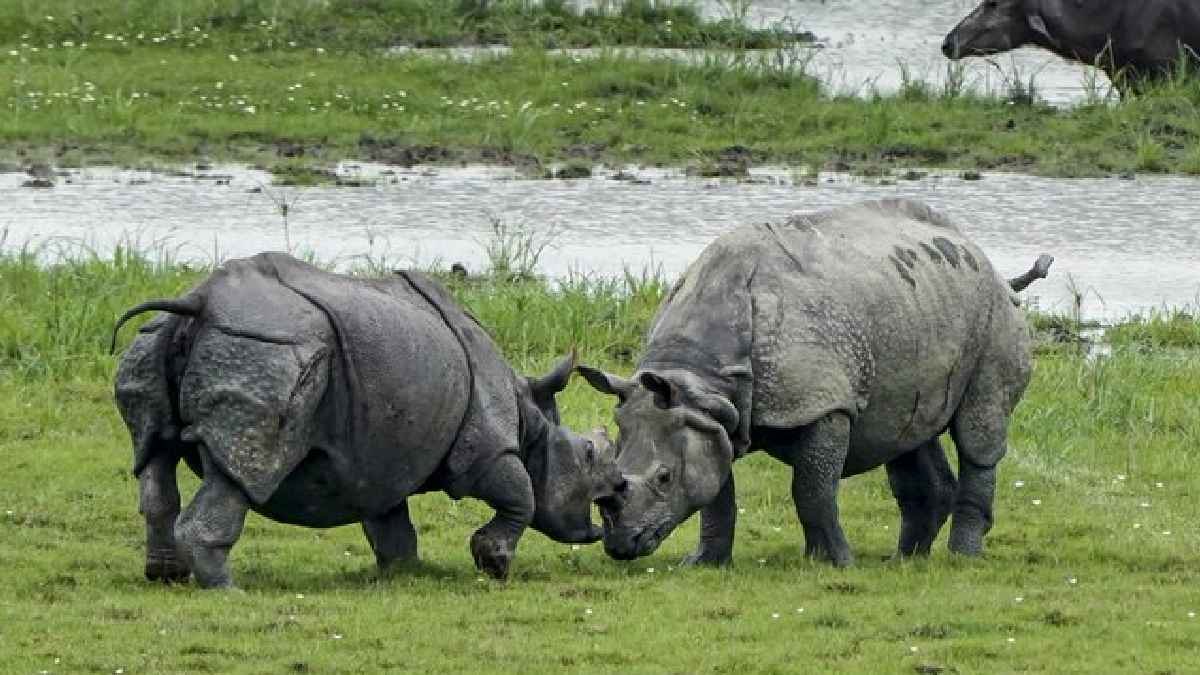
Assam Environment and Forest Minister Jayanta Malla Baruah pointed out the remarkable recovery on Tuesday in a social media post marking World Rhino Day.
“The return of rhinos to Manas is the result of years of conservation efforts to keep the species alive and to increase their number in the UNESCO World Heritage Site,” he said.
The rhino population in Manas had disappeared completely by 1993. Poaching and conflict were among the main reasons behind the decline. At the time they disappeared, the park had between 75 and 100 rhinos.
This is a very big transition for Manas; the one-horned rhinoceros is a landmark in wildlife conservation in Assam.
The greater one-horned rhinoceros, also called Indian rhinoceros, is among the most recognizable large mammals in the Indian subcontinent. Assam is an important habitat for it and protected areas are important for its conservation.
Manas’ recovery also has to be seen in the context of continued protection against poaching. Conservation programmes, habitat conservation, and wildlife protection work to create conditions where rhino populations can recover.
Manas National Park, located in Assam near the Bhutan border, is known for its rich biodiversity. The protected area houses important wildlife species and is part of a larger conservation landscape.
The rhino recovery is especially significant because the species had vanished entirely from the park by the early 1990s. Now there are more than 50 rhinos and that decline has been reversed.
Baruah described the transformation as a journey “from zero to hero” on World Rhino Day in which the long-term conservation work behind the recovery is highlighted; the transformation is an accomplishment and long-term conservation that is not only a big deal for the long term of recovery.
The rhinos’ return adds another chapter to Manas’s conservation story. From losing its entire rhino population to once again being home to more than 50 animals, the park shows how wildlife protection is so successful in bringing back species that have lost their numbers and species that have been on the decline for years.
And the development also has an important meaning for Assam as a state for wildlife conservation. The increasing number of rhinos in Manas is also a factor for Assam, as a state of the one-horned rhinoceros, and the wildlife conservation efforts have to be carried out in its territory.
The current population figure is a sign of hope on World Rhino Day that conservation efforts can produce results when wildlife protection and habitat restoration are maintained over the long term.