A scandal of a shocking welfare scam was revealed where thousands of fictional disability pension beneficiaries were created in Jhalawar district of Rajasthan. The fraud has shocked authorities around the country because it was so massive almost two in three of the town’s residents were indicated on paper as “disabled,” prompting intense scrutiny of how government money was siphoned off from true beneficiaries.
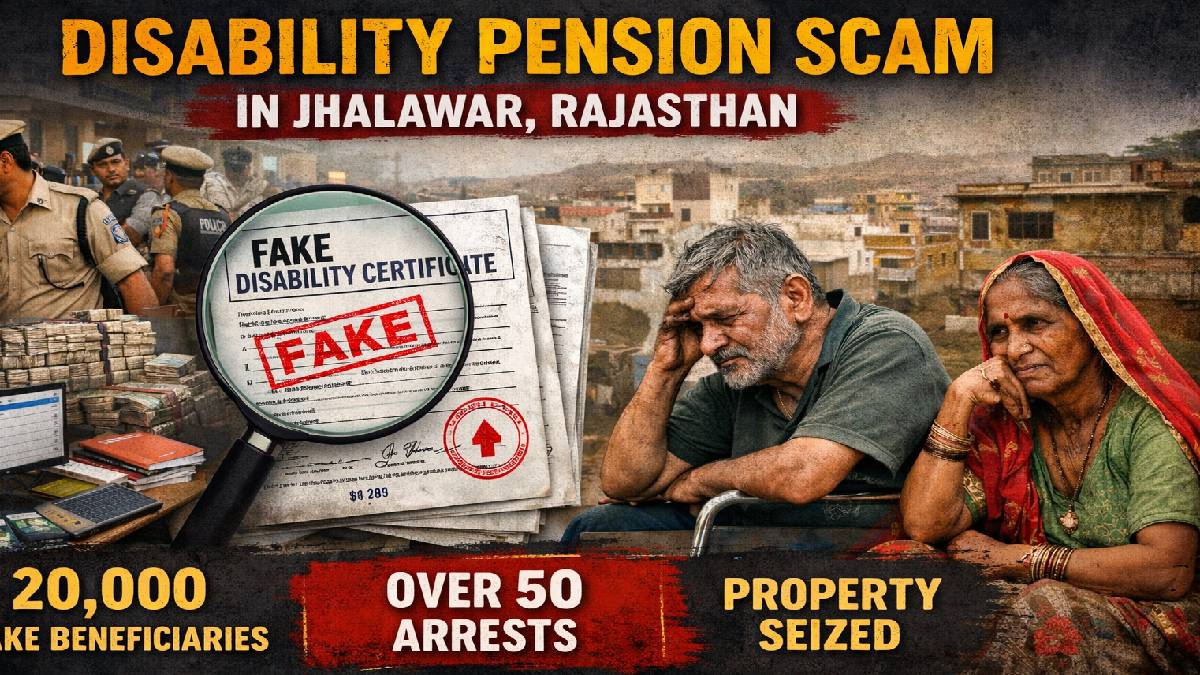
Jhalawar has a population of about 30,000. But investigations found nearly 20,000 people were getting disability pensions. That meant approximately 66 percent of the town was officially registered as disabled, a figure that became immediately suspicious.
The scam involved a mixture of forged papers and digital tricks, the authorities said. Fake medical certificates appeared to demonstrate a disability. The e-Mitra operators are accused of fabricating entries in the system. Local verification approvals were misapplied to justify the fictitious claims. As a result of these operations, thousands of fake beneficiaries became attached to the pension list, siphoning off government funds intended for the impoverished and truly disabled.
The scam was exposed in a police operation in Jhalawar. Investigators discovered the fraud was not limited to disability pensions but spread to other welfare schemes. The network was dismantled by a special drive known as Operation Shutdown.
- Arrests: More than 50 people have been detained.
- Property seizures: Property believed to have been acquired illegally is being attached.
- More look: Law enforcement is now attempting to verify whether similar scams occur in other districts.
Most deeply, though, the most tragic aspect of this scam is that well-meaning disabled citizens were denied their due pensions. Money intended to help those most in need ended up in fraudulent accounts, leaving many broke without assistance.

The Jhalawar disability pension scam was one of the largest welfare frauds revealed in Rajasthan. With almost two-thirds of local people inaccurately identified as disabled, the case points to serious gaps in verification mechanisms. While they’re working on investigations, the officials are seeking to get the government’s aid to those genuinely in need. The incident is a useful lesson on the need for strict monitoring and accountability in welfare schemes.