A video of Prime Minister Narendra Modi holding the hand of a young girl has generated a heated debate on social media that has heated social media as the interaction seemed to people on both sides of the line of thought: whether Modi’s hand holding her hand appeared to be comfortable and if the interaction was comfortable or felt too personal in nature or not and if the interaction was awkward or there were questions about personal boundaries raised. The video has stirred up a heated debate in the eyes of the public on social media from the contrasting perspectives of the Prime Minister and the people not only been seen as well as the opposition to Modi supporters of Modi.
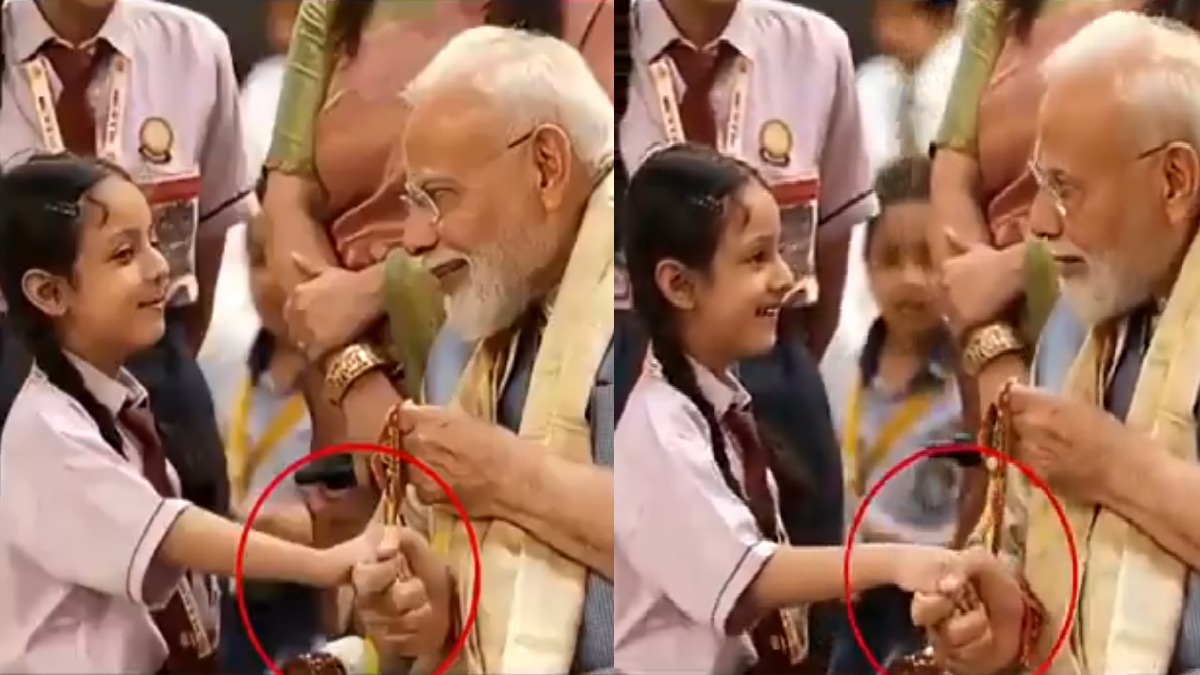
In the video the girl, who wears a school uniform, stands next to Modi as he holds her hand. She appears to smile and Modi is engaging with her warmly and with a warm smile as well. Some viewers have seen her hand in various places making small movements and interpreted it as a move to get away or distance.
Those reactions have drawn criticism online, with some people arguing that interactions with children and public figures should always take into account consent, comfort and personal space. She was not completely comfortable with the physical contact (criticisms have been made of her), and adults, particularly influential public figures should be more sensitive in interacting with children in public.
At the same time, Modi's supporters have been vehemently disputing that interpretation. They say that the short clip being circulated doesn't necessarily show the whole interaction, and that isolated moments can be viewed differently than they were in their original context. It is because of this view that the girl's smile and her engagement in the conversation across the board and her smile that she appeared to be having fun with them, as if the girl was a good fit into it.
The dispute once again illustrates the influence of short-form video on public discourse. Just seconds of footage can spread quickly through social media platforms and create strong reactions before the viewer’s eyes get inside the footage or know what happened before and after the moment they’re watching in the video.
The debate also reflects the polarising online debate of Modi. Supporters and critics often look at the same images at a different political level. A gesture that one group might feel friendly or affectionate may be seen by another as wrong or awkward. So even regular public interactions can be at the table and then become a political battle.
Children’s personal boundaries are also a question of concern in this area. Although adults and children have varying political beliefs, in general adults think they are supposed to respect the child’s comfort and freedom. But it can be difficult to know which individual child is actually uncomfortable from a short video alone and how facial expressions, body movements and the context are interpreted in such a video.
Modi has been frequently photographed and filmed interacting with children at public events, schools and official events. These instances of his informal and accessible nature are often cited. His interactions with young people have also been a common facet of his public appearances and are also part of his larger public image.
The girl is visibly uncomfortable and tries to pull her hand back, but this "creep" deliberately refuses to let go. He’s completely ignoring her boundaries.
— Bhavika Kapoor (@bhavi_kap) August 31, 2026
Shameless pathetic creature Modi is. pic.twitter.com/J7hWRO6oUe
But the latest viral clip illustrates just how quickly one interaction can create competing narratives. Although critics have questioned whether the girl's movements show discomfort, supporters say the footage has been interpreted in a different way so as to paint a negative image of the Prime Minister.
The episode is another example where context is of utmost importance for the evaluation of viral videos. Social media users often encounter clips without knowing what is going on with it, and there is little to nothing to draw conclusions from a single sequence of images. What seems significant in a few seconds can take on a whole different meaning when viewed in the context of longer recordings.
So the debate will be polarised along familiar political lines as the video is now circulating. Rather than drawing a conclusion about the girl’s feelings from a few lines in a video, the discussion highlights the need to distinguish observable facts from assumptions about someone’s inner state. It also captures the larger debate about what boundaries children have and what public interactions with minors can be about online.