The recent explosion and fire accident at the Mangalore Refinery and Petrochemicals Limited (MRPL) has brought a lot of heated discussion in coastal Karnataka and local residents are in a discussion about a warning from the venerated Daiva (spirit God) who is worshipped at the Nellidadi Guthu shrine at Bajpe.
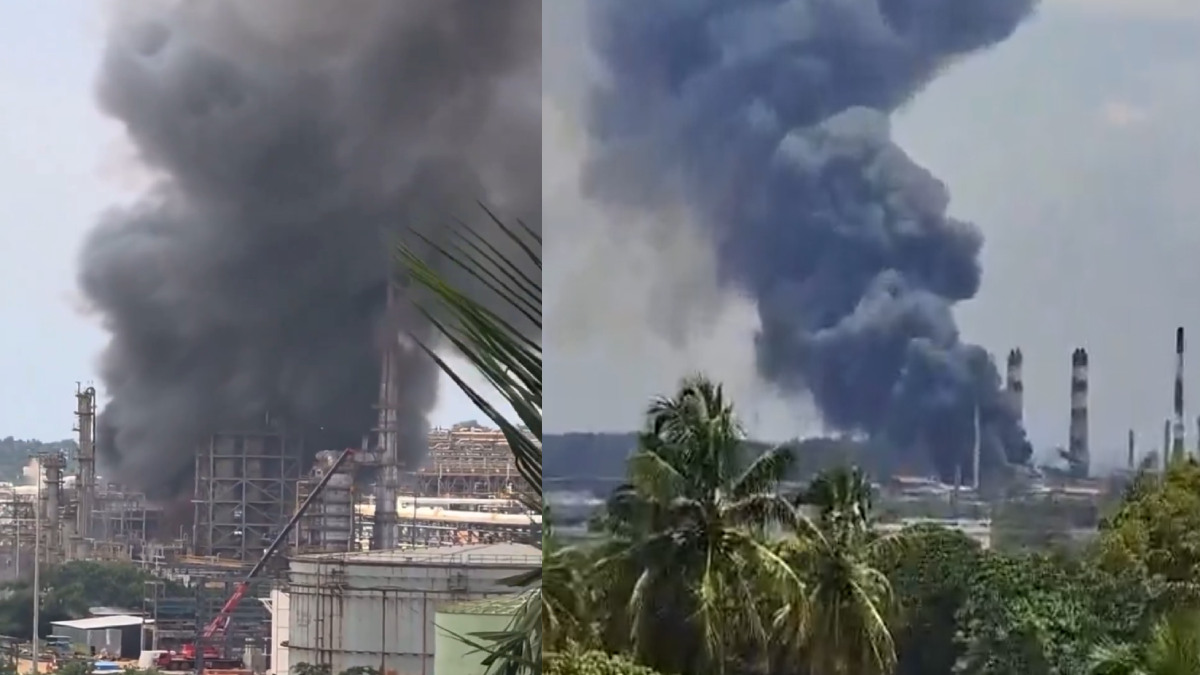
The technical causes of the explosion are still under investigation by the authorities, but the people of the area and those around are recalling a prophecy of Kantheri Jumadi Daiva, which they believe could be seen as a model of the incident.
Nellidadi Guthu, which is located in Mangalore Special Economic Zone (MSEZ), is regarded as one of the oldest and most respected Daiva worship sites in Tulunadu. It is believed to have a history of more than 800 years and is a cultural and spiritual centre for local people. As a place of faith, justice and divine direction, the shrine has been an important place for the traditional Daiva worship practices that still form part of coastal Karnataka.
The current discussion stems from some statements made by the Daiva a few months ago. According to devotees and local residents, Kantheri Jumadi Daiva was against restrictions on worship activities at the shrine and warned of what would happen if worship at that shrine was disrupted. According to devotees, he said at a ritual gathering that if the shrine was destroyed or the land was not returned to the shrine, fire would rain down and a decision would be made within a year. Since the MRPL explosion, believers have interpreted that as a fulfilment of that warning.
The problems in Nellidadi Guthu date back to the establishment of Mangalore Special Economic Zone in 2006. While acquiring land for industrial development, thousands of acres across villages including Bajpe, Bala, Kuthethur, Permude and Kalavaru were put under the project. Large areas of agricultural fields, houses, educational institutions, places of worship, sacred groves and Daiva shrines were affected by the acquisition process.
Despite the immense development, the Nellidadi Guthu Daivasthana remained standing. Relocation or removal of the shrine was opposed by devotees, and it was eventually unsuccessful, local residents say. Another attempt to clear the area was unsuccessful in 2016, and district authorities intervened and let the shrine remain, and worship continue.
The issue came back to us in 2025 when restrictions were imposed on devotees who were seeking access to the shrine for their daily rituals and traditional offerings. There were protests, public criticism and efforts to preserve the shrine. As a result, a small number of devotees were allowed access through special passes to worship under certain conditions.
The real reason for this debate is that the MSEZ region has had a lot of large-scale fires in the past. In 2021, a major fire broke out in a factory in the industrial zone and caused a lot of damage, as reported. If there is now another major fire at MRPL and the Daiva’s displeasure is felt in this way, then some devotees see this as a sign of the Daiva’s hand in all of this.
There is no official evidence for the MRPL explosion to be related to any spiritual or supernatural reason. Research into the accident is being carried out by the authorities, and experts generally consider such industrial accidents to be technical, operational or safety-based. But the beliefs of Kantheri Jumadi Daiva still hold strong among many people living in the coastal belt where Daiva worship is a fundamental part of culture and tradition.
And as discussions continue, devotees and villagers are once again calling on authorities and company management to permanently safeguard the land of the historic shrine. This has reignited a wider debate about how to balance industrial development and the protection of cultural, historical and religious heritage in the area.