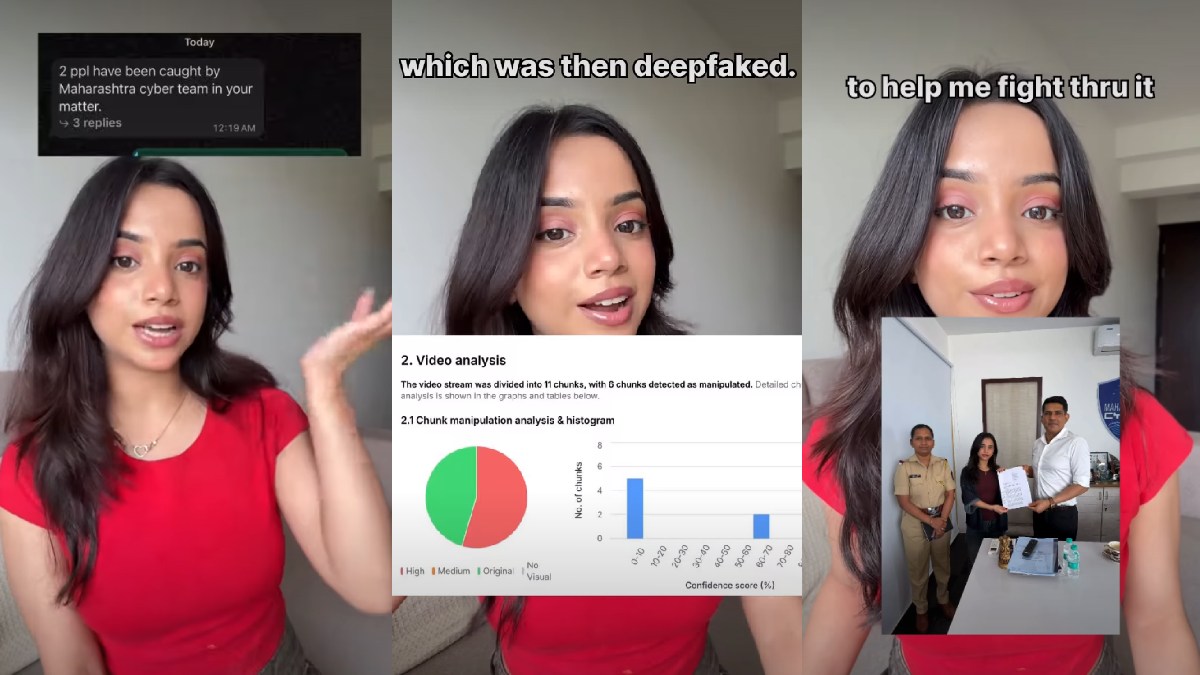
A 22-year-old content creator Muskan Karia has spoken about the emotional trauma she experienced after an AI-generated deepfake video portrayed her in a compromising position. The video looked convincing enough that she had to tell people close to her it was not real, she said. She has contacted the authorities and Maharashtra Police have arrested people associated with the creation of the fake video.
Karia’s account is one of the most prevalent dangers of increasingly sophisticated artificial intelligence tools. Deepfake technology can affect photographs, videos and audio to provide realistic-looking stuff that can be hard to recognize as real. For victims, the consequences are far more than just the internet; they also have to contend with their reputation, relationships and emotional health and safety.
## Muskan Karia Recalls Receiving the Deepfake Video
Karia said she came across the fake video through an Instagram message in late May, when she was searching for a new home. The message contained the video and asked her, “Is this you?” She was deeply shocked at how realistically the manipulated footage appeared.
The problem was even more difficult when the video reached people she knew personally. Karia had to tell her friends and family members that the person shown in the video was not her. The creator described the experience as particularly painful because she had to prove her own innocence over content she never created.
Karia has also said she stayed silent about the incident for nearly two months. She said the video had already been shared among several people. That she took that long to talk about it seems to have been partly motivated by a desire to raise awareness about the dangers that people who are manipulated by AI have.
## Original Footage Was Allegedly Manipulated Using AI
Karia said the source material used in developing the deepfake was an ordinary video she had already shared with subscribers. The original footage contained nothing wrong, she said, but was manipulated to produce the fake content.
After seeing the video, Karia discussed the matter with her lawyer. She kept the original footage and the manipulated version before bringing it to the Cyber Cell. Both versions were submitted in the complaint so investigators could investigate how the original material had been altered.
An FIR was registered. Karia said that the investigation eventually led to police tracing and arresting those who were suspected of creating the fake video. She also said that Maharashtra Police gave her a certificate that the video was a deepfake.
The development illustrates how victims of manipulated digital content can benefit from saving the original files and reporting incidents rather than deleting the material. Original footage, screenshots, messages and other digital evidence can maybe help investigators to understand how fake content was created and circulated.
Family Struggled to Understand That the Video Was Fake
Karia was also describing it to her family emotionally. She had to show them the material and explain how the original video had been manipulated, she said.
Karia recalled that her father saw the content while she tried to show that it had been digitally altered. She maintained that the original recording was harmless and had only been available to subscribers before it was used.
Her story is emblematic of deepfakes’ big problem: the technology does not have to convince millions of people to do serious damage. A fake video can have big repercussions if it’s believed by even a small circle of family members, friends, colleagues or acquaintances.
Karia Highlights the Challenges Faced by Other Victims
Karia said she had legal help, family support and other resources at her disposal to pursue the case. She said many other victims of deepfake abuse might not have the same support or financial resources to challenge the perpetrators.
The creator’s comments highlight the more general social and psychological impact of digitally manipulated content. Victims are embarrassed and harassed, facing social judgment and anxiety even when they have done nothing wrong. The rapid spread of content on social media can make it more difficult because screenshots and copies may still be circulating long after the original post has been removed.
Karia urged people to consider the consequences of creating or sharing harmful material. And her message is about how AI technology, and digital consent, need to be better understood.
Maharashtra Police Action Offers Hope to Victims
Karia thanked Maharashtra Police and her lawyer for helping her pursue the case. She also acknowledged her fellow creator Ashish Chanchlani for supporting her through the difficult period.
Her decision to speak publicly has received warm support from social media users who were also very supportive of her decision and praised her for speaking out about such an extremely difficult and emotional experience in public.
This is what Karia did with her story so that the digital literacy and awareness of deepfake technology are going to be more important; she told us about how to be aware of the need for digital literacy and deepfake technology.
The case serves as an example that the videos being posted online in real life are not to be taken for granted. Users of AI-generated content will have to be more cautious about believing in or sharing it as it is becoming more sophisticated and with social media, people may need to be more conscious of the fact that the content is not real.
Preserving evidence, seeking legal advice and reporting the material to the appropriate cybercrime authority is critical for people who are targets of deepfake content. Karia’s case also serves as evidence to us that we need to have a support system when we cope with online abuse.
The incident has once again raised questions on how society should respond to the misuse of artificial intelligence. AI has many benefits in creative and professional areas and its misuse to fabricate intimate or compromising content can have a severe impact. Karia’s experience is thus not just an individual experience of online abuse but the signposting of the ever-more pressing problems in securing identity, consent and dignity in the era of generative AI.