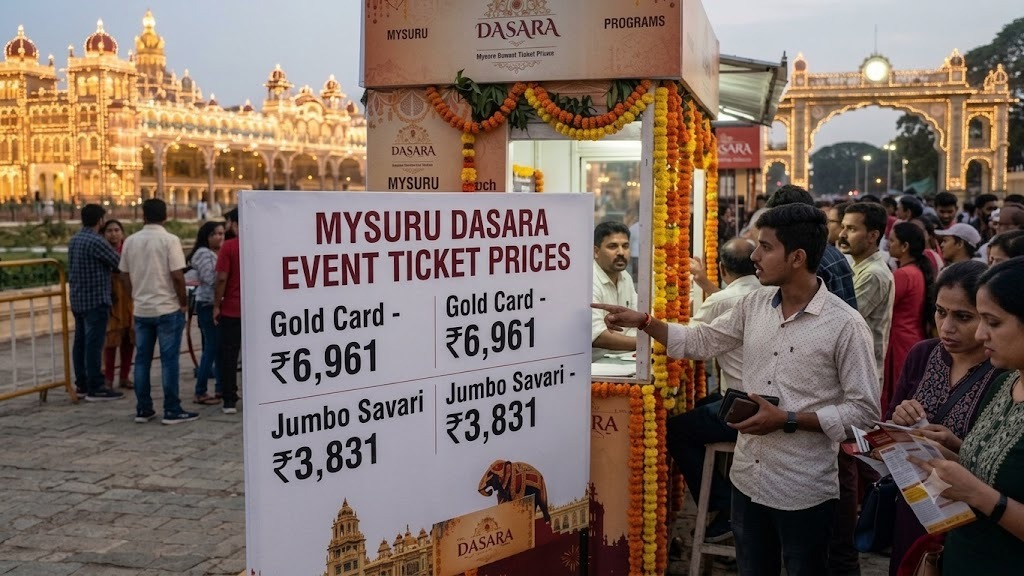
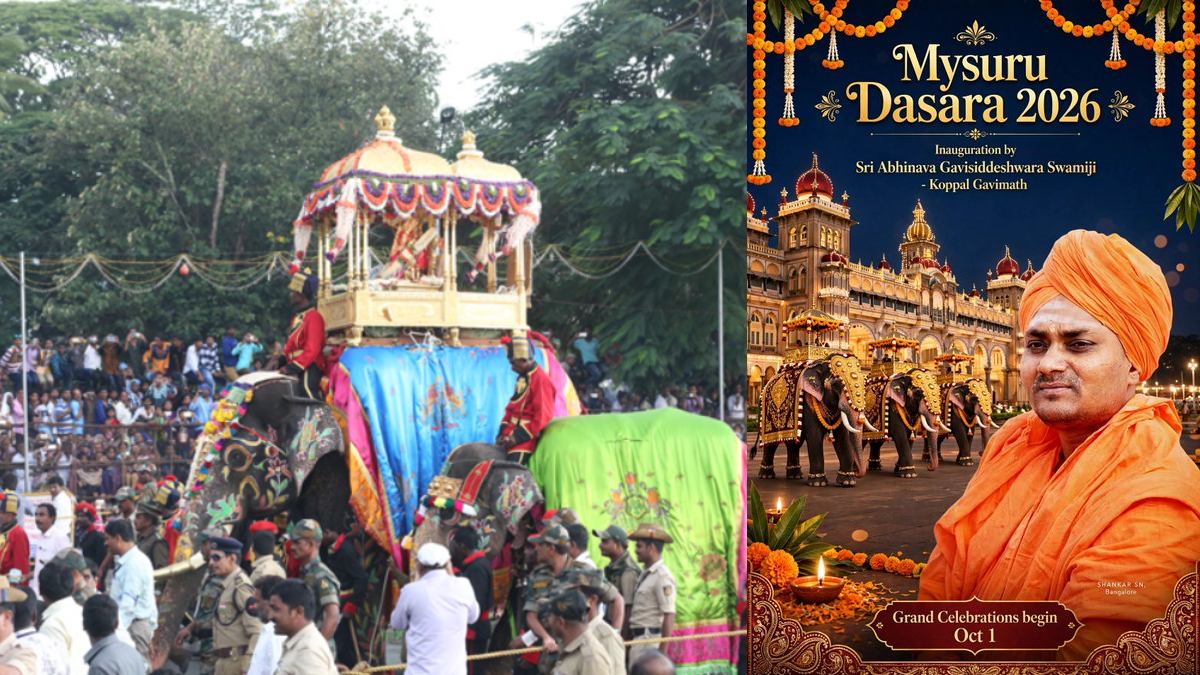
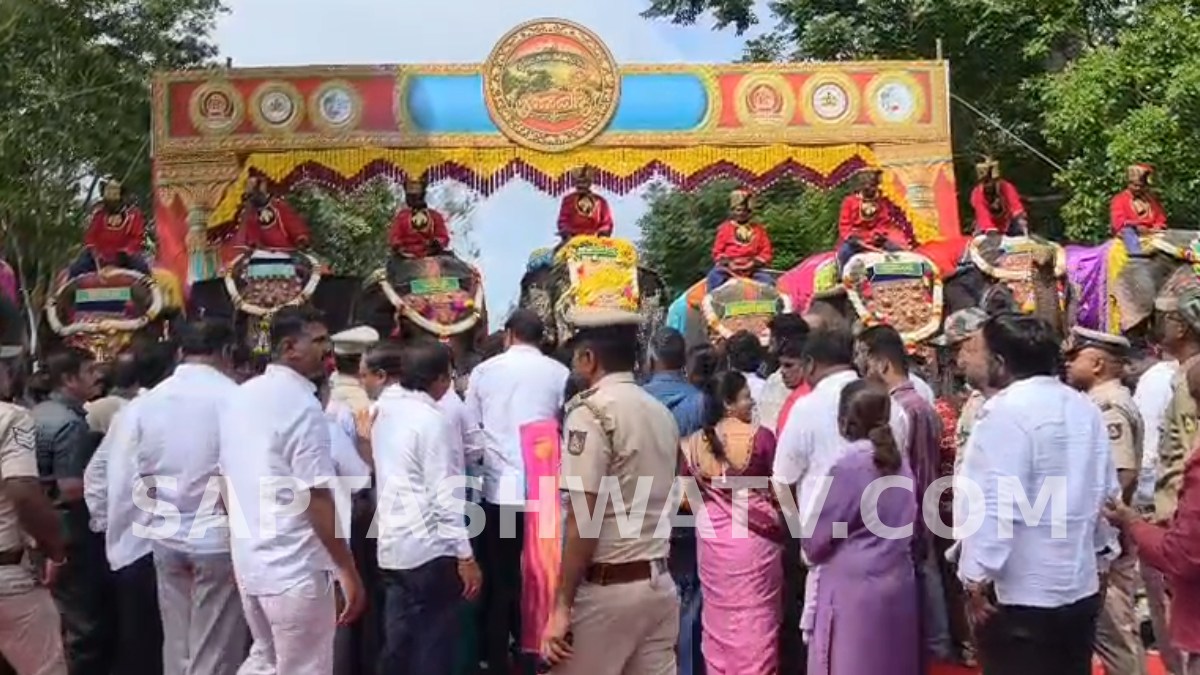
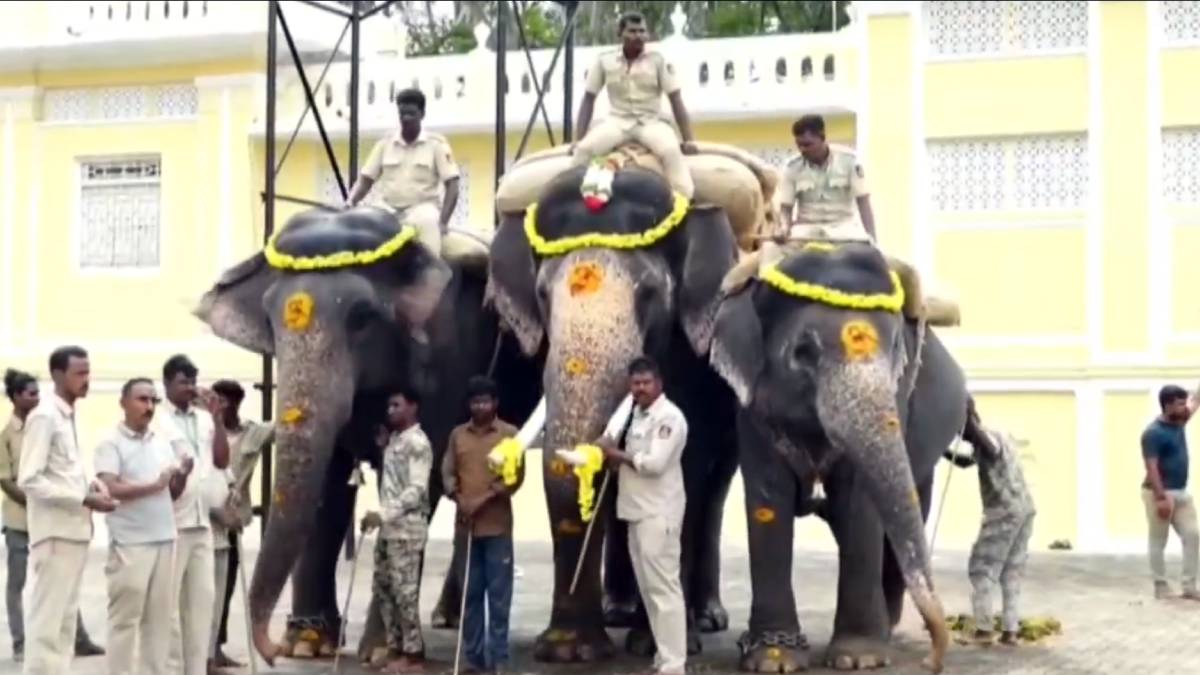
The countdown to world famous Mysuru Dasara 2026 has started, and preparations are also going on at the palace city of Mysuru. The elephants that are the main attraction of the Vijayadashami Jumboo Savari have already arrived at the Mysuru Palace and are in training and rehearsals.
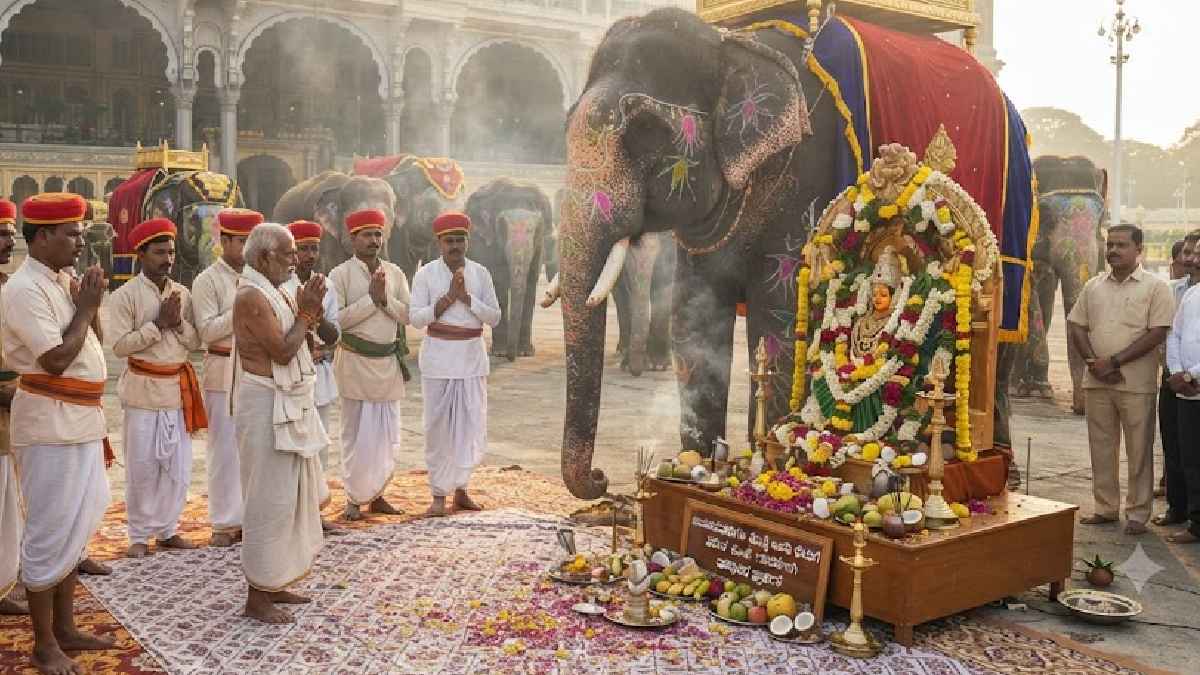
In the midst of all these preparations, mahouts and caretakers who work with Dasara elephants have made a special puja to the forest deity to seek the blessings of the elephant troop and everyone involved in the grand procession.
The ritual reflects the long-standing relationship between the Dasara elephants, their handlers, and the forests from which the elephants are brought to Mysuru each year.
A traditional ritual before the grand procession
Mysuru Dasara is not limited to the grand Jamboo Savari and cultural celebrations. Many traditional and religious practices are associated with the festival and the preparation of the elephant troop.
Mahouts and caretakers who spend so much time with the elephants in the forest and Mysuru observe traditional practices related to their relationship with the animals and their ancestral beliefs.
The special prayer to the forest deity is part of these traditions. The ritual is intended to seek blessings for the elephants, their handlers, and the successful completion of the Jamboo Savari.
For the mahouts, the relationship with the elephants extends beyond the Dasara festival. They know the animals’ habits, food needs, behaviour and individual characteristics and are very concerned with them and are involved in their care and training.
Mysuru Dasara 2026 dates
The official inauguration of Mysuru Dasara 2026 is scheduled for October 11, while the Vijayadashami Jamboo Savari will take place on October 21.
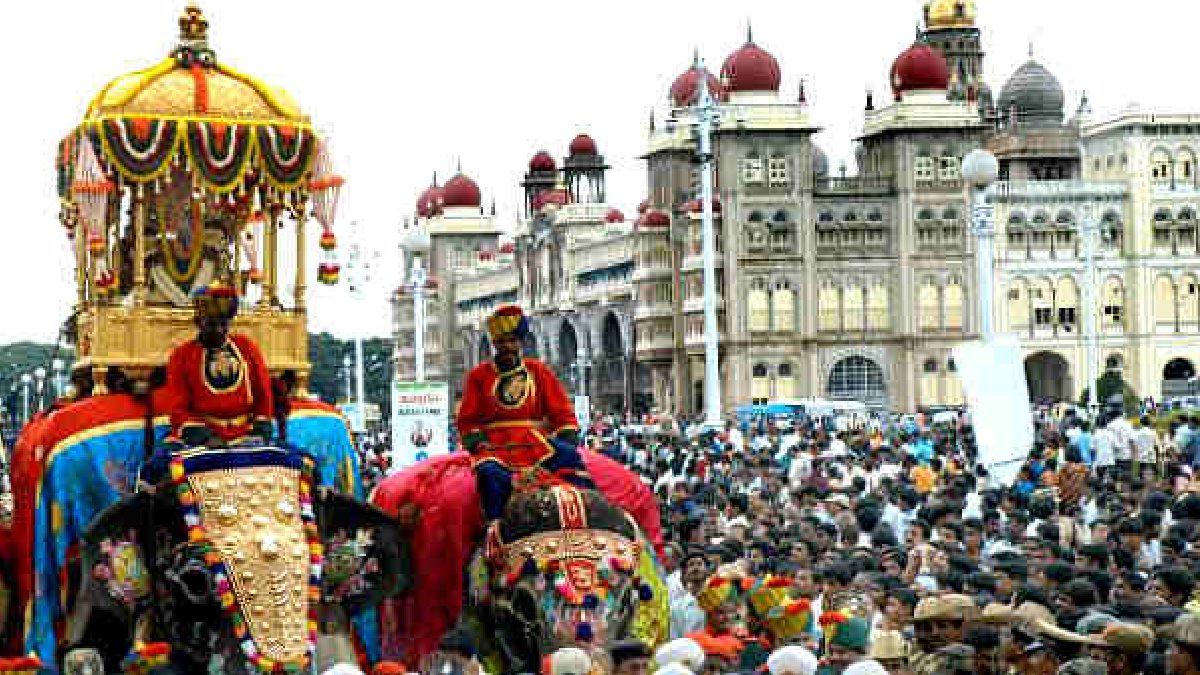
On Jamboo Savari day, the elephant troop will lead the grand procession from the Mysuru Palace towards Bannimantap. Cultural troupes, tableaux, police bands, and other participating groups will also be part of the procession.
The elephants are also the focus of hundreds of thousands of people to be gathered along the route, so more than ever before the safety and discipline of the elephants are concerned about their safety and discipline.
Elephant troop undergoes training
A long tradition has been to bring elephants from forest areas to Mysuru and prepare them for the Dasara procession.
The elephants are gradually introduced to the palace environment and the conditions they will face during the festival. Training sessions take place on palace grounds, and the elephants get used to the crowds, sounds, movement, and other aspects of the procession.
The animals also receive specialised food and regular health monitoring during their stay in Mysuru. Veterinary teams, forest officials, mahouts and caretakers are also engaged in the day-to-day care.
The first batch of elephants for this year's Dasara was traditionally welcomed at Mysuru Palace on August 26. The elephants were received near Jayamarthanda Gate with traditional rituals, while fruits and other food items were offered to them.
Major change involving Abhimanyu
One of the major changes in this year’s Jamboo Savari concerns Abhimanyu, who carried the golden howdah for six consecutive years.
From 2020 to 2025, Abhimanyu carried the approximately 750-kg golden howdah containing the idol of Goddess Chamundeshwari in the Vijayadashami procession.
But the 60-year-old elephant will not carry the golden howdah this year. According to the information provided, Abhimanyu has been given a break as part of forest department rules for the age and participation of elephants.
The process of selecting another elephant to carry the golden howdah is going on. This has been an addition to the preparations for the Jumboo Savari 2026.
Special focus on elephant safety
Dasara elephants have to deal with a very different environment when compared to their regular surroundings. When practicing at the palace grounds, the crowds, noise, vehicles, and other unfamiliar situations are encountered when they rehearse.
Their role is even more important during the Jumbo Savari when they move through the city in front of large crowds.
For this reason, forest department officials, veterinarians, mahouts and caretakers closely monitor the health and behaviour of the elephants. Their food, rest, training and response to different surroundings are observed throughout the Dasara period.
The special puja performed by the mahouts therefore is part of a larger preparation process that links traditional practices to the practical needs of elephant care and procession management.
A special bond between mahouts and elephants
Mahouts are key to the Dasara elephant troop preparation. The animals are closely attached to them, so they can identify individual elephants, as well as their behaviour changes.
Mahouts accompany the elephants for a time from their time in the forest to the palace and assist them in adapting to the new environment. They know the animals’ daily habits, food, and temperament.
This close relationship is particularly relevant during Dasara season, when elephants have to go through training and go to large crowds and loud noises.
The prayer to the forest deity ahead of Jamboo Savari also reflects the traditional connection between the mahouts, the elephants and the forest environment.
Preparations enter the final phase
With Dasara on the way, preparations across Mysuru are moving forward on multiple fronts. In addition to elephant training, cultural events, security, procession management and traditional events are being planned.
Another important tradition of the festival is the 21-gun salute. Traditional rituals related to the gun salute were reportedly conducted at the Mysuru Palace grounds on September 25, and preparations and rehearsals were also performed.
As October 21 approaches, attention will become increasingly focused on the elephant troop and the final arrangements for the Jamboo Savari.
Tradition remains at the heart of Dasara preparations
Mysuru Dasara is associated with its illuminated palace, cultural activities and the spectacular Jamboo Savari. But behind those public celebrations are many traditions around elephants, forests, mahouts and caretakers.
The special prayer to the forest deity is one such tradition. It reflects the beliefs of those who work with the Dasara elephants and their hope that the animals remain healthy and that the procession takes place safely.
With Abhimanyu stepping away from golden howdah duty this year, the selection and preparation of the new howdah-bearing elephant will be another key aspect of Mysuru Dasara 2026.
As the festival draws closer, elephant training, veterinary care, traditional rituals and security arrangements will continue along with the wider preparations for the grand Vijayadashami celebrations.