A political controversy has erupted in Mysuru district after photos and pictures of a protest in T. Narasipura allegedly showing BJP leaders holding a Ganesh idol and wearing footwear were posted on social media. The visuals have drawn fire from some social media users who asked whether the idol was given sufficient respect during the protest.
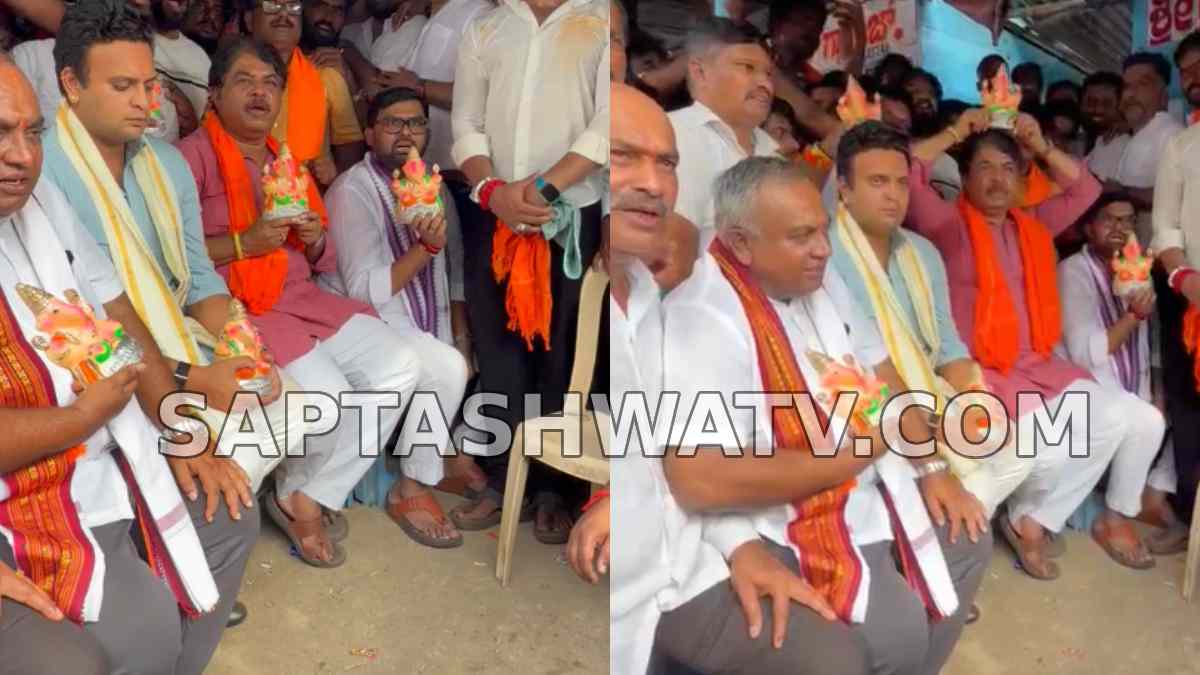
The incident took place at T. Narasipura during the demonstration in which the BJP leaders and workers came together in protest of a Ganesh idol. The people present included former Mysuru-Kodagu MP Pratap Simha, BJP leader R. Ashoka, MLA T.S. Srivatsa and Satchidananda, as well as other party leaders.
The images soon circulated online, with critics objecting to the way in which the idol was handled. Some of the leaders were wearing shoes while holding the Ganesh idol during the demonstration, social media users said.
Social media criticism intensifies
The images have drawn strong reactions online, with critics accusing the BJP leaders of using religious sentiments for political purposes. Some posts questioned whether political protests should involve religious idols and argued that deities should be treated with appropriate reverence.
Critics have also claimed that the leaders brought Lord Ganesh into a political demonstration for their own political messaging. They said there was casual handling of the idol and the incident showed a lack of respect to the religious sentiments of Lord Ganesh.
But these claims represent the views and criticism of social media users and should not be considered as well-established facts until verified independently.
Political use of religion
Hence, the controversy is also fomenting a larger political debate in Karnataka over the use of religious symbols and idols in political campaigns and protests.
Some critics have said that the BJP leaders are “fake protectors of religion” and their actions hurt the religious sentiments of millions of devotees. Posters and social media campaigns criticising the leaders’ conduct have apparently emerged following the incident.
But the criticism focused on the fact that the idol was carried during a political protest rather than a religious ceremony. Some users questioned whether religious symbols should be brought into political demonstrations at all.
BJP leaders among those present
Pratap Simha, R. Ashoka, T.S. Srivatsa and Satchidananda are among the BJP leaders named in connection with the protest. The incident has attracted attention because of the prominent political figures involved.
All of the controversy has been shared so far on social media, and pictures and videos of the protest, that have been posted. Images of the protest have been widely shared, with comments on the leaders' behaviour being criticized; political parties and religious symbols, too.
The incident is occurring at a time when Ganesh-related events and public celebrations are being spotlighted in Karnataka. Ganesh idols are worshipped with great religious reverence, and the use and handling of idols when public displays take place is a sensitive topic all the way down.
Debate over religious symbols in protests
Political parties frequently use cultural and religious imagery when reaching out to voters and communities. But the latest Mysuru incident has raised questions about where the line should be drawn between religious expression and political mobilisation.
Critics say that religious idols should not be seen as political props and supporters of such demonstrations may view the presence of a deity as part of their expression of cultural or religious identity.
So the controversy is not restricted to the specific protest in T. Narasipura. It has also triggered discussions on the role political leaders play in public places regarding religious symbols.
The images are still in circulation and are another flashpoint in Karnataka's politics-driven social media landscape. The allegations and criticism of the visuals are still on the surface and the protest itself is not to be dismissed at this stage but we need to take into account the context and motive of the protest in order to conclude.