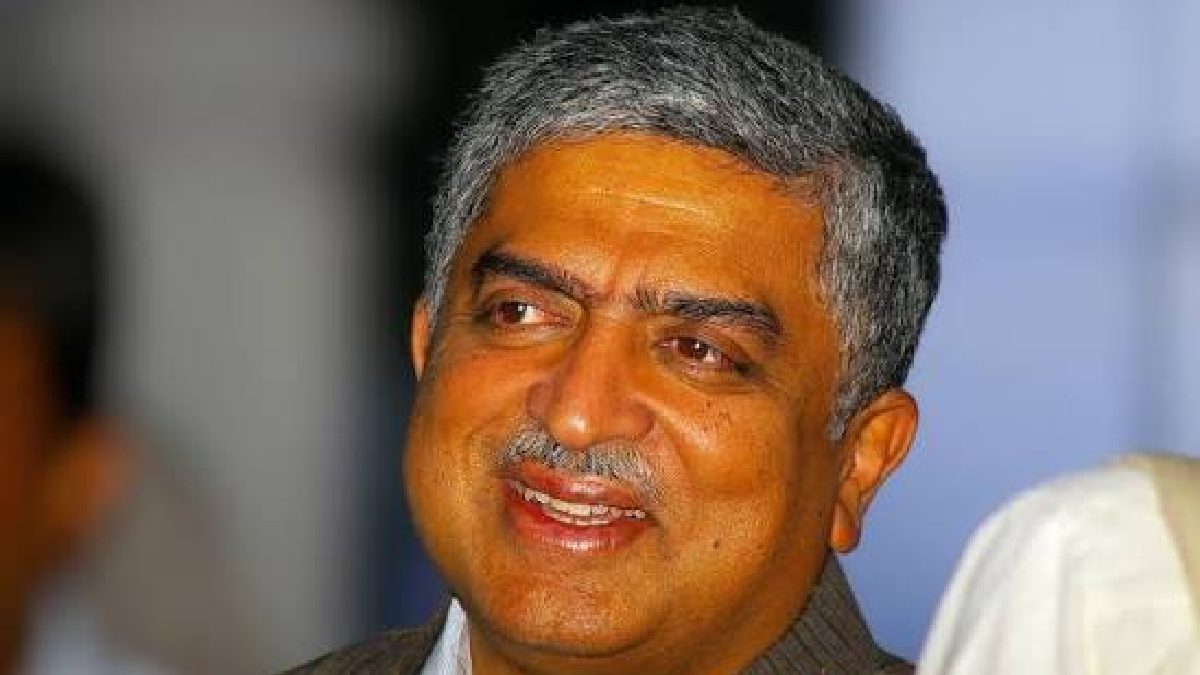
India has appointed Infosys co-founder Nandan Nilekani as co-founder of the high-powered task force to set up for examination reforms and has drawn attention from students, educators and policymakers across the country.
It comes at times when paper leaks, cheating and the integrity of competitive examinations are at the forefront of the agenda.
Who is Nandan Nilekani
Nandan Nilekani is one of India’s most influential technology entrepreneurs and public policy leaders. He was born in Bengaluru, and joined Infosys with Narayana Murthy and others in 1981. Infosys has grown in the last 20 years into one of India’s biggest IT services companies and has become a global symbol of the country’s software industry.
Nilekani was CEO and later Chairman of Infosys which transformed into a multinational technology giant. Besides the corporate arena, he is widely known for his work in building Aadhaar, India’s biometric identity system.
The Architect of Aadhaar
Nilekani was appointed by the Government of India as the founding Chairman of the Unique Identification Authority of India (UIDAI) in 2009. He was behind the establishment of Aadhaar, with over 1 billion inhabitants today and also digital services, banking, welfare distribution and identity verification in the country.
His work on Aadhaar established him as a leader capable of handling large-scale technology-driven public systems that are associated with complex data, security and governance challenges.
Why has he been chosen for Exam Reforms
The government is being seen as a plan to bring technology, openness and accountability into the examination ecosystem. The recent paper leaks and organised cheating have made recruitment and entrance exams seem to be in question.
As head of the task force, Nilekani is expected to help design reforms that could include:
- Secure digital examination infrastructure
- Advanced identity verification systems
- AI-based monitoring of irregularities
- Stronger data security protocols
- Faster detection of paper leaks
- Better coordination between the examination agencies
His experience in building nationwide digital platforms makes him a great candidate for modernizing India’s examination framework.
What could change for students
If the task force recommendations are implemented, students will have access to more secure and standardized exams, less chance of question paper leaks, quicker grievance resolution, and improved transparency in the evaluation process.
The reforms are also expected to be in line with the government’s broader vision for Digital India and technology enabled governance.
A key Public Policy role
Nandan Nilekani has been involved in various public policy initiatives on digital infrastructure, financial inclusion and innovation.
His appointment signals the government’s intention to treat exam reform not only as an administrative challenge but as a national systems problem that requires technological expertise and institutional redesign.
So for millions of students preparing for competitive exams, the task force will determine the future of how exams are conducted in India.