On 26 July 1956, Egyptian President Gamal Abdel Nasser decided to nationalize the Suez Canal Company. The decision set Egypt up as a country with the largest number of waterways in the world and created the Suez Crisis of 1956 and in the process also created world politics.
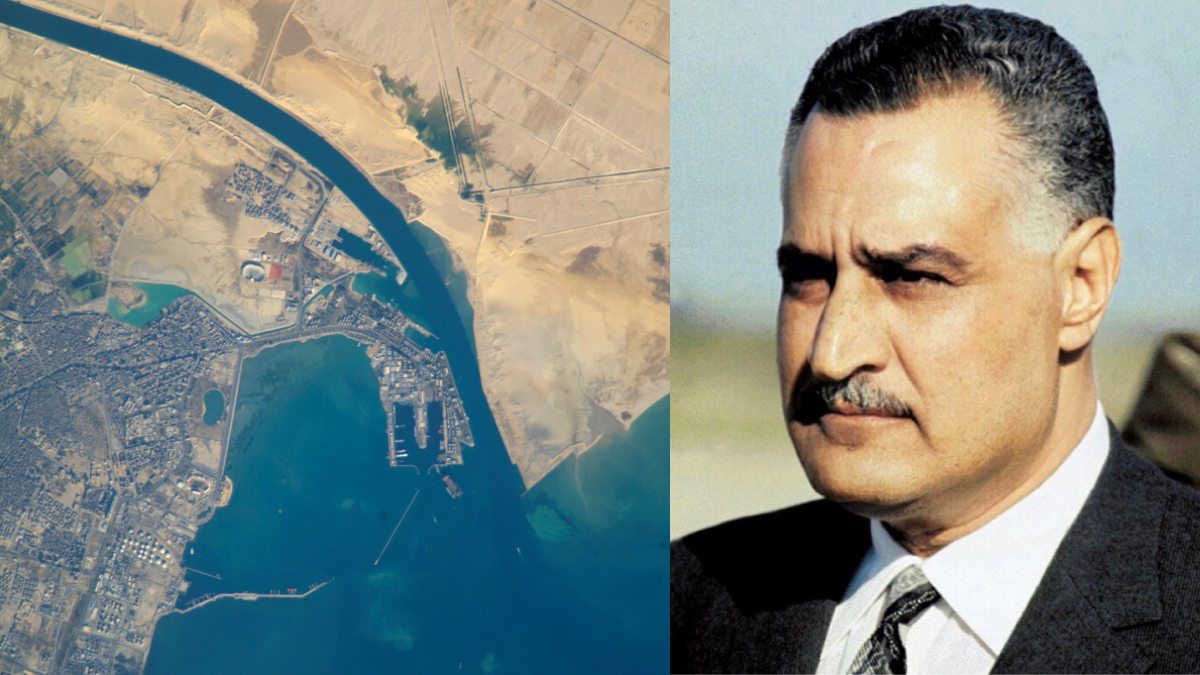
The nationalization of the Suez Canal was the start of an anti-colonial movement and the aspiration of newly independent nations to gain control over their own resources. But it also reflected an international power dynamic change as old European powers and emerging global superpowers were no longer equally dominant.
What is the Suez Canal
The Suez Canal is an artificial waterway located in northeastern Egypt, connecting the Mediterranean Sea with the Red Sea. It opened in 1869, and is considered the shortest maritime route between Europe and Asia and ships must not sail around the southern tip of Africa.
The canal is over 193 kilometers (120 miles) long and one of the busiest shipping routes in the world. It moves goods, oil and commercial cargo and is a key artery to global trade.
Before 1956, the canal was operated by the Suez Canal Company, a corporation largely controlled by British and French interests. The canal was in Egypt but much of its revenue went to foreign shareholders.
Why did Nasser nationalize the Canal
When Gamal Abdel Nasser became the president of Egypt in 1954 he tried to strengthen the country's economy and reduce foreign influence on the country. One of his biggest plans was to build the Aswan High Dam for irrigation, hydroelectric power generation and development of Egypt.
Initially, the United States, the United Kingdom and the World Bank offered financial assistance for the dam. Western support was withdrawn in July 1956 because the Cold War created a lot of geopolitical tension.
As a result, Nasser announced that Egypt would nationalize the Suez Canal Company. He declared that revenue from canal operations would help finance the construction of the Aswan High Dam.
For many Egyptians and supporters in the Arab world, the decision represented national pride, economic independence and the ability to control strategic assets.
International Reaction
The announcement alarmed Britain and France, both of which had major financial interests in the canal and viewed the nationalization as a threat to their economic and strategic influence.
Israel also had security concerns regarding regional security and access to shipping routes.
And in October 1956, Britain, France and Israel collaborated to launch a military operation against Egypt. Israel entered the Sinai Peninsula and British and French military intervention took place, with the aim of securing the canal and separating the combatants.
The Suez Crisis
The military conflict, which we call the Suez Crisis, quickly became an international issue.
The United States, under President Dwight D. Eisenhower, opposed the invasion and argued that the conflict needed to be resolved diplomatically. The Soviet Union also condemned the military action, but for different reasons.
With international pressure including diplomatic efforts through the United Nations and economic pressure from the United States Britain, France and Israel eventually agreed to withdraw their forces.
In the Cold War, global opinion and superpower influence had become decisive forces in global conflicts.
Impact on Egypt
Although Egypt had suffered military losses, the political outcome greatly strengthened Gamal Abdel Nasser's standing both in Egypt and abroad.
The nationalization became a symbol of:
- National sovereignty
- Anti-colonial resistance
- Arab nationalism
- Economic independence
- Political self-determination
Nasser had become one of the most influential leaders in the Arab world and inspired nationalist movements across Africa and Asia.
The Suez Canal remained under Egyptian control and revenue from its operation contributed to the country's economic development.
Global Significance
The Suez Crisis had lasting consequences for international relations.
Some of its major results were:
- The decline of British and French influence in the Middle East
- The growing influence of the United States and the Soviet Union in global affairs
- Increased momentum for decolonization across Africa and Asia
- Greater focus on the United Nations as a mediator in global conflicts
- Realization of the strategic importance of global trade routes
The crisis is often considered as the turning point in the end of European colonial power in the world.
The Suez Canal Today
The Suez Canal is still one of the most important waterways in the world today. It carries much of the world maritime trade each year, transporting energy, manufactured goods, raw materials between continents.
Egypt continues to invest in expanding and modernizing the canal to accommodate larger vessels and growing global shipping demand. The canal is still an important source of revenue to the Egyptian economy and an essential component of international commerce.
The nationalization of the Suez Canal on July 26, 1956 was far more than an economic decision it was a declaration of national sovereignty that altered the shape of Middle Eastern politics and the balance of power worldwide.
Gamal Abdel Nasser’s bold move put colonial-style control over strategic resources at risk and galvanized the newly independent nations that would go on to shape their own futures. Almost seven decades later, this is still one of the most significant moments in modern world history, and the lesson is that a single political decision can bring long-lasting international repercussions.