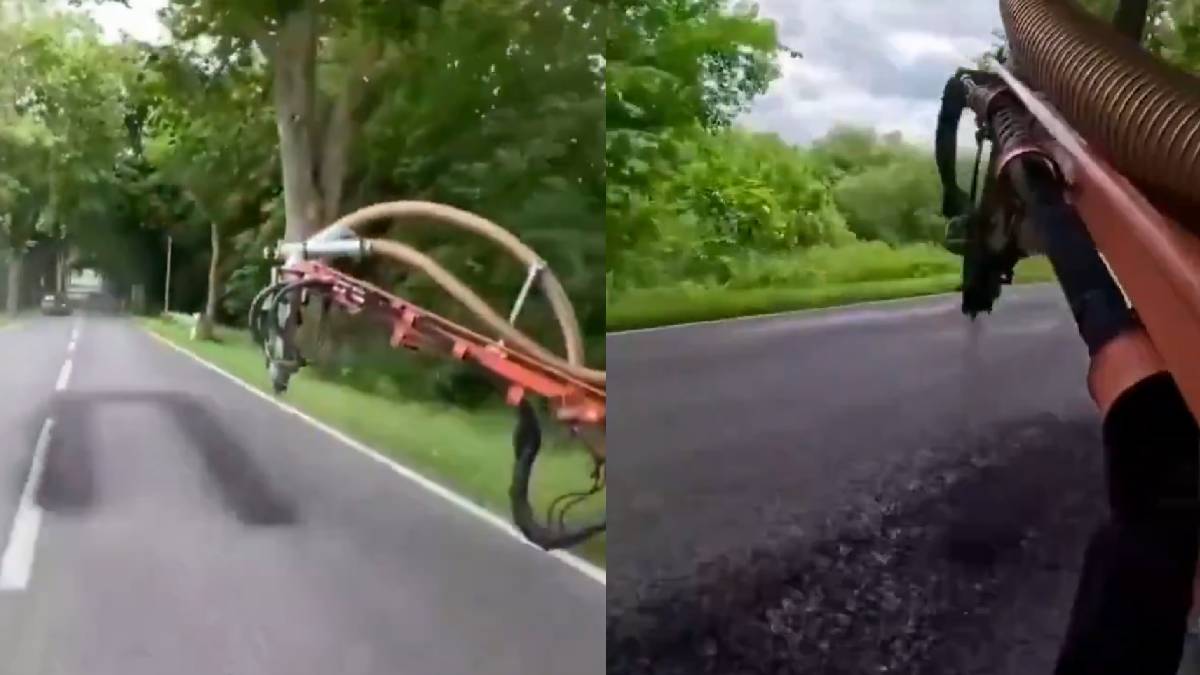
Potholes are among the most common road authorities’ biggest problems, especially on rural roads that need frequent trucking and maintenance and can be difficult to get to the attention of all road authorities. A German road-repair machine has been shown to be able to quickly fill potholes while minimising disruption to the surrounding road surface.
Pothole repair can be time-consuming. Repairmen usually find damaged areas, remove loose material, prepare the patch, repair the surface, add repair material, and compact it. Depending on the size and location of a pothole, there can be multiple workers and equipment and traffic restrictions at times.
The German machine mentioned in the viral claim is different by combining several stages of the repair process into a more streamlined operation.
The machine is meant to work directly on damaged parts of the road, and potholes can be filled in without deep excavation in that part. It could reduce the amount of road material necessary to be recovered from the road before the repair.
Speed is one of the key benefits of mechanised pothole repair. Rural roads can be difficult to close for many kilometers because they are the main link between villages, farms and nearby cities. So a repair system that can complete work faster can save motorists and the local community inconvenience.
This German machine quickly fills potholes on rural roads with minimal impact. pic.twitter.com/OUsgYeZo1M
— Massimo (@Rainmaker1973) September 9, 2026
Another potential benefit is that there is less manpower needed. Instead of a large roadwork crew performing individual stages manually, specialised machinery can automate or combine parts of the process.
The concept is of particular importance in rural areas, where road maintenance authorities have large networks to manage. Rural road systems typically span thousands of kilometres and constantly checking and repairing them is important.
Potholes are more than cosmetic. Small road defects can slowly build up with rainwater, temperature and vehicle traffic. If not treated properly, they can damage tyres, wheels and suspension components and pose risks to the public (drivers, cyclists and pedestrians).
That could also prevent little surface damage from being converted into expensive road-reconstruction projects.
Mechanised repair technology could also improve consistency. When repairs are performed manually, the quality of a patch can depend on surface preparation, material placement and compaction. Specialised machinery could standardise these steps, but actual performance depends on the machine, repair material, weather conditions and the road condition.
The technology would be particularly useful for road authorities seeking quicker maintenance solutions. Rather than waiting for major deterioration to take place before major resurfacing work could be done, smaller defects could be addressed during regular maintenance work.
No pothole-repair machine can eliminate the need for proper road engineering. And if a pothole has developed because of deeper structural problems, drainage failures or a weakened road foundation, filling the surface may only provide a temporary solution. Long-term repairs require authorities to identify and address the underlying cause.
So the German machine’s appeal is primarily in its potential to make routine pothole maintenance easier and less disruptive.
As countries around the world build smarter infrastructure and mechanised road maintenance, such equipment shows how technology can even change relatively simple public works operations.
For rural communities, quicker road repairs can mean road repairs can cut down on traffic stoppages, more efficient travel, and perhaps lower maintenance costs. For both government and road agencies, the ability to repair multiple defects effectively would help them manage the network of roads and highways with a lot of people faster.
The viral attention on the German machine also illustrates that there is growing public interest in new infrastructure technology. From automated construction equipment to AI-assisted road inspections, technology is increasingly being deployed to make traditional public works work more effective and faster.
Whether this machine is suitable for widespread usage will depend on cost, road condition, availability of repair materials, and maintenance needs. However, its approach is an interesting example of how specialist machinery can potentially make rural road pothole repair quicker, cleaner and less disruptive.