Maharashtra’s Food and Drug Administration (FDA) has unearthed an alleged food-label tampering operation in Navi Mumbai after seizing packaged food products and other material worth around Rs 75.21 lakh, with the operation taking place to change the original expiry and manufacturing dates and replace nutritional information on products to be sold overseas.
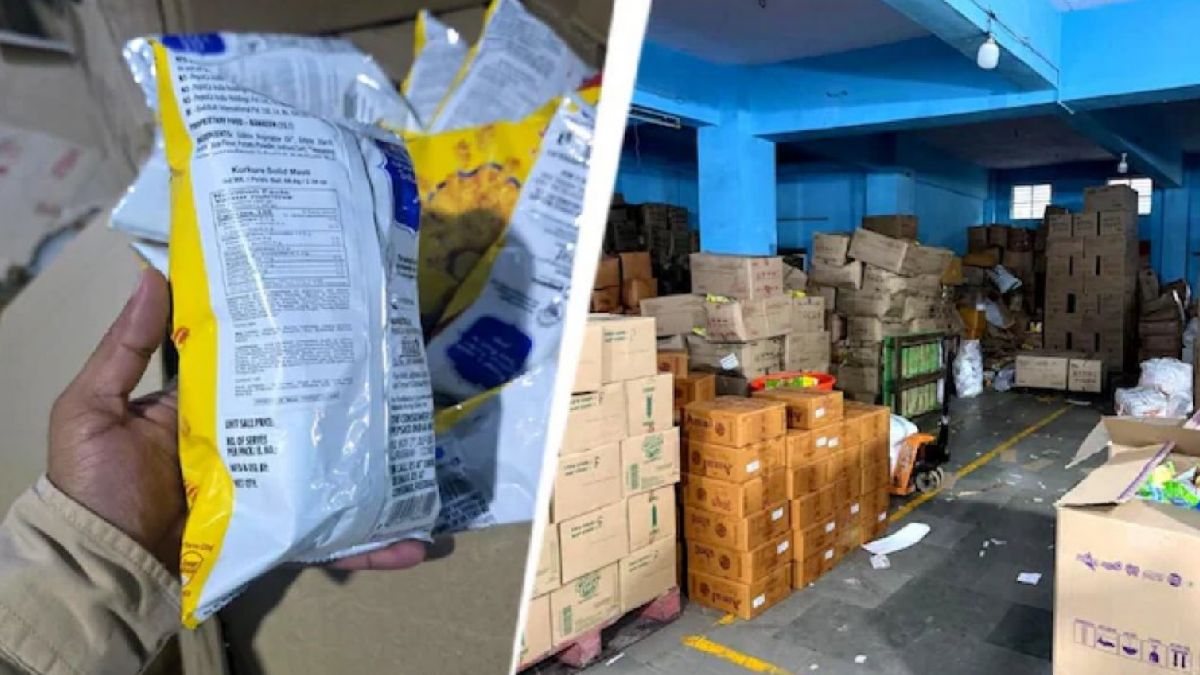
Maharashtra FDA chief Tukaram Mundhe expressed shock at the scale of the alleged operation, saying it was a systematic activity rather than an isolated incident. The raid was conducted jointly by FDA officials and Turbhe police after investigators got information about food products being relabelled before export.
The items recovered during the operation were several well-known packaged food and beverage brands such as Lay’s, Kurkure, Maggi noodles, Knorr soup, Hellmann’s mayonnaise, Thums Up and Limca. The presence of these branded products at the warehouse does not mean that the companies themselves were involved in the alleged wrongdoing, officials added.
The operation came to light as the Crime Branch’s Central Cell received information that original expiry dates printed on packaged food were being removed and replaced with later dates. A police team headed by Senior Inspector Ajay Shinde subsequently raided the premises on August 24.
Chemicals and machines allegedly used for relabelling
During the raid, authorities found chemicals that were allegedly used to erase or remove manufacturers’ original expiry and manufacturing dates. Machines and other equipment used to print and apply replacement labels were also recovered from the premises.
Some packages had their original dates scratched out or erased before new information was placed over them. Label rolls, printed stickers and other material allegedly connected to the relabelling process were also found, officials said.
The discovery raised concerns about food products being presented as fresher than their actual shelf life. The seized products and material as part of the ongoing investigation are being examined.
Mundhe said the scale and organisation of the activity was particularly concerning. Companies and other stakeholders involved in the food supply chain should ensure that products, packaging and branding comply with applicable regulations, he said.
Nutrition labels were changed for foreign markets, he said.
Investigators also found evidence that the alleged tampering went beyond expiry dates. Some products were said to carry nutritional and ingredient labels that were not on the original packaging, the report says.
One sample with Nestle’s Maggi noodles contained a replacement nutrition label which stated the product is “Product of India.” A Kurkure packet also had a bilingual English-French nutrition label.
According to the information gathered during the investigation, some of the replacement labels were said to have altered details like ingredient quantities, calorie information and serving sizes. Such changes may affect compliance with regulations in overseas markets.
The findings thus raised larger questions about how packaged food products are handled when they are prepared for export and whether there are sufficient checks at different stages of the supply chain.
Nearly 5,000 cartons recovered
Investigators found nearly 5,000 cartons of packaged consumer goods in the warehouse. The seized stock included products from PepsiCo, Nestle, Unilever and Coca-Cola among others.
Many of the products were already expired or approaching their expiry date, officials said. Investigators also found instances in which future manufacturing dates had been printed on products, they said.
All of the stock was apparently intended for export, but authorities had not yet established the final destination of all the goods. The English-French labels suggested that at least some products may have been prepared for markets where French-language packaging requirements apply.
12 people face action
The warehouse was allegedly operated by Sadhana Enterprises, a private company. The owner was quoted by authorities as saying that the company carried out this work on behalf of 19 exporters.
After the raid and subsequent investigation, action was initiated against 12 persons involved in the alleged operation. FDA assistance was offered to police for documentation, inspection and examination of the recovered products.
The case has also made clear that there is a need for stronger traceability in the food supply and export chain. The authorities will look into how those products made it to the warehouse, who produced them and where the relabelled goods were ultimately sent.
Police do not accuse PepsiCo, Nestle, Coca-Cola or Unilever of involvement in the alleged fraud. The investigation is focused on what was done in the warehouse and who did it, says the police report.
The Navi Mumbai raid has raised concerns about food safety and consumer protection and is a case of products being repackaged or relabelled and not being given the same shelf life, they say. The authorities are now in search of the entire supply chain and will now know if any of the alleged violations were done.
For consumers, the case underscores the need to check packaging and expiry dates, manufacturing details and product labels before purchasing packaged food. For exporters and businesses, it should also remind people that food products must be prepared to meet domestic safety standards and the regulations of the markets to which they are shipped.