The NICE Road dispute, which continues to grow, has been put on hold by the Supreme Court, which has refused to provide an interim stay on the Karnataka High Court order for an independent investigation and forensic audit of the project.
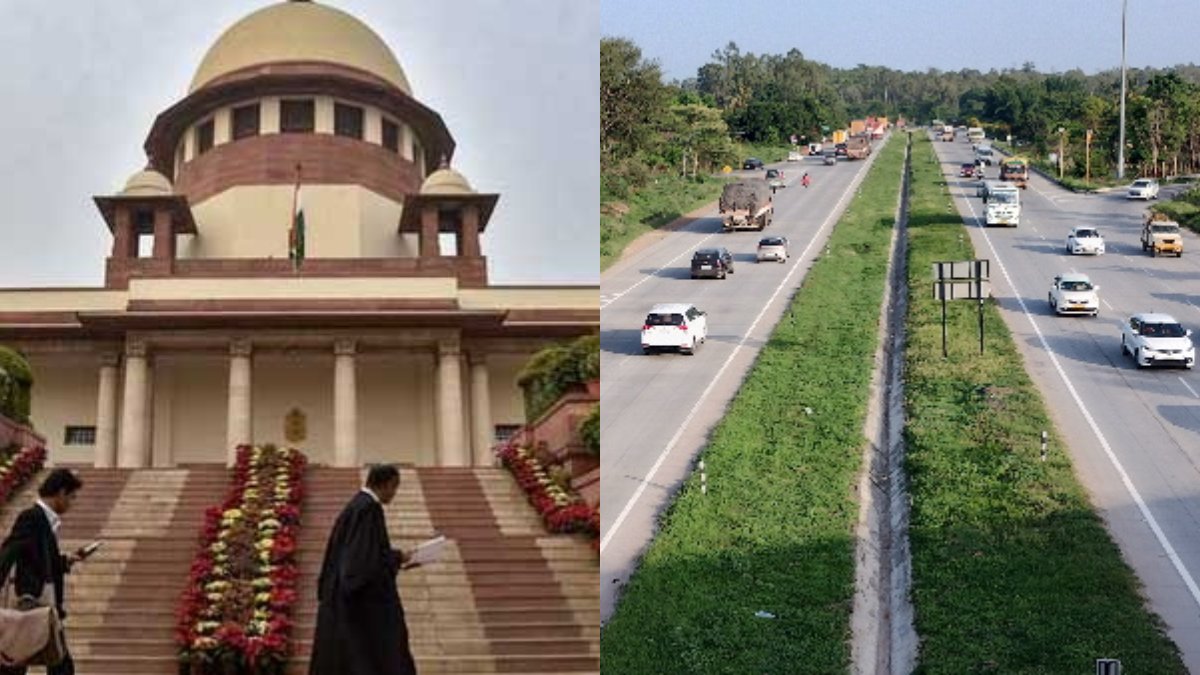
The NICE Road issue is now very much a political row in Karnataka, with questions being raised over land acquisition, compensation to farmers, government land, and allegations about some procedural problems regarding the completion of the ambitious infrastructure development project.
NICE had approached the Supreme Court to challenge the Karnataka High Court's order. The appeal was heard by a two-judge bench headed by Justice Sanjay Kumar. Counsel for NICE wanted an immediate stay on the High Court's direction, or he would like the Supreme Court to tell the parties to maintain the status quo until the matter is resolved.
NICE counsel stated that 25 per cent of the project work had been completed and that 1,100 acres of land had been used for the project. The court was also told that compensation had been paid to farmers in relation to the acquisition of land. Based on these submissions, NICE asked the Supreme Court to intervene and suspend the High Court's directions pending a detailed hearing.
But lawyers representing the farmers strongly resisted the request for interim relief. They stated that farmers were not compensated properly for their land. The farmers had already been denied the use of their land for more than 23 years, they said in their submissions before the court, and the project had led to prolonged hardships and loss of their livelihood. The farmers' representatives claimed there had been systematic failures in the project implementation.
The Karnataka government also appeared before the Supreme Court in the matter. The state's counsel informed the bench that the government had filed a separate petition regarding the case and asked that its plea also be taken into consideration while hearing the dispute.
After hearing the submissions from the different sides, the Supreme Court declined to give an immediate interim order. The bench made it very clear that it could not make a stay or a status quo order without a thorough examination of the matter. Not issuing an interim order on the basis of the filings made in the hearing, the court would rather hear from all the parties involved.
The Supreme Court has set a date for November 2 when arguments of all the petitioners and other concerned parties are expected to be considered.
What did the Karnataka High Court Order say?
The Supreme Court has the power of direct intervention in many cases of corruption. The Supreme Court had expressed serious concerns earlier regarding the NICE project and the land acquisition and implementation of the project at the Karnataka High Court. The High Court had asked for an independent investigation and forensic audit of the project.
The High Court’s observations raised questions about the impact of the project on farmers and their land, the court said. They had not provided the project with public benefits, apart from taking away agricultural land and affecting generations of farmers' livelihoods, said the court’s assessment.
The High Court also raised concerns about what is alleged encroachment involving roads, lakes, and government land and the collection of huge amounts through tolls. Questions were also raised about the acquisition of farmers' land without what the court considered appropriate compensation and the alleged failure of government authorities to take adequate action against irregularities.
Against this backdrop, the High Court ordered an independent investigation and forensic auditing of the financial and other aspects of the NICE project. A forensic audit will be conducted to assess all relevant records, transactions, land-related documents, and financial transactions to determine whether there were irregularities or violations that need to be addressed.
NICE Road dispute remains an important Karnataka issue
The NICE Road project has been subject to years of dispute, with disputes over land acquisition and compensation. The new Supreme Court ruling means that the Karnataka High Court’s investigation and forensic audit directions will continue to be relevant in the larger legal battle.
The Supreme Court's refusal to grant an immediate stay is not, by itself, a final ruling on the allegations against NICE or a determination that the allegations have been proved. The court is yet to hold the detailed hearing and to decide the appeals and petitions before it.
The November 2 hearing is therefore likely to be closely watched by farmers, the Karnataka government, NICE, and political parties in the state. In fact, if the High Court’s directions for an independent investigation and forensic audit remain in force, and the long-running dispute over land, compensation, and alleged project irregularities is resolved, the proceedings will bring more clarity to the situation.
But the Supreme Court has for now decided to look at it in detail rather than halt the High Court's direction at the moment and keep the focus on the decades-old NICE Road controversy in Karnataka.