Introduced in July 2021 as the National Education Policy (NEP) 2020, the National Initiative for Proficiency in Reading with Understanding and Numeracy (NIPUN Bharat) was created to address one of India's biggest educational challenges and that of ensuring that every child becomes proficient in reading, writing, and arithmetic at the end of Class 3.
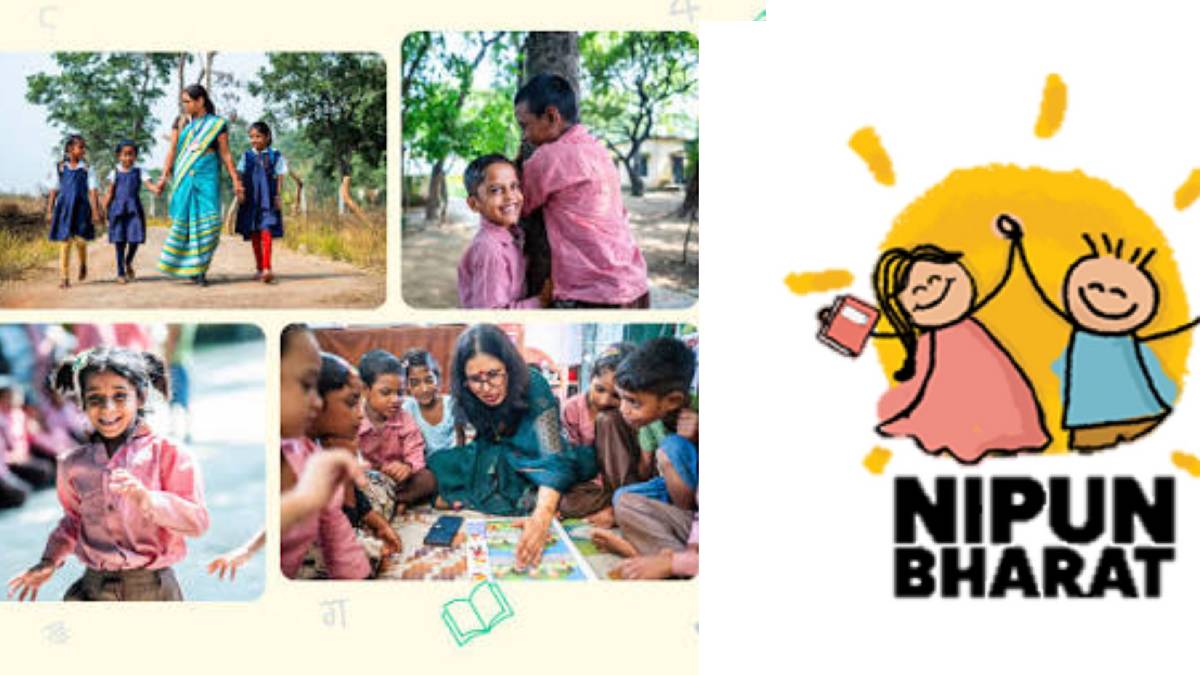
Four years later, the mission continues to keep the discussion going in the education arena.
Did it transform early education, or is it a step in the right direction
The mission was set up with one goal: to build foundational literacy and numeracy (FLN), the building blocks of a child’s academic achievements.
Because children who fail to master these basics do not do well in school, the government made foundational learning a national priority.
NIPUN Bharat has brought a lot of positive changes to classrooms across the country in the last four years. Structured learning materials, competency-based teaching, and regular assessments have been introduced by states to track the progress of students.
Teachers have been trained in a variety of areas in order to help improve classroom instruction and engage in activity-based learning activities to facilitate learning for young children.
Another of the greatest successes is the increased awareness by educators and parents of foundational learning.
Schools are not just doing so to complete the syllabus but to teach kids about reading comprehension, writing, and basic math comprehension before moving on to more advanced classes.
Technology has also augmented the mission's implementation. Digital platforms, online teacher training modules, interactive learning resources, and QR-enabled textbooks have made educational content more accessible.
In some states, the programme has been adapted to local needs through the development of teaching materials in regional languages.
Even so, many obstacles remain for the mission. Many students still struggle with basic literacy and numeracy skills on the learning assessments of different agencies.
The COVID-19 pandemic widened existing gaps, especially among rural and economically disadvantaged kids.
The programme’s implementation difficulties have also been brought about by infrastructure constraints, teacher vacancies, large classroom sizes, and uneven implementation across states.
Some states have shown positive results, but others still have great difficulties in maintaining quality education and regular monitoring of student progress.
Education experts believe that universal foundational literacy cannot be achieved through policy alone.
They stress that long-term teacher support, better parental involvement, continuous classroom assessments, and more investment in government schools are required.
Learning outcomes have to be longer-term rather than short-term.
NIPUN Bharat has done well to bring foundational learning into the context of Indian education reforms.
It has encouraged schools to learn skills that will be the bedrock of learning and states to adopt innovative teaching.
But the mission has not yet reached its ultimate aim of having every child at their expected level by Grade 3.
But instead of viewing NIPUN Bharat as a complete failure or success, it would be more accurate to describe it as an evolving reform that has made significant progress but has had its share of problems and challenges when it comes to implementation.
If the mission is to develop India's education system and the government will be able to achieve it in the long term, funding for education will continue to be the key to sustainable development, policy execution is in place, teachers are well trained, and parents and local communities are involved.
The next few years will determine if NIPUN Bharat can achieve its mission of giving every child in India a real foundation for their education and development.