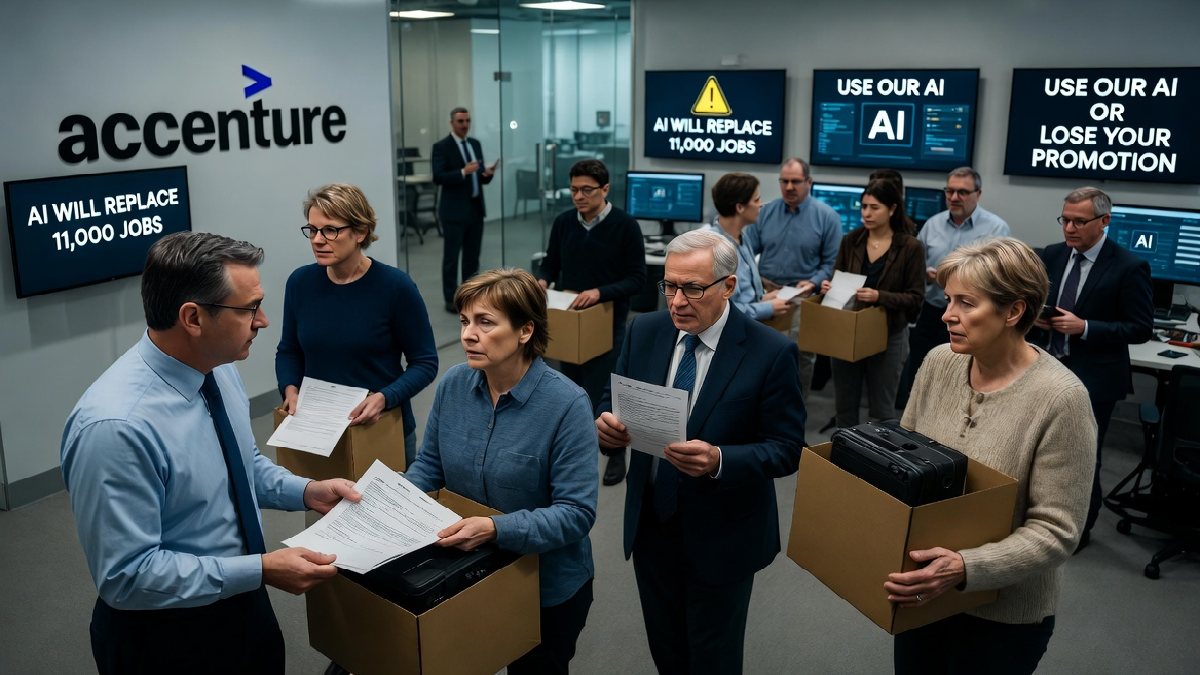
With significant implications, Accenture has formally linked promotions in leadership to the actual adoption of AI tools with the end of “optional” in the corporate world. As announced in internal communications on Feb. 19, 2026, senior managers and associate directors will need to demonstrate they are habitual users of the firm’s AI software platforms to progress.
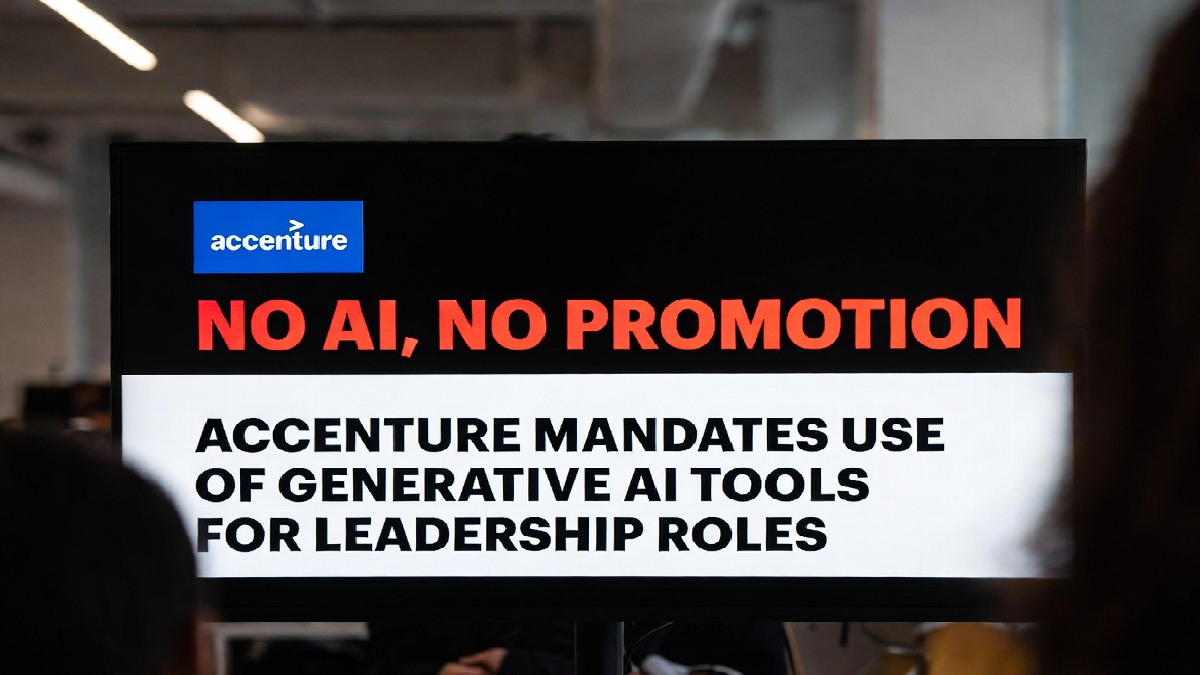
An internal email that surfaced this week, the consulting giant told its senior-level employees that “regular adoption” of AI is now “a mandatory prerequisite to take on leadership roles.” The policy targets Senior Managers and Associate Directors, the very people industry analysts widely point to as the hardest-hit to change with long practices.
Monitoring the "Weekly Login."
Accenture has also started its own user usage statistics to comply. The firm is said to be tracking weekly logins and activity on various of its core internal platforms, such as:
- Accenture AI Refinery- Platform for scaling up AI solutions.
- SynOps: An AI-powered engine for business operations.
These usage statistics will be considered a “visible input” at time of talent conversations as well as the upcoming summer promotion cycle, according to the report. The data-driven approach has helped to unite junior employees who have swiftly embraced AI with older ones at higher levels who have been slow to move away from traditional workflows.
"Exit" Warning from CEO Julie Sweet
That mandate comes after a string of firm statements from Accenture chief executive Julie Sweet. At the India AI Impact Summit 2026 in New Delhi, Sweet reaffirmed her vision of “humans in the lead;” she also reiterated to the workforce her earlier warning: employees who are unable or unwilling to adapt to the AI era may be “exited” from the firm.

“Our approach is to be the reinvention partner of choice for our clients,” an Accenture spokesperson said. "That requires us to utilize the most advanced tools and technologies in order to give maximum value to our clients.”
And internal pushback: “Broken Slop Generators.”
The change has not been without controversy. Senior staff have expressed frustration, writing in passing that some internal AI tools were “broken slop generators” that add more friction than benefit to daily tasks. The opposition aside, the policy is unyielding, although employees in 12 European countries (courtesy of tough labor laws) plus those working on U.S. federal government contracts have been exempt.