But Vinod Jakhar, president of the NSUI, is in support of the student protests. He said that the students' demand for a reform of the education system in the country is legitimate and they should get their education system. But the police’s response to the protests was excessive against students, he said.
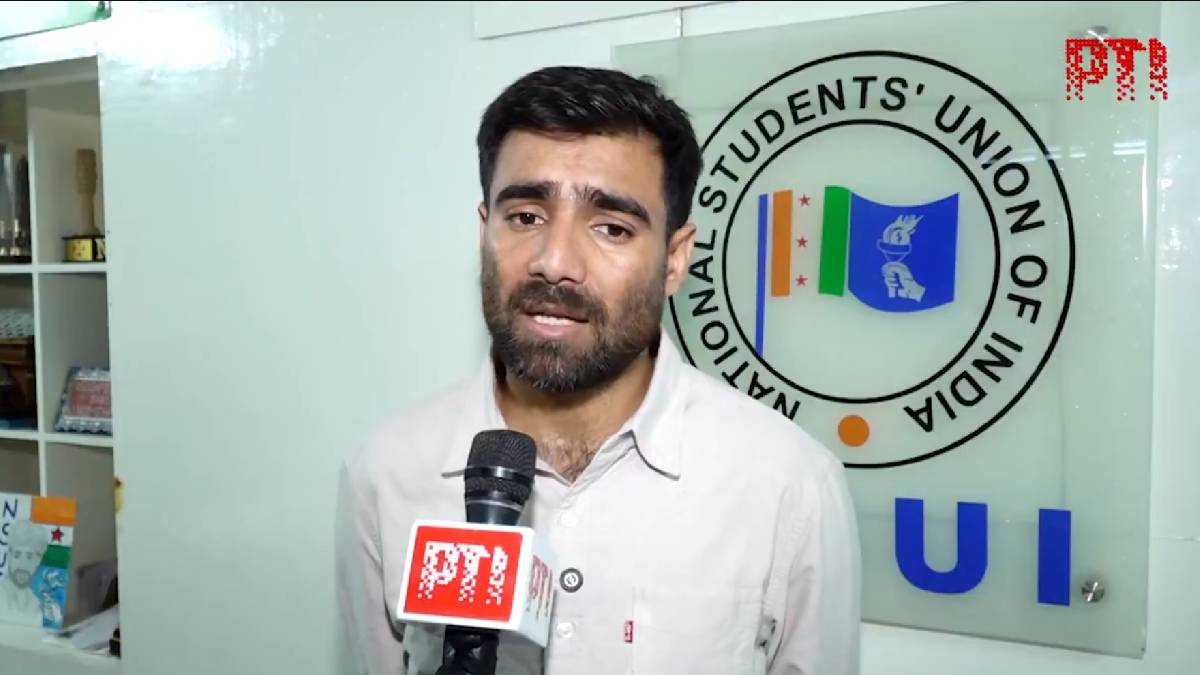
In Delhi, Jakhar said: “Students’ demand for reforms in the education system is valid. The way protesters were stifled using water cannons, tear gas, lathi charges, pellet guns and even AK-47s is condemnable.”
VIDEO | Delhi: NSUI President Vinod Jakhar says, "Students' demand for reforms in the education system is valid... The way protesters were stifled using water cannons, tear gas, lathi charges, pellet guns, and even AK-47s is condemnable."
— Press Trust of India (@PTI_News) July 27, 2026
(Full video available on PTI Videos -… pic.twitter.com/oYvrSeNtln
And his comments come at a time when there has been more than one political debate about the handling of student demonstrations that have taken place in several parts of the country in recent weeks. Students are protesting for greater transparency, accountability and reforms in the examination and education system.
Jakhar said students exercising their democratic right to protest should be heard through dialogue, not through force. He said the concerns raised by young people about the functioning of the education system deserve serious attention from the government and policymakers.
NSUI, which is the student wing of the Indian National Congress, is active in the demonstrations as well and is demanding that the government reform public exams and educational institutions. Student representatives have also asked to be in touch with their government.
Jakhar also cited police action in several states during protests. Water cannons, tear gas, baton charges and pellet guns were reported, as were AK-47 rifles during crowd-control operations, he said. Law enforcement has claimed to have acted to restore public order in areas of unrest where protests turned violent, and investigations are being conducted into some of them, including a suspension of a police constable in Bihar after a video on the internet showed the firing of an AK-47 during a protest.
The broader protest movement has been received by leaders of all political genres. Opposition parties have accused governments of silencing student voices by over-policing, and the ruling establishment has argued that peaceful protests should not be tolerated, and violence and damage to public property should not be tolerated.
The demonstrations have also brought into the public eye examination integrity, paper leaks, and the need for structural changes in education. The Centre has defended its legislative measures (including the proposed anti-paper leak law) as measures to keep the system transparent and in the interests of students.
Political reactions continue to escalate as Parliament debates issues of education and examination reforms. Student organisations have reiterated that their primary objective is to secure lasting changes that contribute to fair and credible examination processes across the country.
Jakhar concluded by telling the government to have a dialogue with students rather than coercive measures. He said that meaningful engagement with stakeholders is important so that confidence in the education system and students’ concerns are not negated, and the issues of students across the country are addressed.