Torrential rainfall in Maharashtra has caused a lot of distress in Patalganga industrial district as floodwater flooding the LPG bottling plant has inundated the LPG bottling plant causing thousands of empty LPG cylinders to be swept away in Patalganga and thousands of empty cylinders to be removed from the plant.
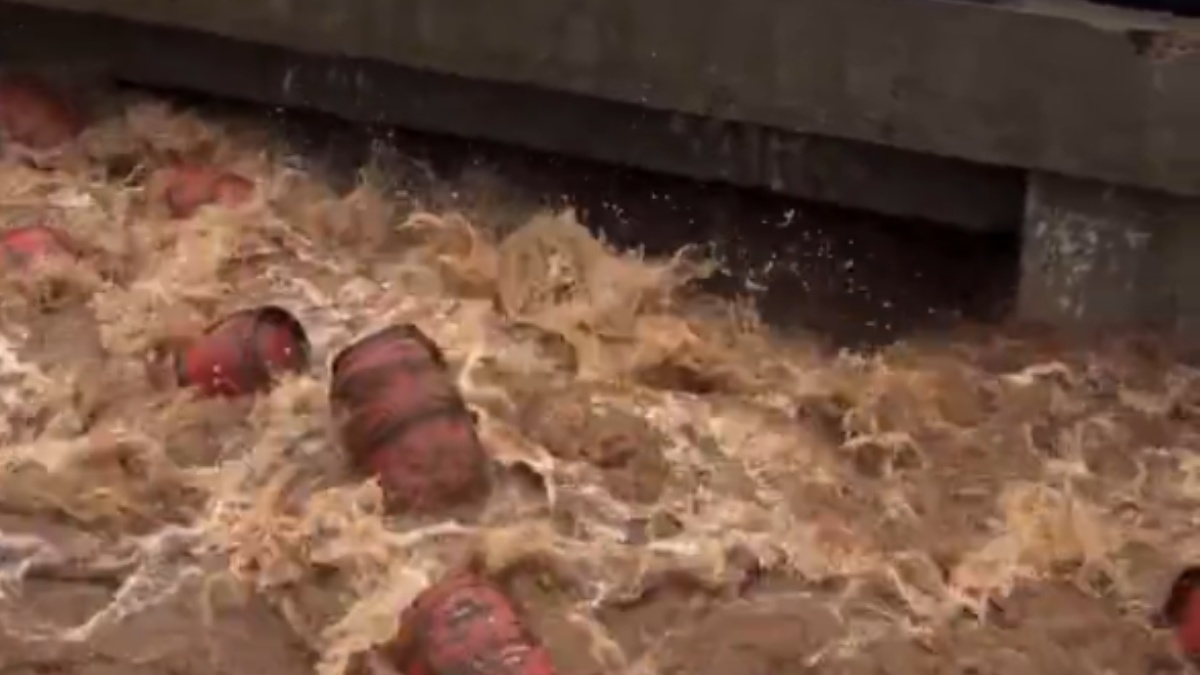
Graphic footage of this kind of incident went viral on social media accounts and raised the alert level of industrial safety, disaster preparedness and the adverse effects of extreme weather events on communities and industries.
The unfortunate incident occurred when continuous monsoon rains caused nearby rivers and drainage channels to overflow, sending floodwater down into the industrial complex. As floodwater rushed through the LPG storage yard, the strong current pulled cylinders off the stacks and sent them floating through the flooded areas. The floating cylinders seen in the viral videos quickly became one of the most talked about pictures of the ongoing monsoon season and the viewers were shocked and worried.
Witnesses said the floodwater was so surreal that hundreds of empty cylinders bobbed in the floodwater and emergency workers were at the forefront of the situation. The images looked so awful at first but officials said all cylinders swept away were empty and thus no fire or explosion was imminent.
But authorities did realize there are other, secondary dangers and quickly secured the area and prevented any further risk to the public.
Emergency teams, together with local police, fire and disaster management officials, were on a mission to assess the damage done and to coordinate the recovery. Barricades were set up around the vulnerable areas of the facility to keep residents away and workers sorted through cylinders that had drifted to other locations once the water level started to recede.
The Patalganga plant flood provides a stark reminder of the ever-increasing challenges industries are experiencing in the monsoon season. Large industrial estates near rivers and low-lying areas are especially prone to flash floods and need flood-resilient infrastructure and emergency response plans. Climate change is still affecting weather patterns and so emergency planning for these events should be considered.
The viral videos of the incident have prompted a wave of reactions online, with many people expressing their shock and disbelief at the sight of thousands of LPG cylinders floating away in the floodwater.
Some users questioned the industrial facilities' preparedness for such extreme weather conditions, and others praised the emergency responders who quickly secured the affected area and reassured the public that those cylinders were not filled with LPG.
Experts have used this opportunity to highlight the critical role of disaster risk management in industrial zones. They say that facilities that deal with hazardous or potentially dangerous materials must regularly review and enhance their flood preparedness measures. That includes assessing storage practices, checking drainage systems and making sure that emergency evacuation procedures are modern, effective and up to date.
The heavy rainfall has not only affected Patalganga district but has disrupted daily life in many other parts of Maharashtra. Many cities and districts in Maharashtra are now flooded with waterlogged streets and rivers have been inundated and rivers running into trouble.
To combat the heavy rain-affected areas, local residents in flood-prone areas have been issued a flood advisory and emergency teams have been brought in to assist them.
Authorities have urged the public to exercise caution by staying away from flooded industrial sites and avoiding approaching any cylinders that may be drifting or stranded in the water.
Besides dealing with the immediate aftermath of the flooding, officials are also doing inspections to see if there has been damage to the bottling plant and its infrastructure from the flood, in addition to maintaining operations. Safety audits are to be conducted before normal operations can be resumed at the plant to ensure that all necessary precautions have been taken.
Environmental experts have pointed out that extreme rainfall events have become increasingly frequent in recent years and such events are more likely to happen again in the future. Industrial planning in general has to take changing weather patterns into account and the flood mitigation should be strengthened to lessen risk and to raise resilience against future extreme weather events.
The incident has revived a lot of discussion about climate resilience and infrastructure planning— at least for industrial facilities in flood-prone areas. The drainage system improvement, storage area development and emergency response system strengthening are all things that can reduce damage during a disaster.
Hundreds of LPG Gas cylinders got washed away in Floods and people are looting them.
— Woke Eminent (@WokePandemic) July 8, 2026
This looks so bizzare pic.twitter.com/bk41ElgmAy
Recovery work is ongoing and authorities have reassured residents that the situation remains under control and that there is no immediate danger to nearby communities. Focused efforts are now directed toward recovering the displaced cylinders, thoroughly assessing the impact of the flooding, and implementing proactive measures to prevent similar incidents from occurring in the future.
Patalganga’s striking images illustrate the ever more difficult task of weather events. So far no major injuries or hazardous incidents have been reported but it underscores the need for continuous vigilance, disaster relief and the building of resilient infrastructure so that industrial and surrounding communities are secured during the monsoon season and in the years to come.