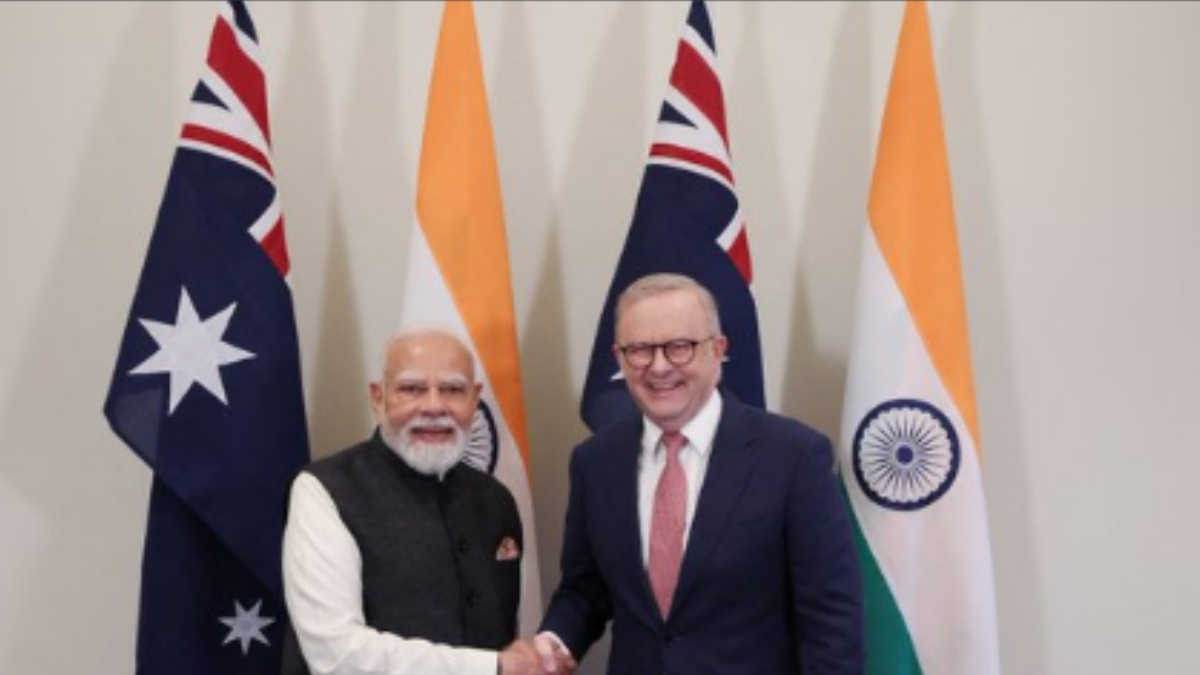
Narendra Modi has claimed that the huge uranium reserves in Australia are an important resource to support India's nuclear energy programme as its country's main source of energy for the development of energy and long-term energy security, and he underlined the need for closer cooperation between the two countries for clean energy and long-term energy security on Saturday as India and Australia signed a historic commercial agreement for Australian uranium supply to India at the annual leaders' summit in Melbourne.
Modi told business leaders and investors in a speech to business leaders and investors he told them that India's rapidly expanding economy needs to find reliable and sustainable sources of energy to meet their future energy needs in the future. India has set a target of 100 gigawatts of nuclear power by 2047 with a commitment to 100 gigawatts of nuclear power generation, he said, with nuclear energy as part of that and the country's long-term vision of zero carbon emissions and uninterrupted power supply. Australia's massive uranium reserves are part of India’s long-term nuclear energy vision and can be found in Australia and can be placed in the country's long-term nuclear energy development plan.
The uranium supply agreement is a significant step forward for India-Australia relations. Although India and Australia had signed a civil nuclear cooperation agreement in the early 2000s, commercial uranium exports were limited due to the regulatory and administrative obstacles. The agreement completes the conditions for regular uranium supply from Australia for India's civilian nuclear energy programme.
Australia has one of the largest known uranium reserves in the world and thus is an important potential supplier for countries looking to expand clean nuclear power generation. For India, access to a reliable uranium supply will in turn help to develop new nuclear reactors and develop future projects to help meet increasing electricity demand while reducing reliance on fossil fuels.
Modi also highlighted the larger cooperation of India with Australia, saying the partnership goes well beyond uranium trade. He told them that it is a partnership in renewable energy, green hydrogen, critical minerals, advanced manufacturing, supply chain resilience, emerging technologies, cybersecurity and infrastructure development. India and Australia have complementary strengths that can also help in the world transition to a cleaner and more sustainable source of energy and, therefore, can make a positive impact on the world as a whole.

The two leaders also discussed strengthening cooperation in maritime security, defence, education and technology. Both sides said the agreements reached at this summit represent an important step towards strengthening the Comprehensive Strategic Partnership between India and Australia in the face of changing geopolitical and economic challenges in the Indo-Pacific region.
Even energy professionals believe that the uranium supply arrangement could provide even more certainty to India’s long-term nuclear fuel requirements. Nuclear power is a growing part of India’s clean energy portfolio as it continues to grow faster than other sources of energy such as solar, wind and green hydrogen. A sustainable energy mix is also an important part of policymakers’ vision for energy security and a climate deal.
Besides energy cooperation, Prime Minister Modi has also invited Australian companies and pension funds to invest in India’s infrastructure to boost investment in India’s infrastructure sector. Ports, airports, railways, roads, urban infrastructure, manufacturing and manufacturing opportunities to take advantage to provide investors with a stable and sustainable environment where India can support long-term investment opportunities for long-term development of India’s infrastructure and growth, he said. He also said that education and skills-centricity for student mobility needs to be developed into long-term talent partnerships between the two countries and international students should be a long-term talent partnership as well as more collaboration in education and skills development with both countries.
Australian Prime Minister Anthony Albanese said the uranium agreement shows a growing level of trust between the two countries. Clean energy, defence and critical minerals cooperation would help to ensure regional peace and prosperity and strengthen both countries’ long-term economic interests, he said.
Analysts say the agreement is a strategic step in deepening bilateral ties at a time when nations are seeking resilient supply chains and secure sources of clean energy. As India moves towards low-carbon development, stable access to uranium will be a crucial factor as it grows in demand for electricity without dramatically increasing greenhouse gas emissions.
Hence we can expect bilateral cooperation to increase with the uranium supply agreement in place, which will help India’s clean energy ambitions, and will also open up new pathways for economic and strategic cooperation between India and Australia.