Periyar is born every year on September 17 and is known as Erode Venkatappa Ramasamy. He was born on September 17, 1879, in Erode and became one of the most influential social reformers of the 20th-century South India. He is noted in the discourse of caste discrimination, rationalism, and the Self-Respect Movement.
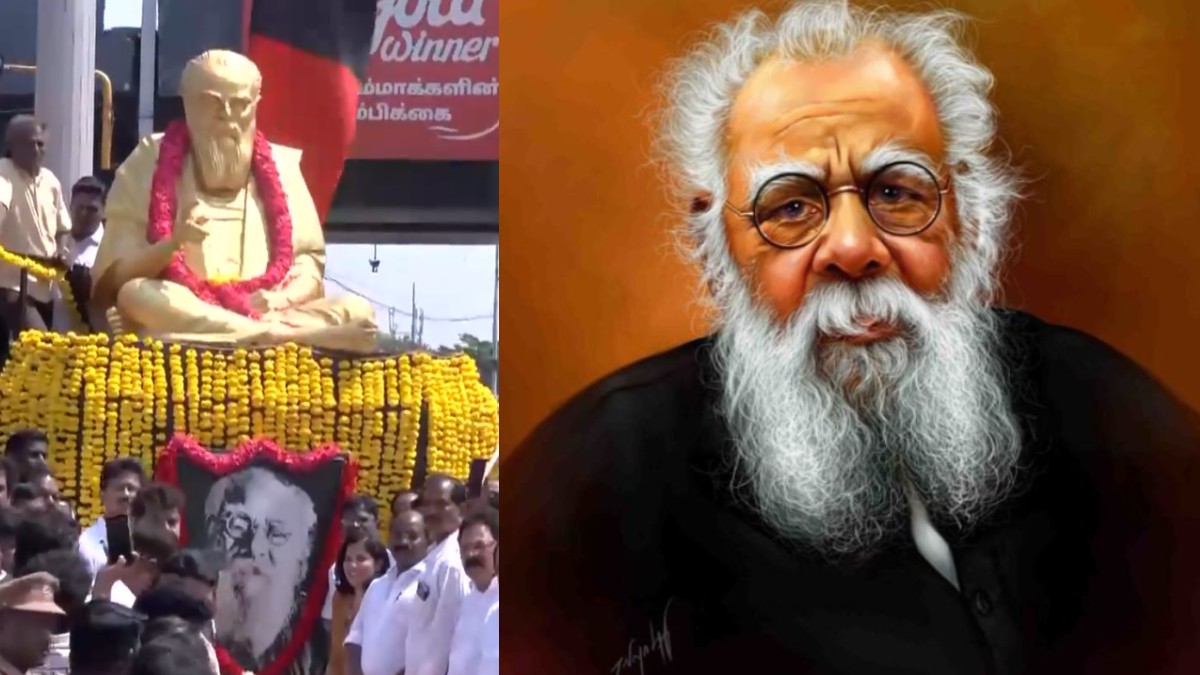
Who was Periyar?
Periyar was a social reformer, political activist, and rationalist whose public life was dominated by questions of caste, social inequality, women’s rights, and religious orthodoxy. He was initially in the Indian National Congress in 1919 but soon became critical about the organisation over questions of social representation and caste inequality. He left the Congress in 1925.
His political and social ideas would later be very strongly associated with the larger Dravidian movement in Tamil Nadu. The influence of his ideas is still being expressed in the current debate on social justice, caste, and Tamil identity.
The Self-Respect Movement
Periyar's most important contribution was the Self-Respect Movement in 1925. The movement sought to put an end to caste-based hierarchy and to promote social equality, rational thought, and individual dignity.
Periyar argued that social status should not be determined by birth. The movement also promoted women's rights, widow remarriage, inter-caste marriage, and alternatives to traditional marriage rituals.
His role in the Vaikom Satyagraha
Periyar is also remembered for his participation in the Vaikom Satyagraha in Travancore, which began in 1924. The movement challenged restrictions that prevented members of oppressed castes from using public roads around the Vaikom temple.
Periyar played an important leadership role during the agitation and was arrested. His involvement earned him the title “Vaikom Veerar” or “Hero of Vaikom.” A study of the movement shows that he led much of the agitation in 1924–25.
Women and Social Equality campaigns.
Periyar’s reform agenda extended well beyond caste. He supported women’s education, property rights, widow remarriage, and greater independence for women. He also supported inter-caste marriages and marriages conducted without elaborate religious rituals.
As such, his Self-Respect Movement was used to challenge some more established social practices and to promote greater equality.
Dravidar Kazhagam and political influence.
The Justice Party was transformed into the Dravidar Kazhagam (DK) under Periyar's leadership in 1944. Periyar himself was not an electoral politician in the traditional sense, but his ideas were instrumental in the development of Dravidian politics in Tamil Nadu.
His political and social thought later influenced the wider Dravidian movement, including organisations formed from the movement in later decades.
Why is Periyar remembered today?
Periyar is still a seminal and sometimes controversial historical figure. He is known for his support of social justice, rationalism, women’s rights, and opposition to caste discrimination, and his beliefs about religion, caste, identity, and politics have led to much of the current debate as well.
Periyar died on December 24, 1973, at the age of 94. His birth anniversary on September 17 is the day for reflection on his life, reform movements, and long-term impact on South Indian society.