Narendra Modi on Friday flagged off India's first hydrogen-powered train as a step toward sustainable transportation.
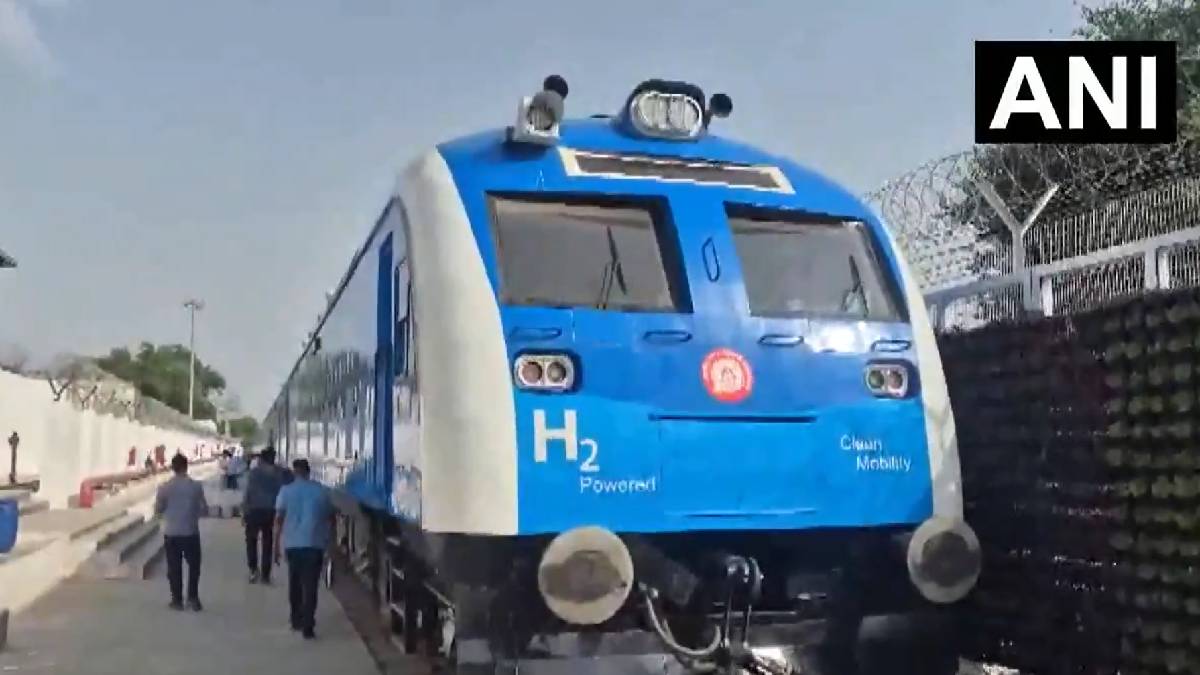
A historic milestone for Indian Railways and we are going to make sure that the government’s policy for green mobility is not only to use hydrogen but to use it for transportation.
The hydrogen fuel cell train will initially run on the Jind-Sonipat railway line in Haryana, covering almost 89 kilometres. Like traditional diesel trains, this train uses hydrogen fuel cells, which produce electricity by combining hydrogen and oxygen. Only water vapour is produced, thus it is one of the cleanest forms of rail transport.
The train is designed and integrated under the 'Make in India' initiative with 10 coaches, including two hydrogen-powered driving cars and eight passenger coaches. It is among the world’s largest hydrogen-powered trains in terms of coach capacity and can carry nearly 2,600 passengers.
The train has a maximum design speed of 110 km/h and its operating speed is expected to be around 75 km/h for both efficiency and passenger safety. The estimated travel time between Jind and Sonipat is around 90 minutes depending on operational conditions and scheduled halts.
Route and Stations
The hydrogen train will run between:
- Jind Junction
- Julana
- Gohana
- Sonipat
These stations link major urban centres in Haryana to the central cities and we are optimistic that the rail services will be improved, and hence will be environmentally friendly.
#WATCH | Jind, Haryana: Prime Minister Narendra Modi will flag off India's first hydrogen-powered train between Jind and Sonipat tomorrow
— ANI (@ANI) July 16, 2026
The train has been developed using indigenous technology. The train is powered by hydrogen fuel cell technology, which converts hydrogen into… pic.twitter.com/JUbWycjE9N
Advanced Technology and Safety
The hydrogen fuel cells convert chemical energy directly into electricity without combustion and reduce greenhouse gas emissions. The train’s safety systems are equipped with hydrogen leak detectors, smoke detectors, and advanced monitoring systems. In addition to that, Indian Railways has also built a hydrogen refuelling facility for regular operation at Jind.
A Major Green Milestone
The launch puts India among a few countries Germany, France, China, Japan and Italy, among others that have introduced hydrogen-powered rail technology. The project is in line with India's overall aim of achieving zero emissions and less reliance on fossil fuels.
And officials believe the success of that pilot program could also pave the way for the introduction of a number of hydrogen-powered trains throughout the country, especially on non-electrified railway lines. The goal of this initiative is to spur innovation, boost domestic manufacturing and to help drive India’s transformation to green transportation.