More than 60 U.S. senators have spoken out in favor of legislation that would mandate tariffs of up to 100% on imports from countries that continue to purchase Russian energy products, including crude oil. The proposed legislation is drawing international attention, especially in India, which has seen huge imports of discounted Russian crude since the Russia-Ukraine conflict started in late 2014.
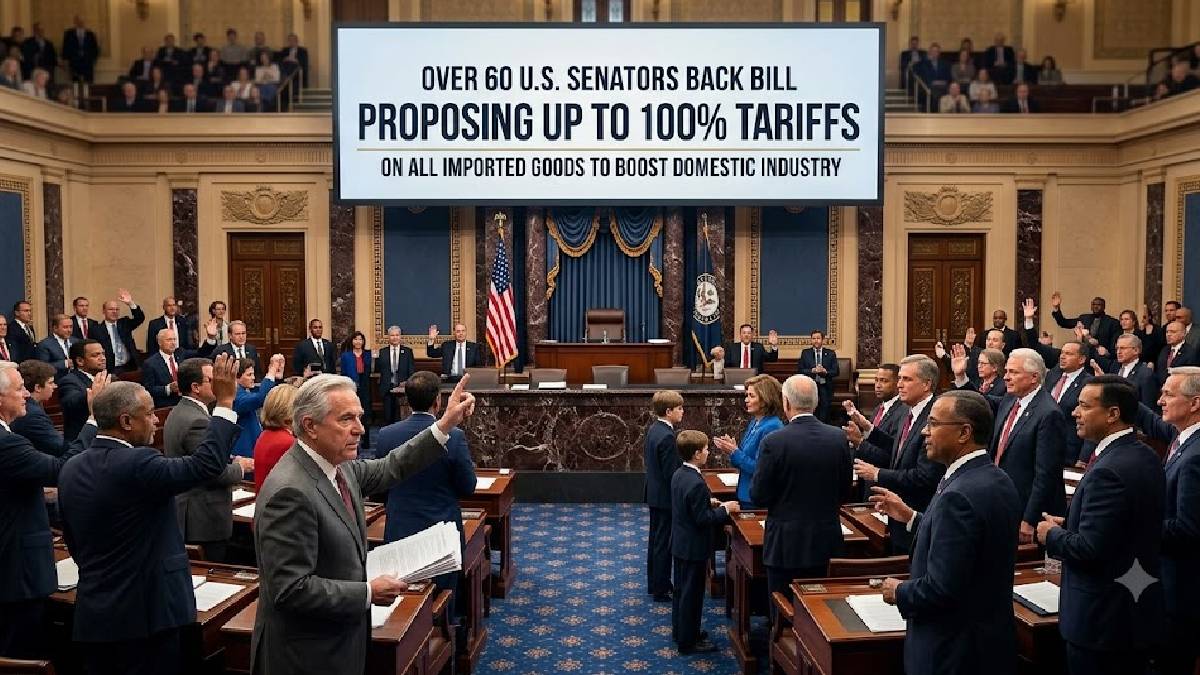
The bill supporters say it is designed to curb Russia’s energy revenues, which they say fund its military operations in Ukraine. The proposal is part of broader moves in Washington to put pressure on Moscow with sanctions and trade.
BREAKING: 60+ US Senators support bill threatening upto 100% tariff on India and others for buying Russian oil
— Shashank Mattoo (@MattooShashank) July 17, 2026
BUT America exempts its own uranium purchases from Russia and European allies for buying Russian natural gas pic.twitter.com/Nqmhxv3gbw
If enacted, the legislation could affect countries that continue importing Russian oil, depending on how the law is implemented and whether the U.S. administration decides to invoke its provisions. As a matter of fact, the bill is a legislative proposal, and it has not yet come into effect.
The proposal has also drawn criticism from some analysts and policymakers who point to what they believe are inconsistencies in Western energy policies.
Critics say that the United States has in some cases allowed continued imports of Russian uranium for use by its nuclear power sector, though Washington has been in recent years able to reduce reliance on Russian nuclear fuel and to tighten restrictions. They also say some European countries still import Russian natural gas, including pipeline gas or liquefied natural gas (LNG), as they seek to diversify their energy supply.
These observations have fueled arguments that countries outside the Western alliance are being held to different standards than the U.S. or its European partners. Pro-law proponents, however, say that exemptions or transition periods may be a matter of practical energy security, not a double standard.
India has repeatedly defended its energy procurement strategy as national energy security and economic interests are the primary drivers behind its purchases. Indian officials have repeatedly stated that the country’s priority is to provide affordable energy for its people, and that oil purchases are within the international rules and not in violation of United Nations sanctions.
Since 2022, Russia has become one of India's biggest crude oil suppliers, and these low prices have helped Indian refiners to handle import costs at a time of high global energy prices. Much of this crude is exported to international markets or used for domestic production of petroleum.
The proposed U.S. legislation comes at a time when India and the United States continue to deepen cooperation in defense, technology, semiconductors, and strategic partnerships in the Indo-Pacific. This means that any trade-related moves on India would likely require careful diplomacy to avoid damaging bilateral ties.
Energy analysts say global markets are very interconnected, and sanctions and trade restrictions are difficult to implement without unintended consequences. Oil or gas trade disruption can have global effects on world prices, supply chains, and inflation, impacting economies far beyond the countries involved.
The future of the bill is going to depend on the U.S. legislative process, which includes consideration by both houses of Congress and, if passed, presidential approval. The exact nature and scope of any tariffs that may be imposed would depend on the final language of the law and its implementation.
As discussions continue to progress, governments, businesses, and energy markets throughout the world will be watching the development of the proposal and the repercussions for international trade in general and energy security in particular for the global energy markets and politics.