Narendra Modi has released the autobiography of former President Ram Nath Kovind, marking the launch of a book that tells the story of his journey from a humble background to the highest constitutional office in India.
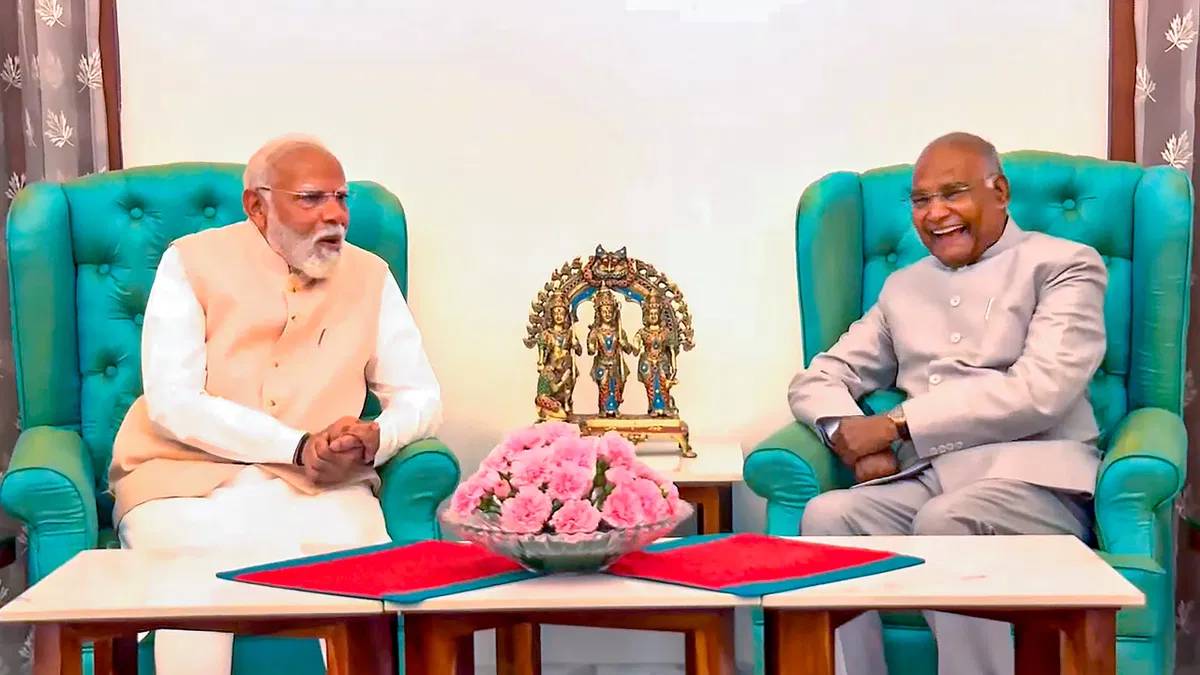
The occasion highlighted Kovind’s long public career, his political and public administration experience, and his position as the 14th President of India.
The autobiography tells of Kovind’s life as it was; his life and challenges were the experiences of Kovind. His life has been depicted as an example of India’s democratic system and opportunities for people from various social and economic backgrounds.
Kovind's journey to the Presidency
Ram Nath Kovind was the President of India from 2017 to 2022. Before being the President, he was also a member of the Rajya Sabha and Governor of Bihar.
His political career began as a lawyer, but he later got involved in public life. Kovind was also on parliamentary committees in relation to social justice, education issues, and the welfare of disadvantaged communities.
His election as President in 2017 marked another significant stage in his public career and saw him as India's constitutional head of state.
Modi Highlights Kovind’s Public Life
The release of the autobiography by Prime Minister Narendra Modi focuses on Kovind's tenure in public service.
Books written by former constitutional office-holders give a first-hand perspective on important political and administrative developments. Kovind’s account should provide readers with his personal experience of his journey in Parliament, as Governor of Bihar, and later as President.
The event also highlighted the relationship between India’s constitutional institutions and the people who have served in them.
A journey from Kanpur Dehat to Rashtrapati Bhavan
Kovind was born in Kanpur Dehat, Uttar Pradesh, in a very humble way. He later studied commerce and law before becoming a lawyer in Delhi.
His journey from a village in Uttar Pradesh to Rashtrapati Bhavan has been frequently cited as an illustration of the democratic evolution of the country.
After practising law, Kovind entered public life and became a member of Parliament. His experience in public affairs took him into the position of Governor in Bihar before he was elected as President.
Autobiography Offers Personal Perspective
The autobiography is significant because it allows Kovind to tell his life and public service from his own perspective.
He also served as President of India during his political career and made contacts with constitutional institutions, state governments, international leaders, and communities.
His term also coincided with some of the biggest developments in India’s domestic and international affairs.
The book is likely to be of interest to those seeking to understand the personal experiences behind one of India’s most important constitutional positions.
Focus on Public Service and Constitutional Values
Kovind’s public career has frequently emphasized constitutional values, education, social inclusion, and public service.
The release of his autobiography enables him to revisit those themes in the context of his own experiences with public office.
Narendra Modi’s presence at the launch also underlined the significance of the former President's political and constitutional journey.
The autobiography will offer readers an insight into Kovind’s life beyond his five-year tenure in Rashtrapati Bhavan and the events and experiences that led him to his career in public service.