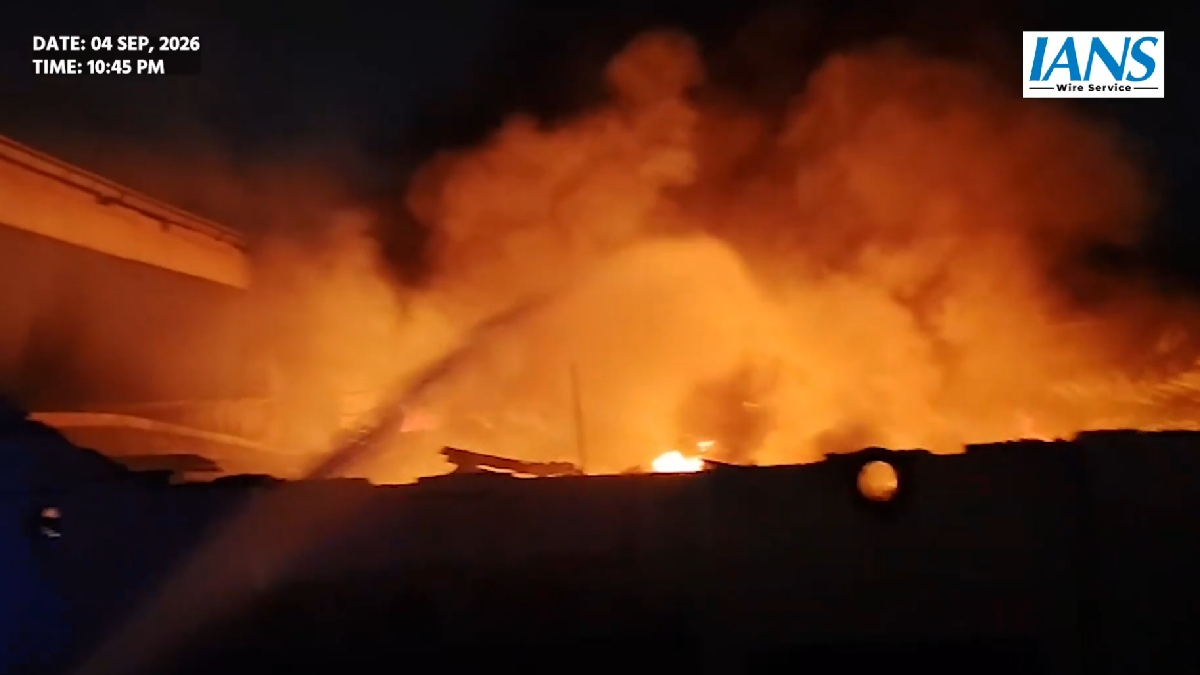
A mosque in the District Magistrate’s office complex in Saharanpur, Uttar Pradesh, was demolished overnight after a district court on Saturday ruled the building to be illegal occupation of government land. The demolition took place by the district administration in the presence of heavy security around the Collectorate.

The development followed a legal battle over the status of the mosque and the land on which it stood. The City Magistrate’s court had on July 16, 2026, ordered the eviction and removal of the structure and it occupies around 315 square metres of government land. The order also directed the occupants to pay compensation of more than Rs 6.41 crore for unauthorised occupation and use of the premises.
The mosque committee subsequently challenged the City Magistrate’s decision in the district court. But District Judge Satendra Kumar’s court rejected the appeal and maintained the earlier order, leaving the administration free to carry out the demolition. The district court considered the disputed land to be government property and did not accept the arguments advanced by the mosque side.
One of the key issues in the proceedings was the age of the mosque. The mosque side had made use of documents, e.g., an electricity bill dated January 1, 1911, to argue that it existed before the present Collectorate complex. However, the administration was not convinced that the evidence was authentic and relevant. Electricity was not introduced in Saharanpur at the time indicated on the paper, and power distribution began later, and the court refused to accept the claim that the evidence showed the mosque existed before the government complex.
The mosque side had also argued that the structure was decades old, so long ago as to the date of Independence. But the court found that documentary evidence had not been provided to establish the age or the legal status of the construction. The legal matter was whether the structure was on government land without authorisation.
The dispute began with Vikas Tyagi, a former Bajrang Dal office-bearer, who filed a complaint in 2025 on the ground that an unauthorised mosque had been built in the sensitive Collectorate premises. The complaint also raised issues of the use of part of the property for religious purposes. In light of the complaint, it was taken under the circumstances of unauthorised occupation of public property.
The administration argued that the presence and use of the disputed structure raised concerns as the Collectorate houses sensitive government offices and confidential administrative operations. Some rooms of the premises were also given to outsiders and a post office was operating from part of the site, the reports said. Such issues were at the center of the wider dispute which the authorities and courts explored.
The final demolition took place in the early hours of September 5. Security personnel were deployed near the Collectorate and other sensitive locations to prevent any disruption during the operation. The situation had also been closely monitored and the demolition of an important religious building had been watched with great concern. Despite the controversy, the demolition was completed successfully and no major mishap took place.
The timing of the action, however, drew criticism from opposition leaders and political figures who felt it was unfair to take the demolition at a time of communal tension. Samajwadi Party MP Iqra Hasan was detained and held under house arrest by the police when she tried to go to Saharanpur.
The mosque inside the Saharanpur Collectorate premises was demolished by the administration.
— Muslim Rights Matter (@RightsForMuslim) September 5, 2026
The mosque committee had presented an electricity bill dated January 1, 1911, claiming the mosque was over a century old. pic.twitter.com/3zrp2mgzVX
The administration maintained that the action was in accordance with judicial direction and not a discretionary action. In the past, officials had said the court order would be followed after the legal challenge was resolved. When the mosque committee's appeal was rejected by the district court, the administration proceeded with the removal of the structure.
The Saharanpur case has now emerged as a politically charged one and concerns government land, unauthorised development, religious structures, and the enforcement of court orders. As government officials have justified the demolition as based on a judicial decision about public property, opposition voices have made their case for its timing and wider effects.
Now the structure has been demolished, the legal issue could be taken to a higher court if the mosque committee challenges the district court’s decision. But until now, the Saharanpur administration has demolished it after the lower court’s original order and dismissal of the appeal.