A student’s observation about the difference between startup founders in San Francisco and India has opened a conversation around workplace culture, mentorship and how young people are treated when they bring new ideas to the table.
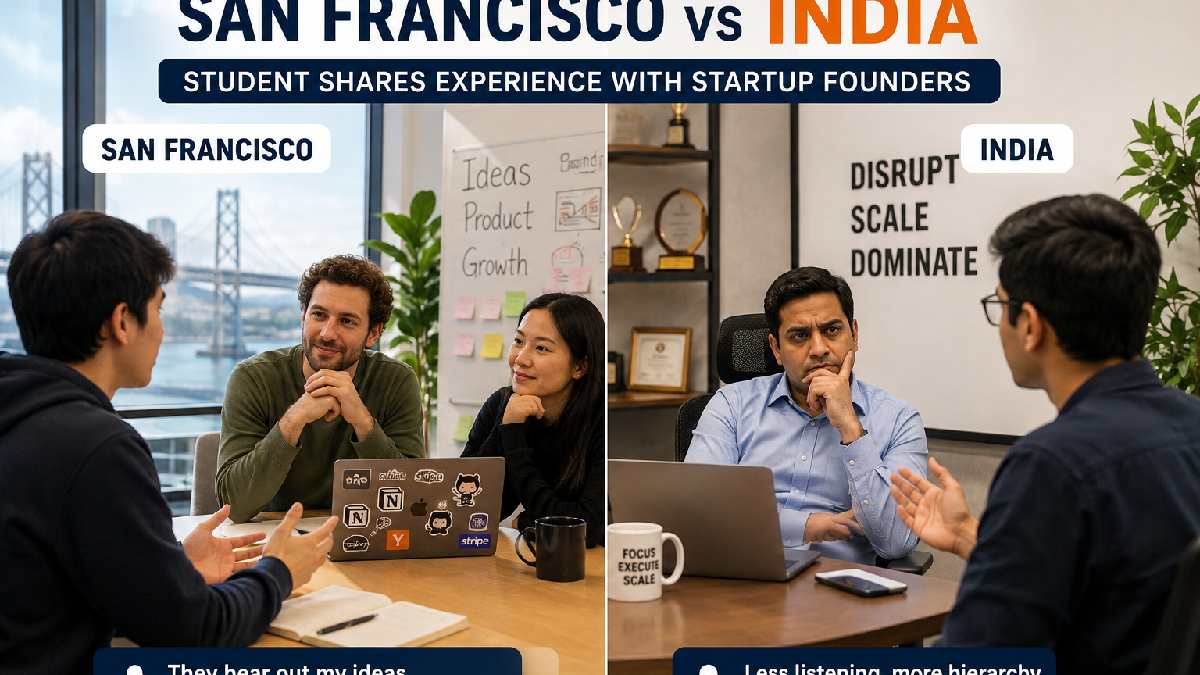
The student said founders in San Francisco are more likely to listen to students and young professionals and create an environment where people feel comfortable sharing their beliefs, that’s the way they are in San Francisco. That openness can change so much for someone who is still in the beginning of their professional journey.
The comparison also underscores a broader conversation about startup culture. San Francisco, well known as one of the world’s major technology and startup hubs, has a culture of experimentation, networking and rapid innovation.
Students and early-career professionals will frequently interact with founders, investors and technology leaders in universities and startup events, internships, networking groups and on-the-job interaction.
Young entrepreneurs can use the hearing to build confidence. A founder who is willing to listen to an idea shouldn’t have to accept it. But simply opening up space for discussion can help young people think up ideas and build their communication skills.
The student’s comments also raise questions about the experience of young people in India’s growing startup ecosystem. India has one of the world’s largest startup communities, with entrepreneurs founding companies in fintech, e-commerce, artificial intelligence, health technology, education and other areas.
Indian startup founders and executives are interacting more and more with students through campus programmes, entrepreneurship cells, hackathons and startup competitions. But experiences can vary widely based on company, founder and workplace culture.
The student's contrast here might not be more in terms of an absolute difference between two countries but rather about different ways of leadership and communication.
Some founders may have the old hierarchies, and some may, in fact, encourage employees and students to challenge existing ideas.
In startups, this openness can be useful. Young people will have perspectives that are shaped by new technologies, changing consumer behaviour and emerging digital trends.
Giving them a chance to speak may help companies identify ideas that might otherwise remain unnoticed.
But at the same time, listening to ideas is only one part of creating a healthy startup ecosystem. Mentorship, constructive feedback, experimentation and respect for different viewpoints affect how comfortable young professionals feel as well.
The student’s comparison has thus touched on a larger issue: what kind of culture should modern startups create for the next generation of entrepreneurs
As India’s startup ecosystem expands, the ability to combine entrepreneurial ambition with open communication could become more important.
Whether in San Francisco or India, founders who create environments where people can question, suggest and contribute may be better positioned to attract young talent and encourage innovation.