Bengaluru's massive Satellite Town Ring Road (STRR) project is transforming the way traffic moves around the city, and several parts of it are currently being opened in phases, while others are being brought to completion. The ambitious road network will give an alternative to visiting Bengaluru’s congested central areas by connecting important peripheral towns and growth corridors around the city.
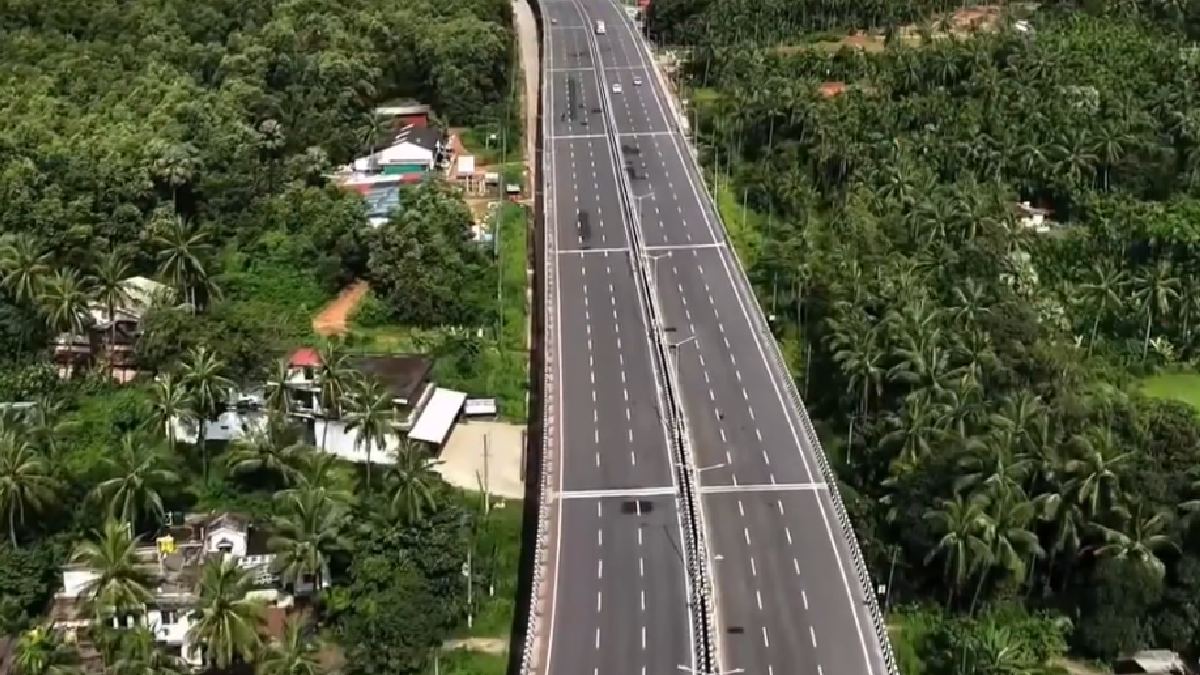
The STRR is planned as a roughly 288-kilometre access-controlled ring road along the NH-948A corridor developed by the National Highways Authority of India (NHAI). The project is estimated to cost about ₹14,655 crore. Rather than trying to force vehicles to enter the city by driving between two outer suburbs, the ring road is intended to allow them to bypass the city centre and take a faster peripheral route.
The project connects or is designed to connect several key locations around Bengaluru, i.e Hoskote, Devanahalli, Doddaballapur, Nelamangala, Anekal and Sarjapur. This creates a wider road network around the metropolitan area and can be especially significant for freight vehicles, industrial traffic and commuters travelling between metropolitan employment centres.
STRR Is To Reduce Pressure On Bengaluru City Roads
One of the main objectives of the Satellite Town Ring Road is to curb unnecessary traffic entering the central regions of Bengaluru. Currently, vehicles that come from one peripheral corridor to another must use very congested roads in the city. STRR provides a dedicated route around the metropolitan area.
For instance, a vehicle travelling between the eastern and northern outskirts may be able to use the STRR instead of going through the busy central Bengaluru. This can reduce the distance and time involved in some inter-suburban journeys and also divert heavy commercial vehicles away from city roads.
The road should play a significant role not only in daily commuting but also in logistics and goods transportation. Better peripheral connectivity is expected to strengthen links between industrial zones, warehouses, logistics parks, employment hubs and residential zones.
Hoskote Emerging As An Important STRR Corridor
Hoskote has also emerged as the centre of attention among the various locations connected to the STRR network, and Hoskote is one of the most important eastern gateways. The area already benefits from the proximity of Old Madras Road and NH-75, and better connections through the STRR offer another significant infrastructure advantage.
Recent reports have highlighted Hoskote as one of the peripheral areas benefiting from the phased development of the STRR along with other growth corridors like Anekal, Sarjapur, Doddaballapur and Nelamangala.
The wider road network could also help in the expansion of residential and commercial development outside Bengaluru's traditional downtown areas. With better transportation links, areas along the major transportation arteries usually attract more businesses, employees and homebuyers because commuting to work centres is more convenient.
Real Estate Impact Around Bengaluru’s Outskirts
The STRR is also being closely watched by Bengaluru’s real estate sector. Better roads can improve access to peripheral locations and perhaps encourage developers to launch large residential communities, commercial projects and integrated townships along emerging corridors.
Hoskote is another place where major residential development is already in its midst. SOBHA One World, for example, is a large township development in Hoskote, located close to NH-75 and the STRR corridor. Public project information indicates that it is located in Hoskote and connected to the city.
However, infrastructure connectivity should not be interpreted as a guarantee of property appreciation. Real estate performance will also depend on employment growth, social infrastructure, water availability, public transport, construction activity and overall demand.
2026-27 Could Be An Important Phase
When more sections of the STRR are deployed, however, the impact will go beyond road traffic. Commercial activities in peripheral areas could happen; new housing projects, logistics facilities and other infrastructure needs would be created.
And for Bengaluru, this is especially significant because the city has expanded beyond its traditional core. Major employment centres are now spread across Whitefield, Electronic City, Devanahalli, Sarjapur, Hoskote and other outer corridors. A ring-road network connecting these locations can help create a more distributed urban transportation system.
The phased development of the STRR therefore is more than just a road-building exercise. It is part of a larger plan to create an alternative mobility network around Bengaluru and reduce dependence on the city’s central roads.
With several sections already in use and other stretches going towards completion, the 288-km STRR could become one of the key pieces of Bengaluru’s future peripheral transport infrastructure. Its full impact will become clearer as additional sections open and surrounding residential, industrial and commercial development catches up with the improved connectivity.