Families are most concerned with food safety, especially when packaged products trusted by millions are at hand. Recently, a consumer discovered that there was fungus inside a sealed pack of Amul, one of the famous dairy brands in India. The product had an expiry date of March 11, 2026 but contained visibly contaminated contents. This has placed under serious scrutiny issues of quality assurance, package handling criteria and consumer protection.
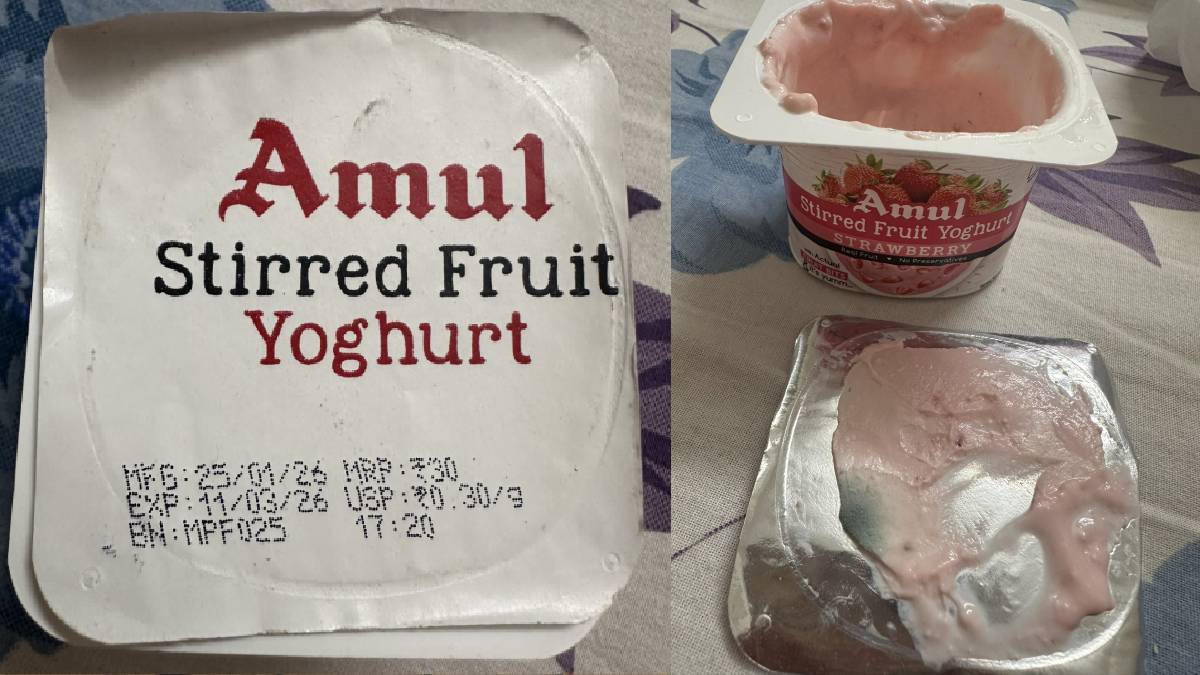
The yoghurt package was opened half by the consumer’s daughter, who snacked on some of it without detection. Later, with the whole cover peeled off, fungus was obviously in evidence on the surface of the yoghurt. It was shocking and disturbing for the family, the product was well within the expiry date. The matter was disclosed publicly on social media, naming Amul and Food Safety and Standards Authority of India (FSSAI) and urged the company for immediate action.
This case raises a number of important questions. The first of these is the issue of quality assurance. So in other words how could a product with a valid expiry date produce fungus? Was it the misconfiguration of manufacturing, storage or distribution? The second is that it does pose health risks. Consumption of tainted dairy products can lead to food poisoning, stomach diseases and various health problems, particularly in children. Third, trust from consumers is at stake. Amul is a household name in India, and these kinds of events can undermine confidence in packaged food companies. Finally, regulatory scrutiny is vital too. Consumers demand frequent oversight and monitoring and responsibility from FSSAI to keep food safe in order to ensure food safety, and have become a key customer expectation.
The episode rapidly caught on online and many users shared their concerns and were unhappy. Parents especially expressed concern at a time when packaged dairy products were widely reported to be unsafe. Social media platforms only ratcheted up the issue and the cries for answers both from the business and from regulators spread like wildfire.
Amul also sees this as a good reminder that rigorous quality control and clear communication are required. For regulators such as FSSAI, it is a mandate for beefing up inspections and ensuring that consumer complaints are dealt with urgently. Consumers are also asked to inspect packaged products, even when they look sealed and are within expiry, carefully before consumption.

What is to be learned, the finding of fungi in a sealed yoghurt pack is not just a one‑off and no one party has yet been left to sit and say nothing has changed or that this is so because “we are here” in an effort to protect against this phenomenon. People buy packaged products for convenience and safety, and that cannot be broken. More stringent quality control, accountability, and consumer scrutiny are necessary to prevent repeat incidents of this type.