A South Korean tourist was injured after being attacked by a monkey near the Eastern Gate of the Taj Mahal in Agra, Uttar Pradesh, on Tuesday as tourists rushed to the Taj Mahal to visit it, and it remains one of the most visited UNESCO World Heritage sites in India, reported local media.
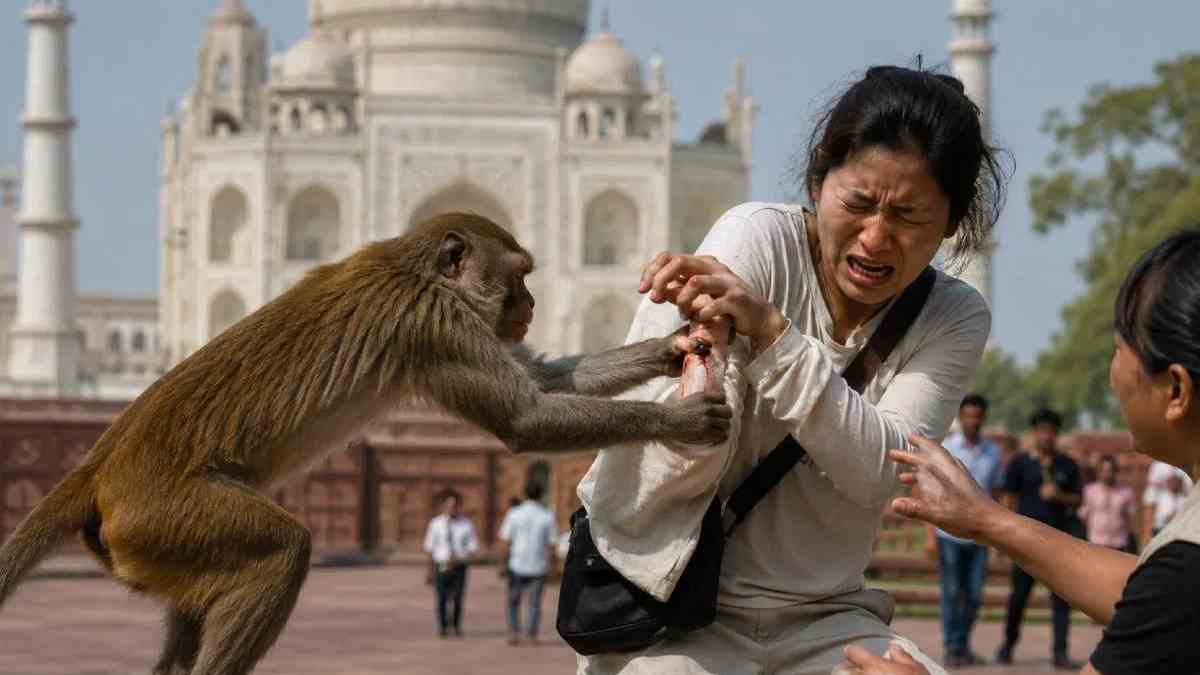
According to initial reports, the woman was in a group of tourists near the monument entrance when a monkey attacked her and bit her hand, she said. The bite caused a serious wound, and the attack left her bleeding and tourists and local vendors panic-stricken.
The injured tourist appeared to be in severe pain as people sprinted to help her. Some bystanders also provided first aid and attempted to stem the bleeding; some in the vicinity were reported to call emergency services, witnesses said.
Local media also reported delays in an ambulance's arrival, and there was criticism from tourists and residents for the lack of emergency medical service in one of the country’s busiest tourist places.
The woman was later transferred to a nearby medical facility, and doctors evaluated her injuries. Medical personnel also evaluated her condition and initiated the necessary treatment typically recommended after an animal bite, he said. The official did not disclose any details about her condition.
The Taj Mahal draws millions of foreign and local tourists to the monument every year, and monkeys have long been seen everywhere around the monument and nearby areas. Many visitors enjoy observing the animals from a distance, but officials have warned tourists not to feed or approach them because they can become aggressive.
Monkeys will attack if they feel threatened or if they try to steal food, bags, and other belongings from visitors, wildlife experts say. Similar incidents have been reported around several tourist and religious places in northern India.
The latest incident has once again raised questions about better crowd control, better control of stray monkeys in tourist zones, and faster emergency medical assistance for injured visitors.
Tourism stakeholders have also emphasized the need to ensure that foreign tourists get medical care and assistance quickly enough, as this can affect India’s reputation as a safe travel destination.
The circumstances of the monkey attack and the delay in emergency response will be investigated, the officials said. More safety measures, warning signage and medical response teams are also needed around the monument.
The situation is a reminder for tourists to be cautious while visiting areas where monkeys are known to be present. Experts recommend avoiding direct contact with wild animals, keeping food out of sight, and following instructions issued by local authorities and monument staff.
There will be an official inquiry into the incident, as well as a government investigation, and security patrols are up and running around the Taj Mahal.