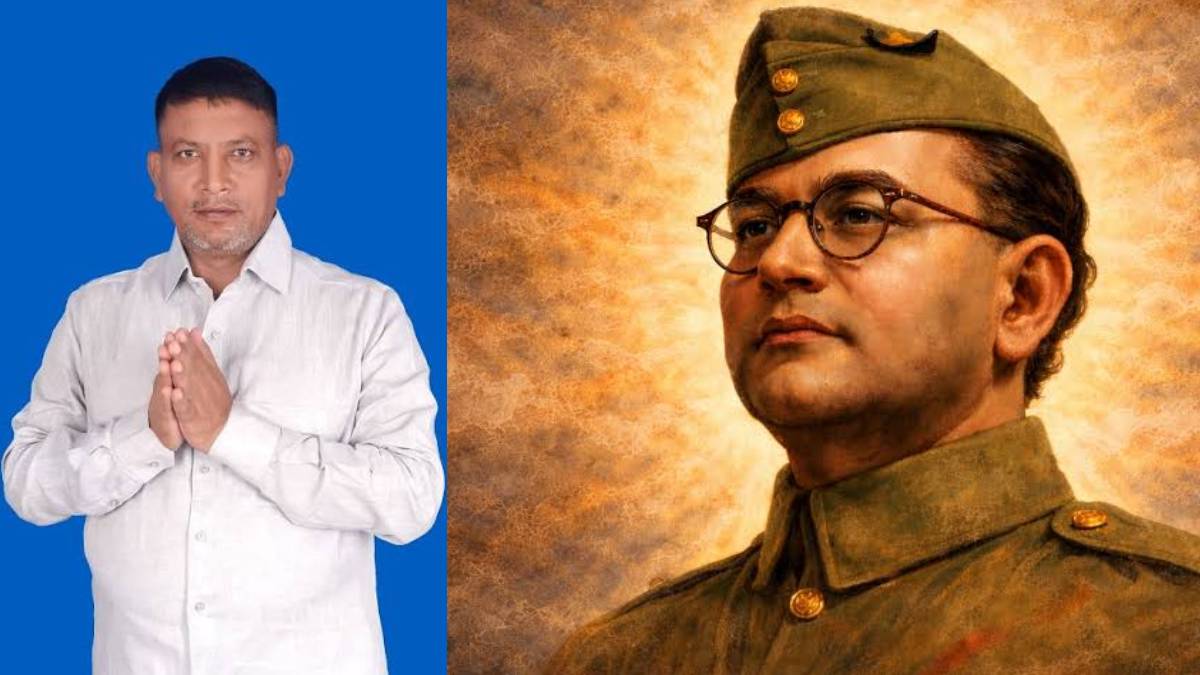
The Supreme Court on Thursday declined a request to take suo motu cognisance of alleged denigrating remarks made by Rajya Sabha MP Nagendra Ray, also known as Anant Maharaj, about freedom fighter Netaji Subhas Chandra Bose.
A bench of Chief Justice of India Surya Kant and Justices Joymalya Bagchi and V Mohana listened to the request on 13th August, 2026. Instead of starting the proceedings on its own, the bench directed the lawyer who raised the issue to approach the court through an appropriate petition.
The lawyer asked the court to intervene, describing the alleged comments about Netaji as extremely unfortunate and arguing that they were comparable to hate speech. The counsel pleaded with the Supreme Court to take suo motu cognisance of the matter.
The bench, however, wondered why the matter needed to be taken up suo motu when the lawyer could file a formal petition.
“Why do you want suo motu? Why can’t you file a petition?” Chief Justice Surya Kant asked in the court on Thursday.
Justice Joymalya Bagchi explained that if the concern was that someone had made comments amounting to hate speech, the appropriate course would be filing a petition. Then such a petition would be looked at under the principles of free speech and reasonable restrictions.
The court's answer doesn’t mean that the MP’s alleged comments are hate speech or violate any law. But the court did make it clear that the matter should come before the court through the regular legal process so that the allegations can be thoroughly investigated.
Justice Bagchi also described the common practice in which the Supreme Court would consider suo motu action. It is generally considered when there is a serious cause, the court said, and when affected persons may not be able to approach the judiciary themselves.
The Chief Justice mentioned earlier cases on such issues as the environment and vulnerable sections of society and said that the court may intervene on its own initiative if those affected are unable to effectively seek judicial remedies.
In the present case, however, the bench concluded that a competent lawyer was before the court already and could make an appropriate petition. This difference was what led the court not to begin suo motu proceedings.
The controversy is about comments allegedly made by Nagendra Ray, popularly known as Anant Maharaj, on Netaji Subhas Chandra Bose, one of India's most prominent freedom leaders.
The Supreme Court’s direction means that the controversy could still reach the court if the lawyer files a formal writ petition. Such proceedings would permit the court to examine the exact statements, their context, and whether they violate the legal boundaries governing freedom of expression.
The issue also illustrates the delicate balance between free speech and reasonable restrictions under Indian law. People, including elected representatives, are guaranteed constitutional protection for expression, but those who are charged with hate speech or in violation of the law can find themselves in trouble with the courts if they are found to have acted in bad faith.
The Supreme Court has not ruled yet on the substance of the allegations against Anant Maharaj. Its Thursday order was limited to declining the request for suo motu intervention and directing the petitioner to follow the established route of filing a petition.
The lawyer who raised the issue is now the next step. If a petition is filed, then the Supreme Court will decide if the alleged remarks should be intervened in the judiciary based on the constitutional and statutory rules.
The episode once again demonstrates the Supreme Court's approach to suo motu jurisdiction while leaving open the possibility of judicial examination if the matter is brought before it through a proper petition.