The Supreme Court today ruled a ban on firecrackers would be in place but fireworks could not be burst throughout the day.
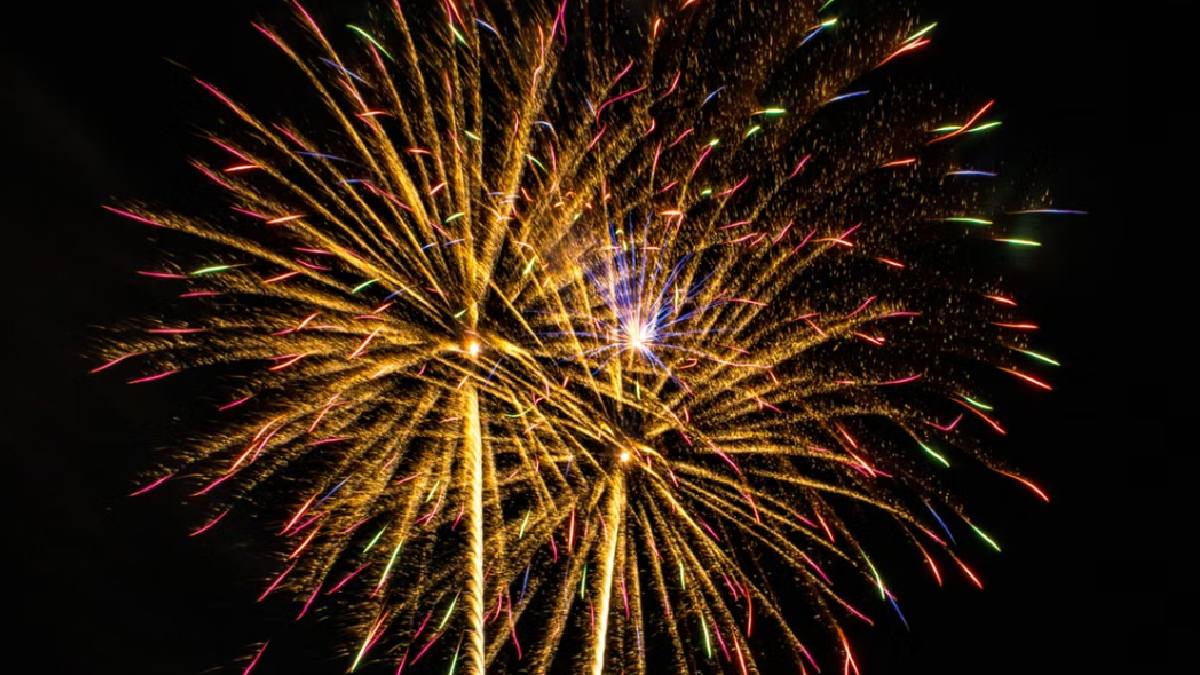
A bench of Justices M M Sundresh and P B Varale said a blanket ban might affect public sentiments, and unlimited use of fireworks could have major repercussions on people and the environment. The court therefore said that firecracker use should be under specified timings and other conditions.
The recent observations come just before the festive season, when fireworks are prevalent in many parts of India and use of fireworks is expected to soar in the upcoming season. The Supreme Court has been dealing with issues related to firecracker emissions, noise pollution and restrictions for many years.
The Supreme Court Seeks a Middle Ground.
At the hearing, the bench made clear that neither extreme would be adopted. The court said it would not agree to a total ban, but would not allow fireworks to be used round the clock.
We need to set a specific period when fireworks can be used, the judges said. We want to balance cultural and festive times and concerns over pollution and the health of the less privileged.
The court’s observations are particularly relevant for children, elderly people and those who have health problems that could be exacerbated by increased air and noise pollution. Unrestricted fireworks could affect “every other living being”, including older people, sick people and children, the bench said.
The court’s position is consistent with its broader approach of allowing controlled fireworks use rather than unrestricted burning. Previous orders have placed restrictions on the types of crackers that can be manufactured and used and the periods during which they can be burst.
Next Generation Green Crackers In Focus
During the hearing, Additional Solicitor General Aishwarya Bhati submitted a note to the court concerning the use of certain next-generation joined green crackers.
These fireworks have been developed in collaboration with the Council of Scientific and Industrial Research-National Environmental Engineering Research Institute, or CSIR-NEERI. They are intended to reduce emissions through modified formulations and lower quantities of certain substances.
The court has now allowed specified next-generation joined green crackers under certain conditions. The products must be manufactured by duly licensed manufacturers and comply with prescribed noise, emission and safety standards.
These conditions also cover the chemical composition of the fireworks. Crackers with banned chemicals would not be allowed, and the approved products would have to meet the noise limits.
Barium Issue To Be Considered On October 15
One of the key issues before the Supreme Court is the use of barium in firecrackers. The court has given the Centre and expert bodies some time to evaluate the effect of barium-containing green crackers on ambient air quality.
The issue will be further discussed on October 15. The assessment will assist the court in developing the regulatory approach to such formulations.
Barium has long been considered a significant part of firecracker debates because of the effects of emissions on air quality. The Supreme Court has held fireworks containing hazardous substances to be prohibited and the environment must be protected.
Timing Restrictions Remain Important
Though the new observations rule out a blanket ban, they do not mean that fireworks can be used at any time. The court has reaffirmed that firecrackers cannot be burst round the clock and that their use should be done within prescribed time windows.
A specific area’s timing may be determined by court orders and the rules in place by government and local authorities. As such, fireworks in the festive season will need to be lit in the time and conditions as specified for their specific location.
The Supreme Court has also previously stressed the necessity of enforcing restrictions rather than merely issuing them. That’s why authorities will have to monitor compliance with noise levels, banned chemicals and the use of permitted green crackers.
Balancing Festive Traditions And Environmental Concerns
The firecracker issue has frequently involved a balance between religious and cultural celebrations, environmental protection and the right to health. The Supreme Court's words on the matter were consistent with its position that a complete prohibition and unrestricted use would not be accepted.
The court’s comments are also in line with pollution problems in major Indian cities during the festive season. Firecrackers can lead to a high level of pollution and noise if they’re used in large numbers for a very short time.
At the same time, the court has acknowledged that a complete ban could affect sentiments so regulated use is at the heart of the current proceedings. The green-cracker program allows for celebration at the same time with limits to minimize environmental and health effects.
The Supreme Court will take the barium issue again on October 15. On that point, the position is no blanket nationwide prohibition announced in this hearing, but unrestricted, round-the-clock fireworks are not allowed.