The Supreme Court has rejected gangster Abu Salem’s plea seeking early release from prison in the 1993 Mumbai serial blasts case.
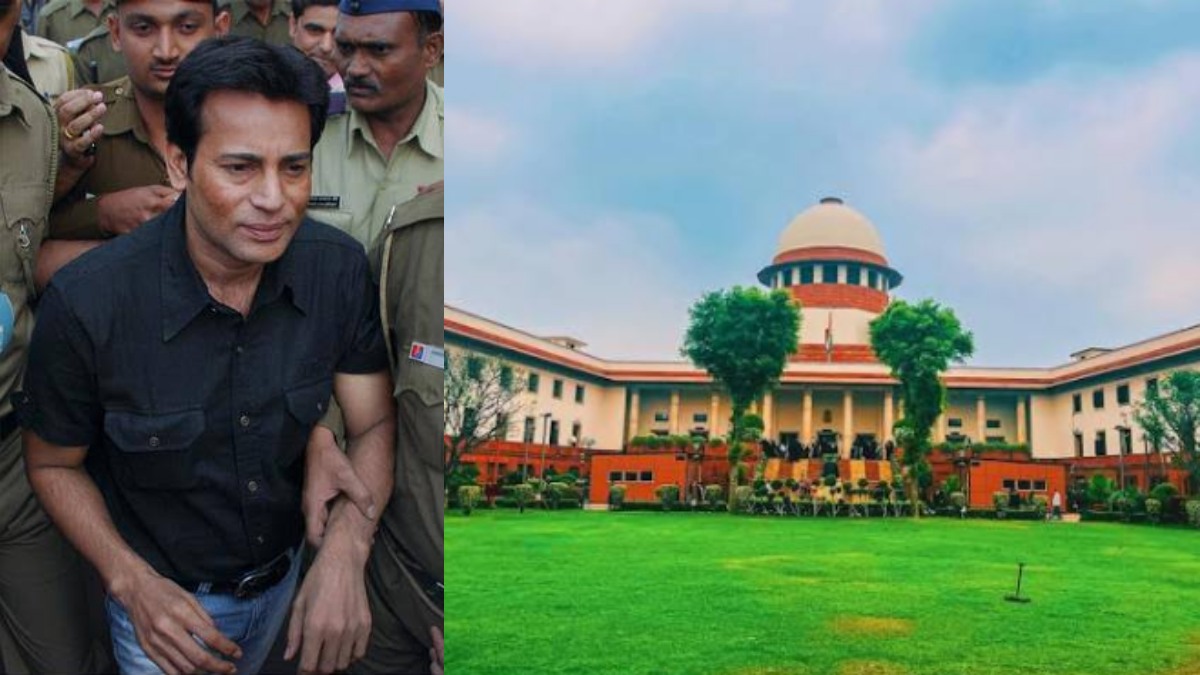
A bench of Justices Vikram Nath and Sandeep Mehta dismissed Salem’s plea after his claim that he had completed the 25 years linked to the extradition assurances given by India to Portugal.
Salem is on a life sentence for his role in the 1993 Mumbai bombings. He was extradited from Portugal in 2005 to India. In his extradition process, India had assured Portugal that Salem would not be sentenced to death and that he would not be imprisoned for more than 25 years.
The decision means Salem will not get the early release he had been seeking through this plea.
What was Abu Salem’s argument?
Salem’s legal team argued he had completed the 25 years if the calculation included the time he spent as an undertrial and the remission he received during his imprisonment.
His lawyers had argued Salem had received about three years of remission for good conduct. They also wanted to include the time he spent in custody as an undertrial in the 25-year limit.
The issue had already been discussed by the Bombay High Court earlier this year. In April, the High Court turned down Salem’s bid for early release and said the 25 years had not yet been completed.
The High Court's calculation listed a date of completion of the 25-year period in November 2030. Salem's prison remissions could not be used to reduce the 25 years resulting from the extradition arrangement.
Salem then went to the Supreme Court to challenge the position.
The Supreme Court had heard arguments on whether earned remission and the period spent as an undertrial could count towards the 25-year limit. The court had reserved its order after hearing both sides in July.
What is the 25-year period?
Salem’s release hinges on the conditions under which he was extradited from Portugal.
Salem was brought back to India in November 2005. He was convicted and sentenced to life imprisonment in cases related to the 1993 Mumbai blasts.
But the Supreme Court had already considered the extradition assurance and had held that the 25-year limit had to be respected. Salem’s argument was that he should be released once that period was over.
The fundamental problem has been how this 25-year period should be calculated.
Salem argued that different periods of custody and earned remission should be included in the calculation. But authorities said he had not completed the required period.
The Bombay High Court rejected Salem’s calculation and said that allowing regular prison remissions to reduce the 25 years would violate the extradition agreement as well. The court also said the 25 years itself was tied to the assurances given to Portugal.
The Supreme Court’s recent dismissal is another setback for Salem’s efforts to secure an early release.
The 1993 Mumbai serial bombings are still one of the most significant terror attacks in India’s history. The bombings across Mumbai on 12 March 1993 killed hundreds and injured many others.
Salem was one of the accused in the case and had lived outside India for years before his extradition from Portugal.
His legal battle over the length of his imprisonment has continued even after his conviction; the courts are still examining how the extradition assurances should be applied.
The Supreme Court’s decision means Salem’s request for early release has been rejected. His plea included being released from undertrial custody and receiving remission to reach the 25-year limit earlier.
The recent ruling, however, means the release of his sentence and the 25 years are subject to the legal situation.