Pakistan is rapidly transforming its military capabilities in a reliance on Chinese and Turkish defence technology and its fighter jets, drones, missiles and air-defence systems are increasingly visible. And this is another example of Islamabad’s drive to improve its air-defence system when it is financially constrained and the regional security environment is changing.
Recent footage released by Pakistan Air Force showed Chinese-made J-10C and JF-17 fighters and Bayraktar TB2, Baykar Akinci and Chinese Wing Loong II unmanned aerial vehicles. There were also Chinese and Turkish air defence systems in the display.
China remains the backbone of Pakistan’s air power.
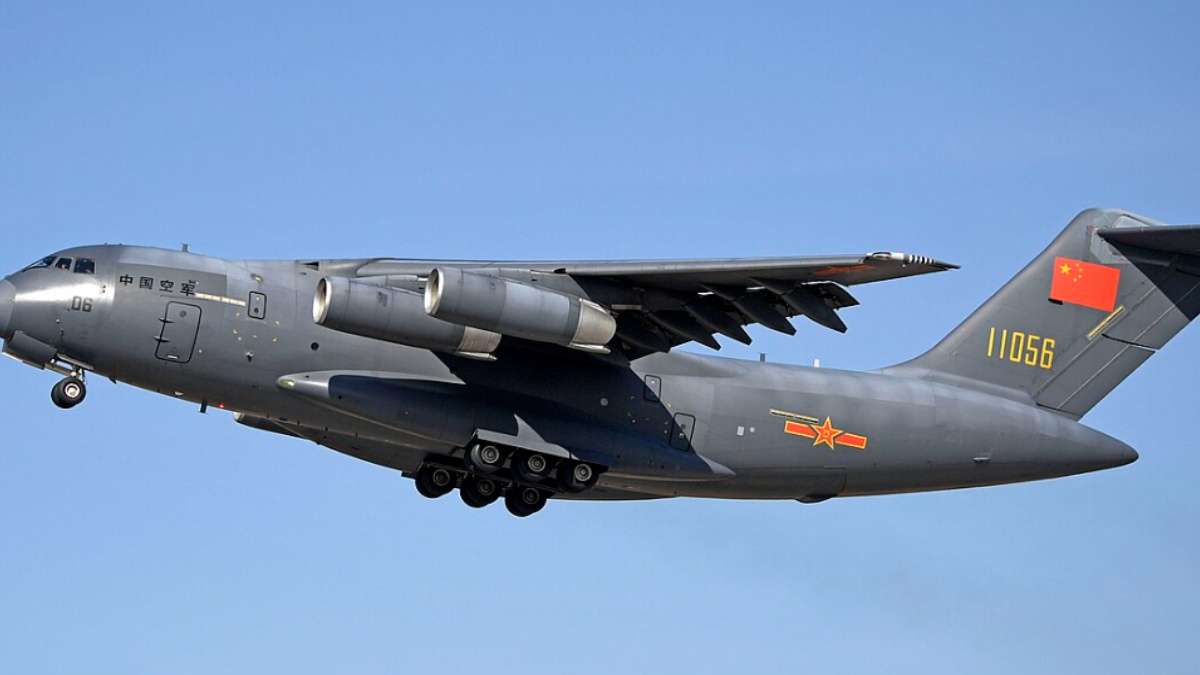
China has emerged as Pakistan’s most important defence supplier. The J-10C fighter has become a key component of the Pakistan Air Force, and the jointly developed JF-17 Thunder is still a central element of Islamabad’s fighter modernisation programme.
Pakistan has also acquired Chinese missile and air-defence systems such as the HQ-9 family and other surface-to-air missile platforms. Cooperation extends beyond procurement to joint production, technology development and command-and-control systems.
Pakistan itself has highlighted the strategic importance of its relationship with China. President Asif Ali Zardari visited China in 2025 and toured the AVIC complex producing J-10C and discussed fighter aircraft, drones and advanced military technology.
Turkish Drones Add Another Layer
Turkey has become another important defence partner for Pakistan, especially in unmanned systems and short-range air defence.
The Bayraktar Akinci, along with the Turkish Bayraktar TB2, gives Pakistan new options for intelligence, surveillance and strike missions. Turkish technology has also entered Pakistan’s ground-based air defence architecture.
According to Janes, Pakistan has introduced Turkey’s Korkut self-propelled anti-aircraft gun and Aselsan’s Şahin counter-drone system. These are meant to prevent the growing threat from drones and low-altitude targets.
New Chinese HQ-17AE enhances short-range defence
One of the most interesting additions is China’s HQ-17AE short-range surface-to-air missile system. The mobile system is supposed to protect military formations and installations against low-altitude aerial threats, including drones.
The system incorporates phased-array radar and vertical missile launch technology. Its mobility also allows it to operate alongside rapidly moving military units.
The presence of HQ-17AE and Turkish Korkut indicates that Pakistan is trying to build multiple layers of air defence rather than relying on a single weapons platform.
India’s Defence Modernisation Raises the Stakes.
Pakistan’s military expansion comes as India continues to modernise its own armed forces with fighter aircraft, long-range missiles, drones, air-defence systems and indigenous platforms.
The May 2025 India-Pakistan conflict also brought new attention to the performance of Chinese-origin weapons. More and more people were interested in Chinese combat aircraft, especially the J-10C.
For Islamabad, the challenge is to reconcile military modernisation with economic pressures. Expanding the inventory of foreign-supplied systems can improve capability quickly, but it also means spending on longer-term financing, maintenance, training, spare parts and ammunition.
A Strategic Shift, Not Just a Military Display
So Pakistan’s latest defence showcase is more than a collection of new weapons. It is also indicative of a shift in strategy toward deeper defence-industrial partnerships with China and Turkey and its long-term strategic outlook.
While these partnerships are giving Pakistan access to modern fighters, drones and air-defence technologies, India’s continued investment in indigenous and imported defence capabilities means the regional military competition is likely to remain intense.