Suvendu Adhikari is to become Chief Minister of West Bengal, the first time a leader of the Bharatiya Janata Party has climbed to the top seat for the state.
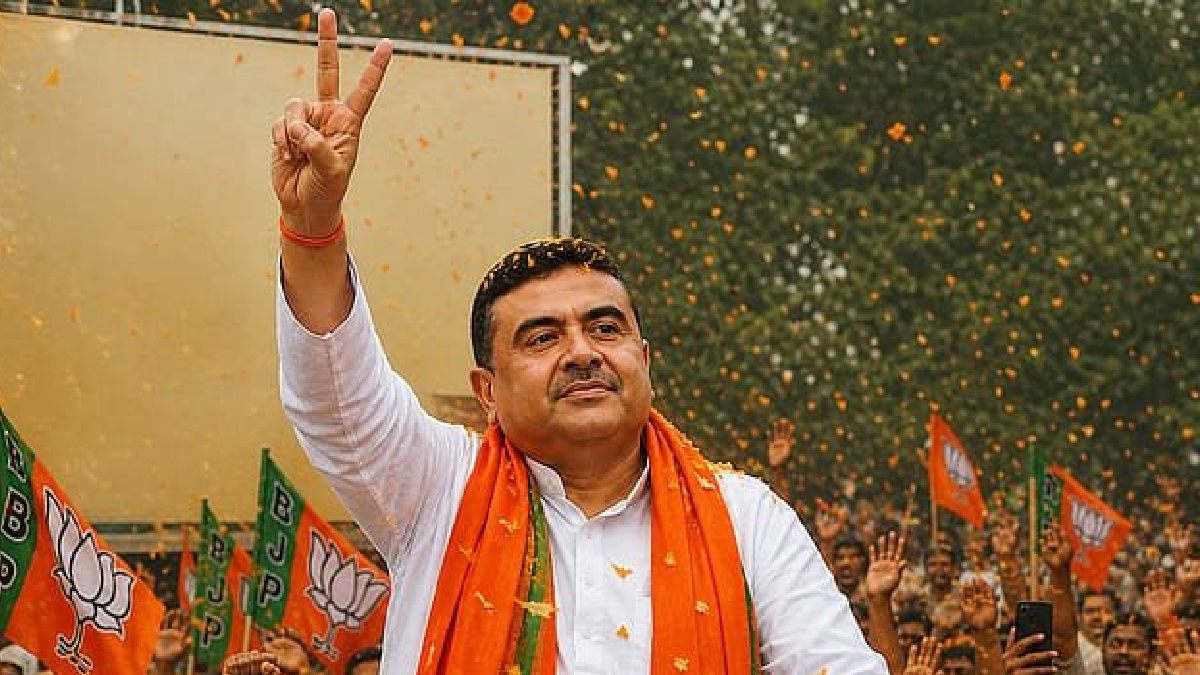
Party members said Adhikari will take an oath tomorrow in a large ceremony in which senior leaders from the BJP and various political leaders from across India will attend. It would be a seismic shift in Bengal politics, ending decades of regional party dominance, and clearing the way for the BJP’s first chance of governing the eastern state.
That development has already begun celebrations for BJP workers and loyalists in Kolkata and some districts there. Suvendu Adhikari made history as one of the BJP’s most successful leaders in Bengal after quitting the All India Trinamool Congress and defecting to the BJP for the 2021 Assembly elections.
His clout as a leader has soared after he defeated Chief Minister Mamata Banerjee in the Nandigram constituency runoff. Adhikari has then been Leader of Opposition in the Bengal Assembly and has always styled himself as being the best available face of the BJP vis-à-vis the Trinamool Congress-driven government.
Famous for his hawkish campaign schedule and organisational style, he helped widen the BJP penetration even further across Bengal. Party insiders reported unanimous BJP backing for Adhikari when the BJP legislature party had held a meeting in light of the election and a discussion of government formation. Several rounds of consultation concluded that senior central leadership officially sanctioned the decision.
The oath-taking ceremony will likely involve some of the country’s top BJP national leaders, chief ministers from states under BJP rule and some of the party’s most prominent workers, with preparations underway. The security at the ceremony site is said to be ramped up with large groups.
The development has been widely seen by political analysts as one of the major ups and downs in West Bengal’s political history. For decades, the state was ruled by the Left Front, then by the Trinamool Congress primarily under Mamata Banerjee. The rise of the BJP from a fringe power to becoming the government represents a seismic shift in Bengal’s polity.
Supporters of the BJP hailed the moment as a “new chapter” for Bengal, while the opponents of any such development said the scenario was bad and accused the BJP of using aggressive political measures to establish its grip on power in the state. Yet at the same time, there were celebrations outside BJP offices in Kolkata and other districts soon after the reports of Adhikari’s rise surfaced.
Party staff carried sweets, set off firecrackers, and raised slogans welcoming the new leadership. Analysts believe the first two things Adhikari will have to cope with after that will be the dilemma of establishing political stability, consolidation in top administration control and getting the people at the same time to accept these things in this highly divided environment.
The change would also probably substantially affect national politics because West Bengal is among India’s most important states and has significant influence over the electoral landscape of the national opposition. While the BJP governing coalition has promised to hold out hope with the new government at hand, there is no denying that the Trinamool Congress is certainly not going to shy away from a strong role of the opposition, both inside and outside the assembly.
Adhikari, whose politics starts at the grassroots with organisational politics and other grassroots organising, is poised to lead through Bengal’s daunting challenges of employment, industrial development, law and order, and political division. It is now the day of the oath ceremony; the state is on a path of transformation and a path of politics.