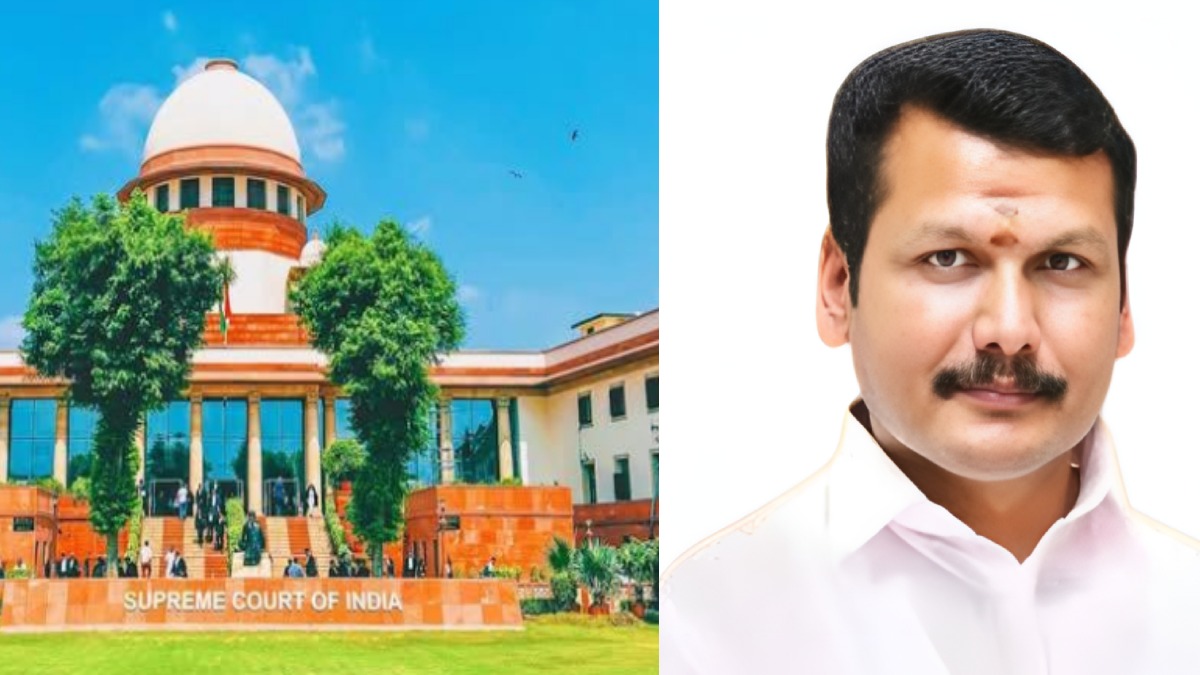
Tamil Nadu’s anti-corruption authorities have conducted searches at DMK MLA V. Senthil Balaji’s residence, reigniting an old political war and reigniting the debate on corruption and state political change in the past few years.

The operation of state anti-corruption officers has attracted the attention of political parties and the public as well, with political leaders from all over the state and people on both sides of the spectrum giving different views on the development.
The searches were conducted as part of an ongoing investigation into corruption and financial irregularities, officials said. But the operation was part of an official investigation and was carried out in the proper manner. It is not at present known whether the investigation is ongoing and will reveal more if required under the law.
The raid has been politically significant as Senthil Balaji is one of Tamil Nadu’s top political figures and has played a critical role in the state’s political history over a long time. The recent action has generated much discussion on its legal, administrative, and political implications.
The development has also revived discussions about the evolving political situation in Tamil Nadu. Political pundits have noted that the senior Congress leader Rahul Gandhi had previously referred to M.K. Stalin as “my brother” in public events, a mark of the close relationship the Congress and DMK have had as alliance partners. And in this context, the anti-corruption move has received even more political attention as rival parties try to frame the investigation in relation to current political alliances.

But no official statement has been made to say that the investigation is politically motivated or directed by any political alliance, and the authorities have maintained that the inquiry is being conducted independently under applicable legal provisions. Investigations of this nature are subject to judicial scrutiny, and conclusions on criminal liability can only be determined through due legal process.
The DMK has reacted strongly to the searches; party leaders have questioned the timing and intention of the operation. Legal processes should be unbiased and not subject to political influences, party members said, and they are confident the truth will emerge via the course of the investigation. The party has also voiced their views on social media sites, where the issue quickly became one of the most talked-about political topics of the day.
Opposition leaders welcomed the anti-corruption action and said investigations into allegations involving public representatives should proceed without fear or favour. Transparency and accountability are the bedrock of democratic governance, they said, and that agencies should have the freedom to do their work independently.
The searches have once again driven home the increased public interest in corruption-related investigations involving political leaders across India. Anti-corruption agencies at both the state and central levels have intensified action against several public officials as well as elected representatives. But with so many people on the receiving end, actions like these typically lead to a lot of public debate in the political sphere, and they are most likely to happen in hot political times.
The searches conducted during an investigation do not, in themselves, prove guilt, as legal experts say. Investigations are meant to collect evidence, investigate records, and verify allegations before any prosecution can proceed. Under India’s criminal justice system, individuals under investigation are presumed innocent unless proven guilty in court.
Political analysts are optimistic that the development could have a wider significance for Tamil Nadu politics in the upcoming months as the political discourse in the state will continue to be influenced by this development, given that parties are positioning themselves ahead of future elections. If the inquiry is limited to legal proceedings and becomes a larger political issue, there will probably be a lot of evidence, and how the various players involved respond will all matter now that the investigation is going to be based on the evidence gathered during the investigation and the responses of the parties to the various actors involved.
We also recall that institutional independence and the role of investigative agencies have become a topic of conversation for the public. Transparency in the case of investigations that are conducted in accordance with the law and legal processes is fundamental to democratic institutions and accountability, regardless of party.
Researchers will continue to investigate documents, financial records, and other evidence in the case as they go along. If more evidence comes forward, we may have more official statements. For now, the searches at Senthil Balaji’s residence have become one of the most followed political stories in Tamil Nadu, not only because of the legal investigation but also because they may be a touchpoint in the state’s ever-changing political landscape.