A fresh discussion about school nutrition has been raised in Tamil Nadu after the Minister A. Rajmohan of Tamil Nadu said that the state government is considering the possibility of serving chicken biryani as part of meals provided to students in government schools. It has received much scrutiny from the public as part of a bigger picture that the state government will be working towards food quality of child nutrition, meal quality, and more students being in the schools in the state and more students will attend.
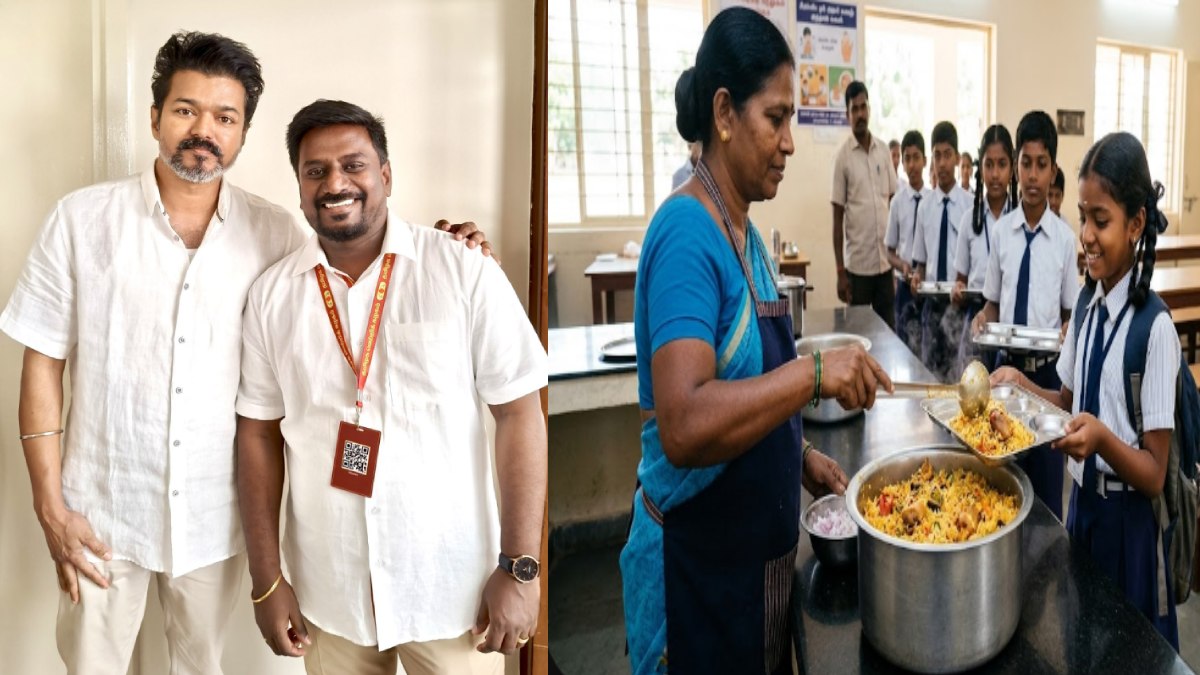
As the minister explained how nutritious food should be a part of school meals such as those in a more protein-rich and appealing way will be possible in the future, provided they meet nutritional criteria and logistical needs and are financially realistic. A decision has yet to be announced but the comments have caused a lively discussion among educators, nutrition experts, parents, and political leaders.
Tamil Nadu has long been seen as an early pioneer in school meals. The Mid-Day Meal Scheme introduced decades ago and increased over the years has been a great success in driving up the enrolment of students and dropping school dropouts and in reducing childhood malnutrition for millions of students in government and government-aided schools. Food is provided in schools during school hours and to help with nutrition and education.
The idea of adding chicken biryani has attracted attention because it is an entirely new addition to school meal menus that are typically rice, vegetables, pulses, eggs, and other balanced foods. Such an approach suggests that chicken is a source of high-quality protein, iron, zinc, vitamin B12, and essential amino acids that are the building blocks of children’s physical and cognitive development. And they argue that providing protein-rich meals occasionally might boost the nutritional intake of students from economically weak backgrounds.
Health professionals say that balanced diets during childhood are essential. Protein intake is key to muscle development, brain development, immune system function, and overall health. International school feeding programmes all over the world have begun to include various sources of protein in order for children to get enough nutrition. But nutrition experts note that menu changes should be based on scientific nutritional guidelines, not popularity.
At the same time, the proposal has raised several practical questions. Education administrators stressed that preparing and serving chicken biryani on a large scale across thousands of schools would require careful planning. Food procurement, cold-chain storage, hygiene, cooking infrastructure, transportation, quality control, and food safety standards would need to be addressed by governments. The logistics of uniform preparation and effective distribution to local and regional schools would be a huge challenge.
Dietary diversity and inclusivity are also in the conversation. Schools cater for students of various religious, cultural, and dietary backgrounds. If non-vegetarian meals are expanded, suitable vegetarian alternatives should also be made available so that every student continues to receive nutritionally balanced food according to their preferences and dietary practices.
Parents and education practitioners have mixed reactions. There are those who welcomed the idea, saying many children would find a much more varied menu while getting better nutrition. They think meal programs should first focus on ensuring the regular delivery of eggs, pulses, milk, fruits, and vegetables and then go on to more elaborate menus. Consistency, food quality, and the composition of nutrients are more important than any one dish, nutritionists have said.
Tamil Nadu has always introduced innovative welfare interventions to education and child development. The government has expanded breakfast programmes, improved nutritional standards, and introduced measures to better the quality of learning via health and nutrition. The discussion on the state’s policy is reflective of the continuing focus of the state on children’s well-being with public welfare programmes.
Policy experts believe that any decision about school meal menu changes would likely need to be taken into account in consultation with nutritionists, public health experts, education officials, food safety authorities, and financial planners. The cost impact, procurement mechanisms, nutritional value, and long-term sustainability of the food supply would need to be considered in any such policy before a statewide policy is implemented.
On social media, discussion of innovative ways to improve school meals has also been robust. Some appreciated the focus on nutrition but also said that improving infrastructure, classroom facilities, sanitation, and teaching quality should also be part of the conversation alongside nutrition.
At present, we are considering serving chicken biryani in government schools in Tamil Nadu and no policy has been announced. But the discussion has once again made school meal programmes a must take into account for children’s health, education, and overall development. Whether chicken biryani will eventually become part of the school menu or not, we are still seeing that there is a need for innovation every time and every child needs a healthy, safe, and wholesome meal to be well educated.