Salt production in Tamil Nadu’s Thoothukudi district has been increased since the hot and dry weather conditions in the Thoothukudi area are still prevailing across the district. The salt pan operations in the salt-producing region have been able to operate with little or no rain, and salt pan operations have been under good conditions for evaporation.
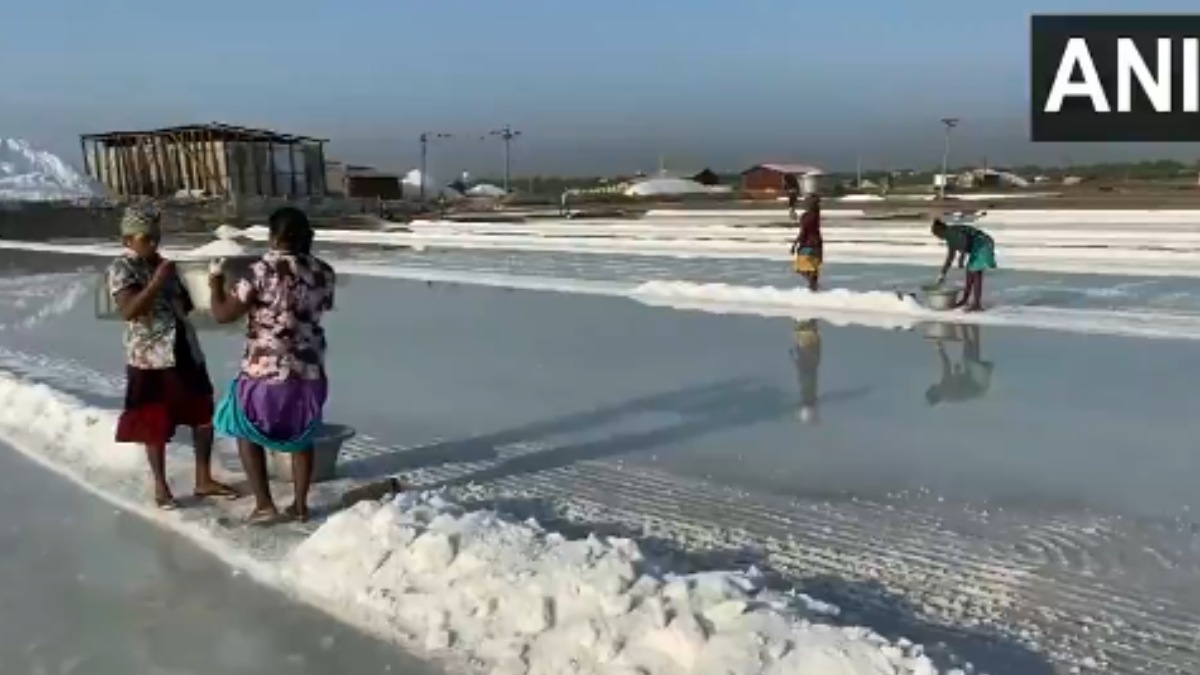
Salt producers and workers are now able to increase harvesting and collection activities. The better production has brought some relief and cheer to the salt producers and workers who depend on the seasonal work for their living.
Thoothukudi is one of the most important salt-producing regions in Tamil Nadu, and weather conditions play a crucial role in determining the production from the salt pans. Longer sunshine, high temperatures, and limited rainfall are always favourable for salt production, as evaporating seawater and brine is necessary to crystallise salt. Salt pans in the district are harvesting and gathering in their entirety now, and producers are taking advantage of the favourable weather to bring out maximum production.
The increase in production has also been a positive development for workers who work in different stages of the salt production. Salt harvesting is labour-intensive and requires workers to collect crystallised salt from the pans before it is transported, stored, and prepared for further distribution. The activity has thus created a busy atmosphere in the salt-producing areas of Thoothukudi, with workers engaged in harvesting and related activities.
But production has also resulted in a challenge for salt producers. Salt availability, producers say, has led to low prices in the market. Excess output is good for the production sector, but the producers need to be paid enough to pay for operations and to live comfortably. If the supply and market prices are not in line, the producers get less in return despite good production conditions.
In the salt industry, the situation is a clear illustration of the close relationship between the weather, production, and market price. When the weather is dry and sunny, salt pans work more efficiently and generate higher volumes. At the same time, significant increases in supply could put pressure on prices if demand does not rise at a similar rate. For salt producers, production costs, output, and market realisations need to be balanced.
At present, harvesting and collection are being carried out intensively across salt pans in the district. Producers and workers are working in the good weather window to continue to harvest and collect salt. The ongoing activity will be closely linked to weather conditions, so if precipitation occurs, that will affect harvesting, and salt quality and quantity will be affected.
#WATCH | Tamil Nadu: Salt production has increased in Thoothukudi district due to the prevailing hot and dry weather conditions, with little or no rainfall, which has favoured salt pan operations.
— ANI (@ANI) September 28, 2026
The increased production has brought cheer among salt producers and workers.… pic.twitter.com/uPPYT6GIyb
The increase in activity creates more work opportunities in salt pans for workers, and the producers have the ability to produce more. But the difficulty of the industry is that there are still too low prices. Producers will be watching the market conditions closely to see whether the increased production will translate into better earnings.
Thoothukudi's development is a testament to the importance of good weather and a stable market for the salt industry. Hot and dry weather in the field has provided the boost for production, and salt pans are still producing, but producers are not getting good prices for their output. The market will be key in determining the success of the season for salt producers and workers as harvesting is not over yet in the district.